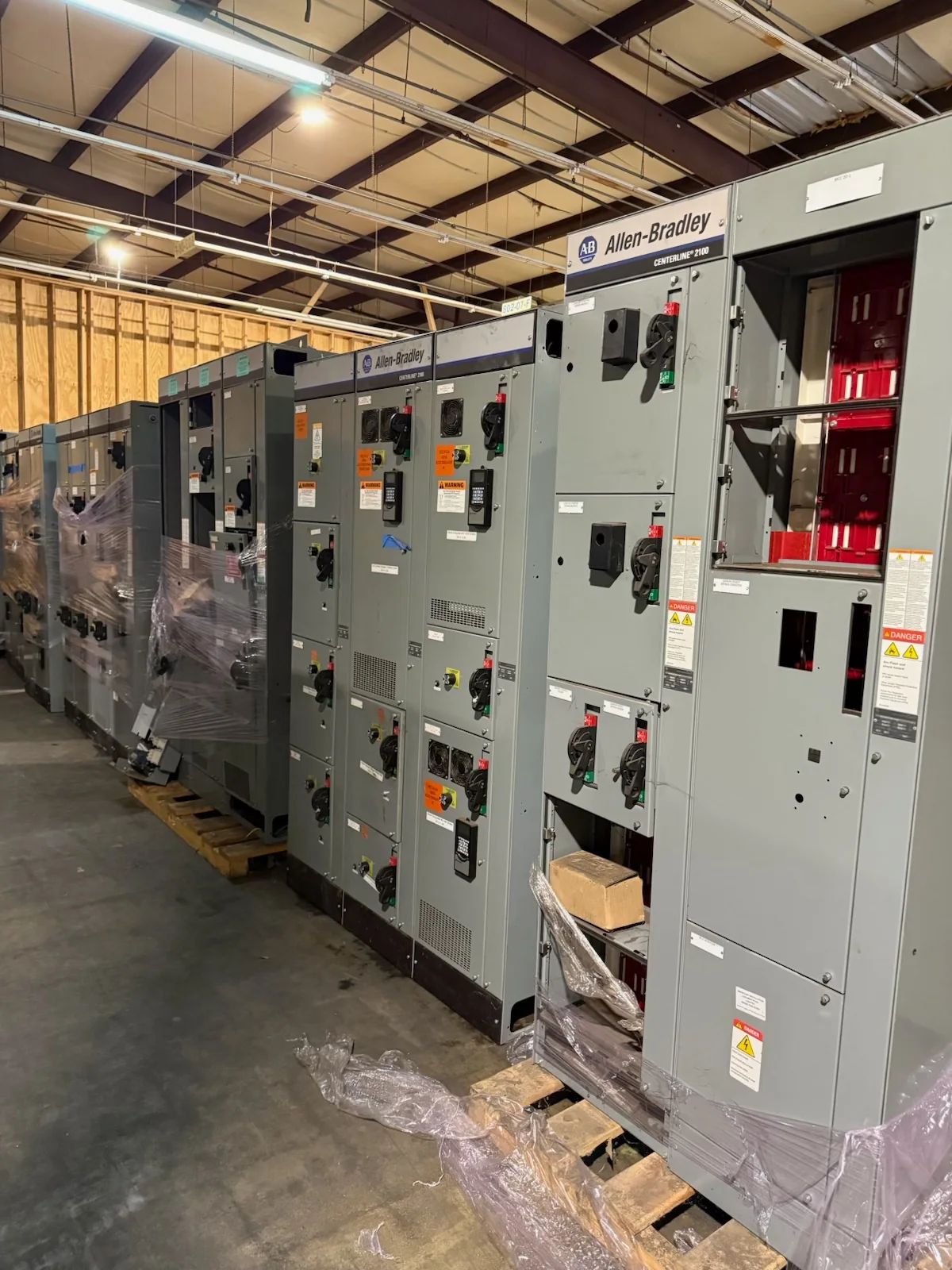
Match the lineup before discussing the lot
Selling surplus motor control centers in Trumbull County requires more than counting gray cabinets. The actual pickup site may be anywhere in the county, while Warren is identified in existing records as the county seat; neither fact establishes a particular facility, address, or local project. What matters first is the equipment boundary. An MCC is assembled from vertical sections, with starter buckets, feeders, control compartments, and sometimes variable-frequency drives or soft starters arranged in a lineup. A useful evaluation separates those sections and devices instead of treating the enclosure as interchangeable inventory.
For a possible staged shutdown, hypothetical example: one section may be released after its production load is transferred while another still serves shared pumps, ventilation, or auxiliary controls. The second section is not available merely because it is adjacent. Mark each section available, retained, or unknown, and identify the authorized person who can confirm the boundary. A qualified, authorized team must establish safe conditions and handle disconnection; no seller needs to operate equipment or prove that a bucket works.
Identify sections, buckets, and controls
Start with lineup labels and readable nameplate information visible from a safe exterior position. Record manufacturer, lineup designation, section number, documented voltage class, bus or current wording, and the apparent location of each bucket. A bucket schedule or one-line diagram is valuable because a starter labeled for a motor may not be the same device as a spare with a similar faceplate. Include the starter type, documented size or rating, overload information where listed, and whether a drive, bypass, transformer, relay, or other control component is included.
Shared control circuits deserve their own note. A control power transformer, interlock, network connection, or common terminal arrangement can serve several buckets, so one visible unit may not define a complete package. Reserved spaces, blank compartments, and buckets listed on a schedule but absent from the lineup should be shown as such. Do not infer compatibility from appearance, color, or brand name alone. Unknown voltage, missing labels, and uncertain bucket associations should remain explicitly unknown until supported by records.
Build a complete, honest inventory
List each vertical section separately, then identify installed buckets, loose buckets, drives, controls, barriers, doors, and documented spares. Note whether loose equipment is tagged to a section or simply found nearby. Include quantities and visible condition, but do not open compartments or touch energized equipment. Safe exterior photos of labels, doors, handles, and stored items are useful; they should never require removal of covers or entry into a restricted area.
- List lineup and section identifiers, with the available, retained, and unknown boundary.
- Reconcile the bucket schedule with what is visibly present, including empty or reserved positions.
- Separate included drives, starters, feeder units, control parts, and loose spares.
- Describe missing buckets, damaged doors, corrosion, impact, moisture exposure, contamination, or packaging.
- Identify shared circuits or controls that remain tied to loads outside the proposed sale.
Hypothetical example: an inherited inventory might show two six-section MCC lineups, eighteen installed starters, three loose buckets, and four drives. If records associate only two loose buckets with the first lineup and the third has no confirmed match, say so. That distinction prevents valuing an assumed package that documentation cannot support.
Condition and valuation factors
Offer consideration reflects both equipment match and condition. Complete, traceable sections with readable labels and a credible schedule are easier to evaluate than mixed buckets in unidentified storage. Note enclosure damage, missing hardware, rust, water marks, heat discoloration, cable-entry changes, and absent doors or barriers only from safe observations and supplied records. Drives and electronic controls raise separate age and documentation questions.
All voltage classes may be considered, but provide documented voltage and current information rather than guessing from an application. Confirm that the offered equipment belongs to the seller and is not leased, utility-controlled, landlord-retained, or needed for another building. Existing one-lines, bucket schedules, lineup drawings, maintenance records, and decommissioning documents can clarify the lot. Unknown facts do not need to be filled with speculation.
Plan access and a safe release
Site logistics can change the practical value of a large MCC. Share the actual pickup location once authorized, room or storage area, doorway and corridor constraints, floor or loading limits if documented, loading hours, and any escort, security, outage, or access approvals.
The buyer handles qualified disconnects, crane needs, rigging, loading, freight, and hauling; the seller is not asked to dismantle or move equipment. A staged shutdown may require owner approval of an outage boundary before a section is released, and a narrow route may determine the handling sequence for qualified personnel. Do not open, operate, test, or touch energized equipment. No seller testing is required. After reviewing the equipment and release conditions, the buyer can provide a cash offer; once the seller accepts and the sale is agreed, payment is made upfront before the agreed pickup.
Questions to send with the records
- Which Trumbull County site holds the equipment, and who can authorize its release?
- Which sections still serve shared loads, and what date or condition releases them?
- Is an existing one-line, bucket schedule, lineup drawing, or decommissioning list available?
- Which buckets, drives, controls, and spares are included, and which matches remain unknown?
- Are any sections retained by an owner, landlord, utility, tenant, or another department?
- What safe exterior photos and access notes can be supplied without opening or operating anything?
Those answers create a defensible boundary, realistic valuation, and safer handoff.