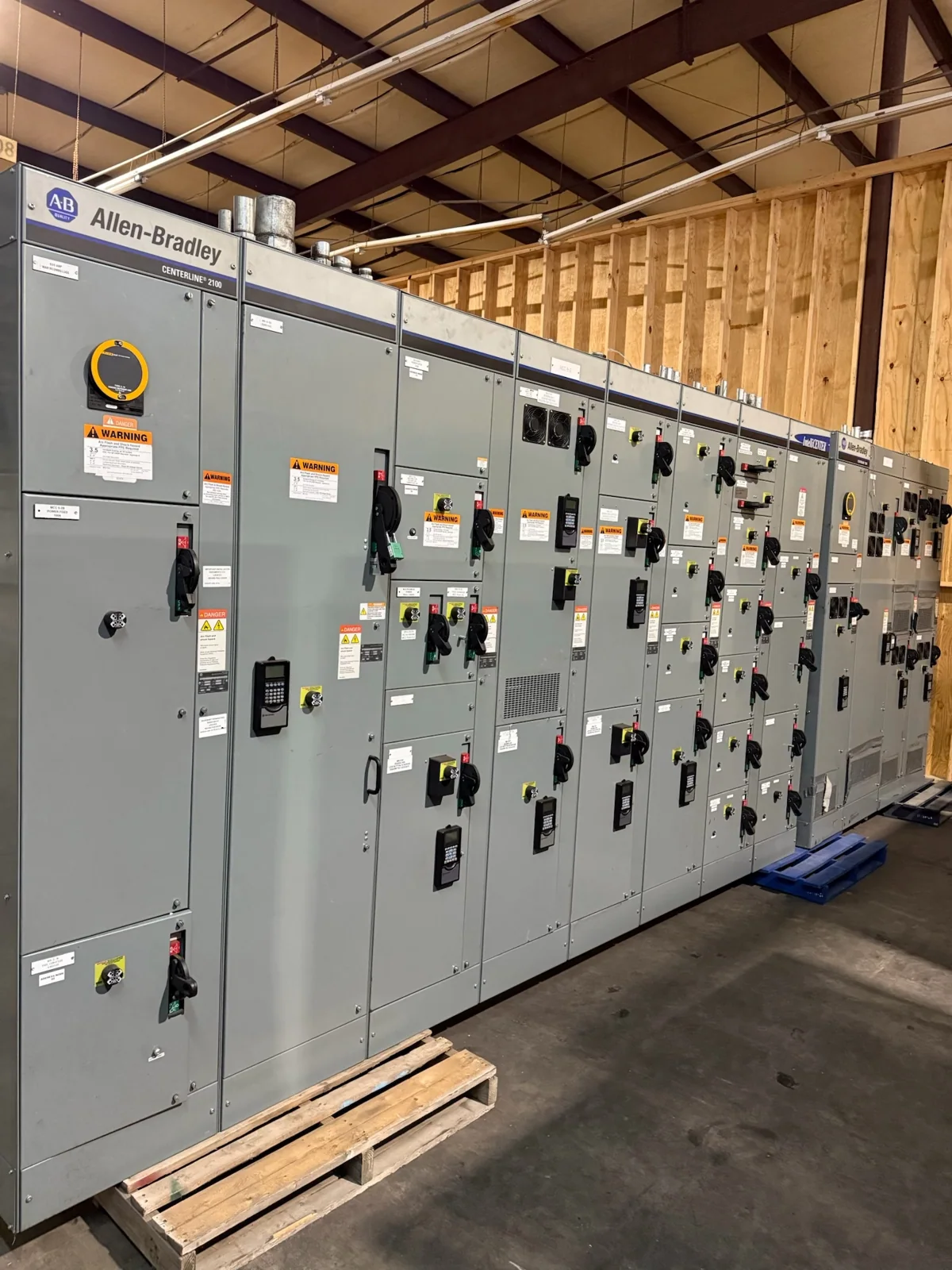
What motor control center equipment is actually available?
Are you reviewing a surplus motor control center somewhere in Richland County, Ohio? The county record identifies Mansfield as the seat, but that does not establish the pickup address. Start with the equipment: a lineup of vertical sections containing starter buckets, feeder compartments, control gear, or open and reserved spaces. A buyer evaluates the documented lot, not a county name or cabinet appearance.
Which sections are included? Please separate the lineup into section identifiers and list the buckets associated with each one. A bucket schedule may show motor names, starter sizes, overload information, disconnects, fuses, or control references. It may also show positions that were reserved but never populated. Those distinctions matter. A schedule that says “spare” is not proof that a bucket is physically present, and an empty space is not a missing component unless the records support that conclusion.
How should a seller identify buckets, drives, and controls?
Can paperwork be matched to visible labels? Useful records may include a lineup schedule, one-line drawing, elevation, wiring index, maintenance list, or nameplate transcription. Share the manufacturer and series only when documented or shown on a safely viewable exterior label. Record assembly voltage and current wording exactly; do not infer a voltage class from color, size, or brand. The buyer considers all voltage classes, subject to review of the equipment and lot.
Are drives and controls part of the sale? List variable-frequency drives, soft starters, programmable controllers, overload modules, relays, interface devices, and loose control transformers separately. Note whether each item is installed in a bucket, mounted in a section, stored nearby, or merely shown on a drawing. Shared control circuits deserve special attention: one control power supply or network component may serve several buckets, while a machine-specific control may belong with the production machinery rather than the MCC.
What does a complete lot look like?
A complete inventory is more than a section count. Include every vertical section, bucket position, removable bucket, spare bucket, drive, control assembly, door, barrier, and known loose part that is offered. Identify unknown or missing buckets plainly. If a bucket schedule lists ten positions but only seven can be documented as present, report seven confirmed, three unverified rather than rounding up.
Consider this hypothetical example: a process relocation leaves four MCC sections, six installed starter buckets, one tagged spare bucket, and two drives in a cabinet. A separate bucket still serves a motor that will travel with the production machine. The offered lot should identify that bucket as retained, not include it simply because it appears in an old schedule. The same example may contain shared control wiring that remains required until the process is disconnected. That boundary should be confirmed by the owner and authorized electrical team before any release decision.
How do condition and documentation affect valuation?
What condition information can be supplied without testing? Existing maintenance records, inspection notes, storage history, exterior photographs, and known damage descriptions are useful. Photos can show nameplates, doors, labels, corrosion, dents, missing covers, packaging, or water exposure. Do not open compartments, operate devices, dismantle buckets, or touch energized equipment. A qualified, authorized team must establish safe conditions and handle disconnection.
Valuation can reflect documented identity, completeness, matching buckets, included drives or controls, age information, corrosion, contamination, impact damage, missing barriers, storage environment, and the cost and complexity of handling. A clean record of ownership and a clear lot boundary can be as important as a strong-looking enclosure. Unknown facts remain unknown; they are not treated as favorable condition. No seller testing is required. After reviewing the lot, the buyer can provide a cash offer; once the seller accepts and the sale is agreed, payment is made upfront before the agreed pickup according to the transaction terms.
How is a safe Richland County release coordinated?
Who handles removal from the site? The buyer handles crane coordination, qualified disconnects, rigging, loading, freight, and hauling. The seller does not need to arrange those services or dismantle the lineup. The seller’s role is to confirm ownership, identify the authorized decision-maker, and coordinate site access approvals, escorts, operating-hour rules, security requirements, and any building or utility restrictions.
What site facts help with planning? Describe the actual pickup location without assuming it is in Mansfield, plus access roads, door or dock constraints, interior travel path, known floor or loading restrictions, loading hours, and whether the lineup is indoors, outdoors, or in a decommissioned facility. Do not promise a route, crane position, outage window, or dimension until responsible parties review it. Access coordination is not a transfer of removal cost to the seller.
What should you send for an initial review?
- County and actual pickup-site description, ownership status, and authorized release contact.
- Manufacturer, series, documented voltage and current, section count, and available bucket schedules.
- Confirmed installed buckets, spare or stored buckets, included drives and controls, and retained equipment.
- Known missing parts, shared circuits, corrosion, contamination, water exposure, or storage damage.
- Existing drawings, maintenance records, release approvals, access rules, and safe exterior photos only.
Questions are welcome: Which sections are offered now, and which remain needed until production ends? Does each loose bucket have a documented section association? Are drives and controls included, or do they belong to another machine? Which facts remain unknown? Clear answers let the buyer assess the Richland County lot responsibly, including equipment from a shut-down power plant or decommissioned data center, without asking the seller to test or disturb anything.