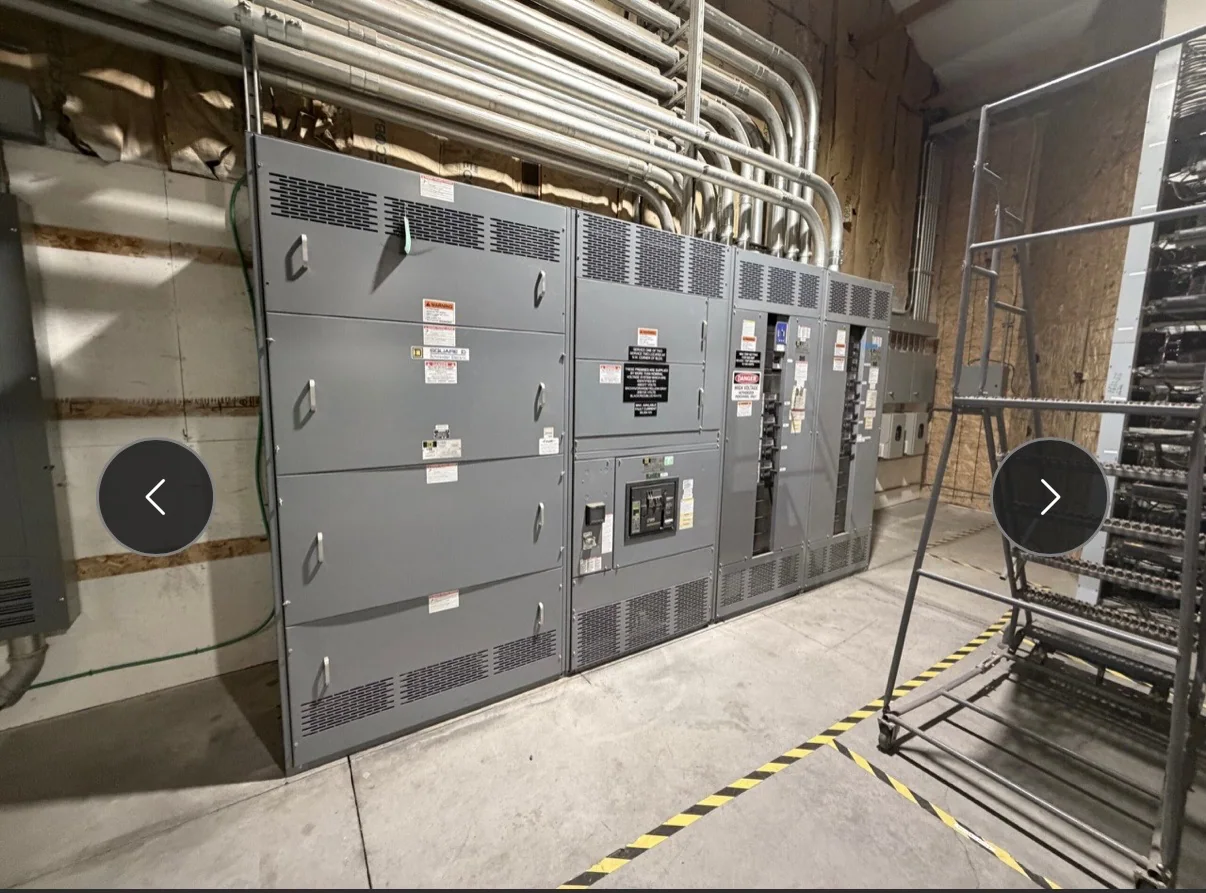
Verify what carries the 1,200-amp rating
A 1,200-amp label can describe the motor control center bus, a main incoming device, or another documented assembly component. It should not be copied onto every starter bucket or feeder. Share the exact wording from a visible nameplate, lineup schedule, one-line drawing, or equipment record. Voltage, continuous-current rating, interrupting rating, and protective-device trip settings answer different questions. A 1,200-amp bus does not prove a removable breaker has a 1,200-amp frame or the same interrupting capability.
This route considers motor control centers across voltage classes when records identify them. Leave an unreadable voltage, uncertain manufacturer, or incomplete rating unknown rather than estimating from appearance. Exterior labels and schedules are useful; sellers do not need to open compartments, operate controls, handle energized equipment, or test anything.
Reconcile sections, buckets, and shared controls
Count vertical sections first, then compare each section with the available bucket schedule. Record section labels, starter or feeder designations, bucket sizes, visible device labels, overload information when already documented, and included drives, soft starters, control transformers, or spare parts. Mark each bucket as installed, separately stored, reserved, or missing. A schedule can list positions that were never populated, so paper and physical counts should remain separate until reconciled.
Identify shared control circuits from drawings or records without disturbing wiring. A control power source, interlock, PLC interface, common terminal strip, or network connection may serve several starters. Also distinguish the 1,200-amp lineup from adjacent disconnects, distribution equipment, or loose buckets the owner intends to retain. Write the proposed lot boundary down before an offer is treated as covering the room.
Hypothetical inventory example
Hypothetical example: an Ohio facility record identifies a three-section center with a 1,200-amp main-bus rating, an unknown documented voltage, eight installed starter buckets, two labeled spare buckets on a pallet, and one reserved position. The inventory should say exactly that. It should not call the spare buckets compatible with every section, assign the bus rating to the starters, or count the reserved position as installed. If a shared control circuit serves production motors, mark that circuit and its release status for review.
Describe condition and completeness separately
Condition covers what can be observed safely from the exterior or supported by records: cabinet corrosion, dents, missing covers, water staining, labels, storage packaging, and apparent relocation damage. Completeness asks whether the sale includes sections, doors, barriers, buckets, control components, spare fuses, drawings, and hardware that define the lot. A clean cabinet with absent buckets is incomplete; a complete lineup with unknown storage exposure still needs a condition note.
State whether equipment is installed, staged indoors, or stored elsewhere. For a decommissioned data center, identify whether it served cooling, pumping, or other building systems, and separate it from still-required life-safety or facility power equipment. For a shut-down power plant, identify the documented lineup and equipment retained for environmental, security, or closeout work. These are inventory contexts, not claims about a particular Ohio site.
Factors in a potential offer
Valuation may depend on the verified rating-bearing component, documented voltage, manufacturer and series information, section count, bucket mix, matching spares, control architecture, physical condition, and the percentage of unknowns. It can also reflect whether the lineup is coherent, records support identification, and release dates are firm. Do not infer a model, brand, compatibility, price, or resale outcome before review.
Confirm that the seller owns the equipment and can release it, especially where a tenant, lender, utility, plant owner, or demolition contractor may have an interest. Identify equipment that must remain in production and the boundary of what may leave. After reviewing the equipment, the buyer can make a cash offer; once the seller accepts and the sale terms are agreed, payment is made upfront before the agreed pickup, and the seller is not expected to test it first.
Coordinate shutdown, staging, and freight
List remaining production controls separately from surplus sections. If a process upgrade is phased, provide planned shutdown or release windows for each section, bucket group, and shared control circuit. A section is not available merely because it appears on a replacement drawing. Unknown timing should be labeled unknown, and access approvals should be coordinated with the owner, site contact, and qualified electrical personnel.
After agreement, the buyer handles qualified disconnect coordination, crane arrangements, rigging, loading, freight, and hauling. The seller provides records, safe exterior views, and authorized access coordination, including escorts, outage windows, and staging rules. Do not dismantle or move anything to make shipping easier. Confirm the route, doorway dimensions, floor limits, clearance, loading hours, and staging location before removal planning.
Questions to send with the records
- Which nameplate or document carries the 1,200-amp rating, and what voltage and continuous-current wording appears with it?
- How many sections and installed buckets are present, and which scheduled positions are empty, reserved, missing, or separately stored?
- Do records identify interrupting ratings, trip settings, drives, controls, or shared circuits without operating equipment?
- What exterior condition, water, corrosion, contamination, storage, or impact concerns are known?
- Who owns the lineup, which equipment must remain, and who can authorize release?
- What shutdown dates, access approvals, loading restrictions, and freight details require coordination?
Send documented labels, schedules, ownership information, condition notes, and the release plan for an evaluation. Unknown values can remain unknown until qualified personnel establish safe conditions. The buyer can define the lot, agree on terms, and coordinate removal without asking the seller to test, operate, disconnect, rig, load, or haul the motor control center.