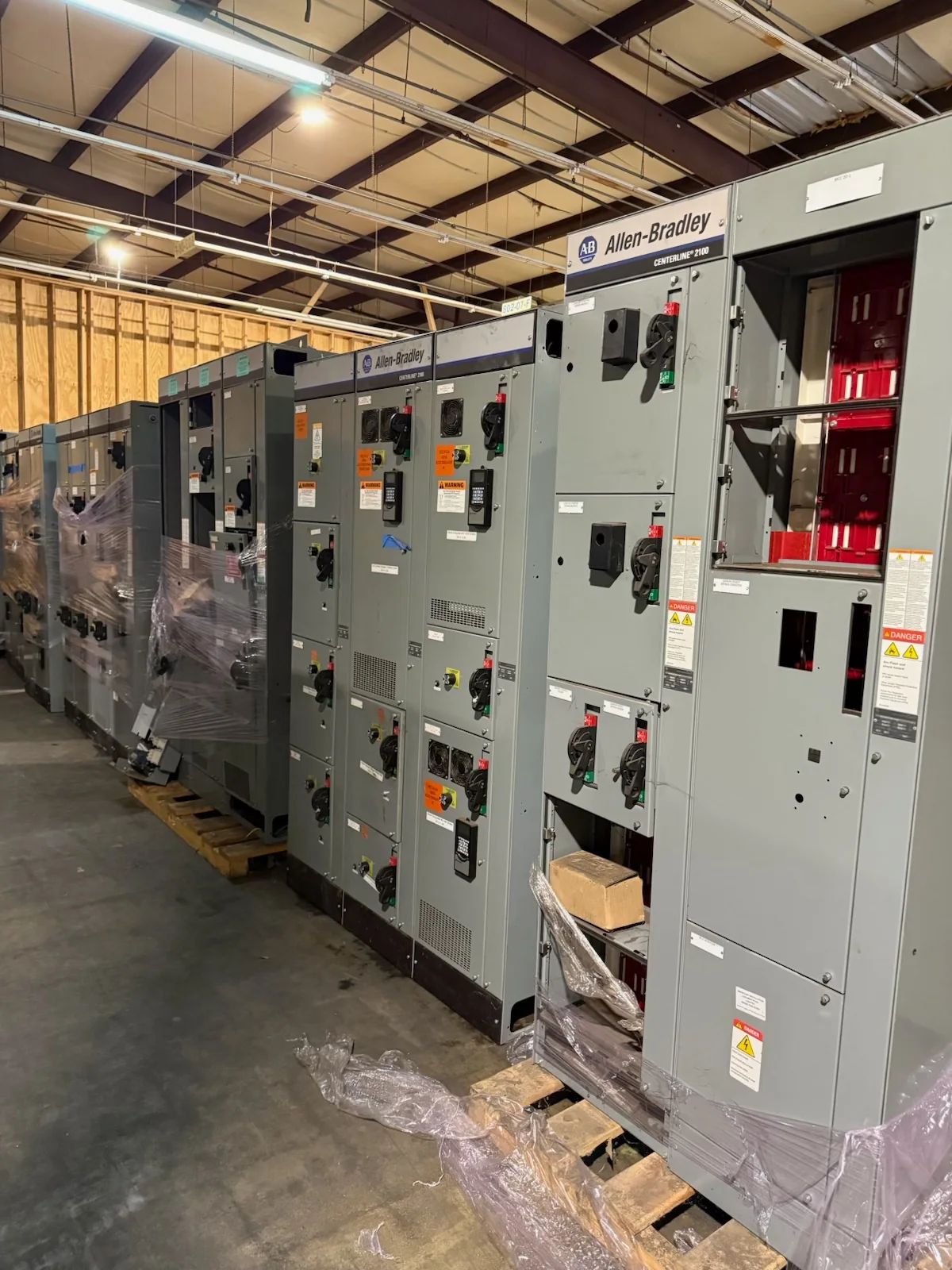
1. Start with the documented identity
A 208-volt motor control center is evaluated from records and visible labels, not from appearance. Copy the complete voltage marking exactly as it appears on the lineup or nameplate. Include phase, frequency, wire arrangement, or multiple voltage values only when documented. A label with more than one value may describe different portions of the equipment; do not select the value that seems most useful.
Record the manufacturer, lineup designation, section identifiers, approximate dimensions, and available drawings or schedules. Do not infer construction, suitability, or operating state from “208” alone. If a transformer is associated with the lineup, keep its primary marking separate from its secondary marking. A transformer with a 208-volt secondary does not make every connected component a primary-voltage device. Existing documentation should control the description.
2. Reconcile the lineup with the bucket schedule
Count vertical sections and starter buckets as related but distinct inventory items. List each section label, then compare physical bucket positions with the existing schedule. Note installed starters, spare buckets, blank spaces, withdrawable units, drives, overload devices, control transformers, and separately stored components when documented. A schedule may show reserved positions that are not populated, so do not present a reserved control as an included bucket.
Shared control circuits deserve a specific note. A common control supply, interlock, network connection, or remote permissive may serve several starters. Its presence can affect what constitutes a complete lot. Record what documents identify and mark uncertain associations unknown. Do not open compartments, operate handles, or verify a circuit.
Hypothetical inventory example
Hypothetical example: records could describe one documented 208-volt lineup with four vertical sections, twelve installed starter buckets, two labeled spare buckets on a storage pallet, one variable-frequency drive, and a shared control-power section. If the schedule lists a reserved position in section C, it remains “reserved,” not a thirteenth bucket. Whether the stored spares belong to this lineup remains unknown until records or matching labels establish the connection.
3. Describe condition without testing
Condition reporting should be factual and limited to safe exterior observations. Useful notes include enclosure dents, corrosion, water staining, missing covers, damaged doors, faded labels, exposed packaging, storage environment, and whether components are mounted or loose. Mention known contamination or environmental concerns. A clean exterior does not establish internal condition, and a complete-looking bucket does not prove operation.
Send safe exterior photos showing nameplates, section labels, bucket fronts, storage tags, and the access area when permitted. Existing one-lines, equipment schedules, purchase records, maintenance records, and decommissioning lists add context. The seller does not need to test, energize, operate, dismantle, or open anything. Qualified, authorized personnel establish safe conditions and handle disconnection.
4. Explain what affects the offer
Valuation depends on more than the 208-volt phrase. Relevant factors include documented voltage and phase, manufacturer and lineup identity, section count, bucket mix, included drives or controls, completeness against the schedule, loose spares, visible condition, storage history, and shared controls. Clear ownership and a defined lot boundary reduce uncertainty. Missing schedules, mismatched labels, unverified spares, damaged enclosures, or an unclear transformer relationship can affect evaluation.
The buyer considers equipment across voltage classes, but the seller should present this lot according to its documented markings. Do not assume compatibility, reuse, operating condition, price, or acceptance from one rating. After reviewing the equipment and release conditions, the buyer can make a cash offer; once the seller accepts and the sale is agreed, payment is made upfront before the agreed pickup, with valuation depending on the information available for this lot.
5. Confirm ownership and coordinate release
Before release, identify the owner of the lineup, buckets, drives, and loose spares. If a facility is leased, decommissioned, or shared, confirm who may sell each item and which equipment must remain. For equipment from a shut-down power plant or decommissioned data center, identify the asset owner, site contact, security rules, and required property or environmental approvals. Treat site-specific facts as unknown until documented.
Provide the agreed release window, pickup address, access approvals, loading restrictions, door or ceiling limitations, and authorized facility contact. This is coordination, not a request for seller removal. The buyer handles crane needs, qualified disconnects, rigging, loading, freight, and hauling. Preserve labels and records, and never touch energized equipment.
6. Questions to answer before release
- What is the complete documented voltage marking, including phase or multiple values?
- How many vertical sections and physical buckets are present, and how do they compare with the schedule?
- Which buckets, drives, controls, spares, and shared circuits are included, reserved, or unknown?
- Are transformer primary and secondary markings separately documented?
- Who owns each item, who authorizes release, and what must remain in service?
- What exterior condition, storage, access, security, and approval information should the buyer know?
Answer with records and safe observations where possible. A precise inventory gives the buyer a clearer evaluation while keeping the seller’s role safe: identify the equipment, establish authority, coordinate access, and release it only through the agreed process.