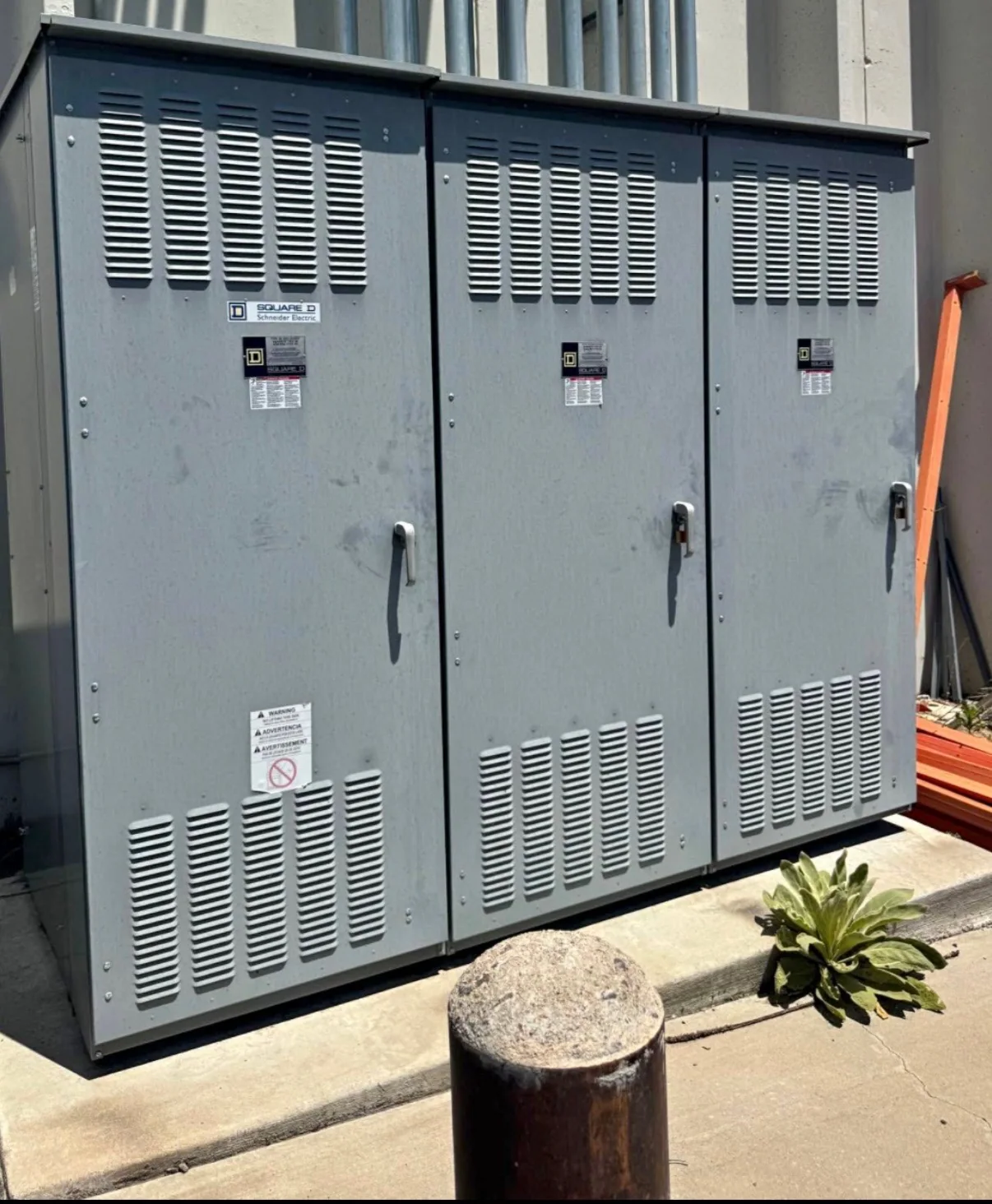
Start with complete identification
A 600-volt label is useful, but it does not by itself define a motor control center lot. Copy the complete existing voltage marking from the lineup nameplate or available record, including phase information or multiple values only when documented. Record the manufacturer, lineup designation, section count, approximate dimensions, and visible serial or identification numbers. Do not infer suitability, construction, or operating state from a single number or a cabinet’s appearance.
For every vertical section, note bucket positions and labels readable without opening or operating anything. A bucket schedule, one-line drawing, control schematic, maintenance record, or decommissioning list can clarify what the exterior cannot. Count installed starter buckets, empty spaces, spare buckets, and separately stored drives or controls. Note shared control circuits specifically: a section may serve more than one process, and a control component may be retained rather than included.
Two hypothetical sale situations
Hypothetical situation one: a decommissioned data center
Imagine a decommissioned data center with a documented 600-volt motor control center. The schedule shows six vertical sections, bucket positions, spare starters, and a separate control cabinet. Exterior photos show the manufacturer and voltage marking, while records identify one control circuit serving equipment that remains. The proposed lot should identify the six sections and included spares, then exclude the retained process control and anything still supporting the facility.
The useful question is not simply how many buckets exist, but which buckets, controls, and sections are released together. Matching records and an authorized release date make the inventory easier to evaluate. Unknown bucket associations should remain marked unknown rather than being assigned by appearance.
Hypothetical situation two: a shut-down power plant
Now consider a shut-down power plant with a larger lineup, loose starter buckets, and transformers in the same room. Records may show a 600-volt secondary connected to a transformer whose primary has a different voltage. Those markings have different meanings: do not present the primary rating as the motor control center voltage or assume the secondary suits every device. List the transformer separately, with both documented sides noted where available.
This lot may contain more material but less certainty. Some buckets may belong to another lineup, shared controls may be removed, and ownership may be divided between the operator and an asset owner. List each section, identify loose items by visible labels, distinguish documented matches from guesses, and state which facts require confirmation.
Sample inventory and sale boundary
- Lineup: manufacturer, complete documented voltage wording, phase if shown, section quantity, designation, and known dimensions.
- Sections: labels, bucket positions, empty spaces, visible starters, reserved positions, and recorded overload information.
- Loose equipment: spare buckets, drives, control-power components, doors, covers, and hardware, separated by documented association or listed as unknown.
- Excluded equipment: retained process controls, active sections, utility or owner property, and components needed for another system.
- Records: schedules, drawings, photos, maintenance notes, ownership documentation, and authorized release date.
This format prevents an enclosure count from being mistaken for a complete interchangeable system. It also clarifies whether “600 volts” applies to the assembly, a motor circuit, a transformer secondary, or another documented point.
Condition and valuation factors
Evaluation can consider completeness, identification quality, age information in records, visible corrosion, impact damage, missing doors or covers, water exposure, storage conditions, and whether buckets remain matched to their positions. Request only safe exterior views: nameplates, closed doors, section fronts, stored items, pallets, and the access area. Do not open compartments, operate devices, touch energized equipment, dismantle components, or test anything.
Value depends on more than nominal voltage. A documented, coherent lineup with associated buckets may be more useful than a larger collection of unidentified parts. Missing controls, uncertain ownership, severe visible damage, or an incomplete release boundary can reduce confidence. All voltage classes may be considered, while this route requires accurate documentation of equipment represented as 600-volt motor control centers.
Ownership, safe release, and freight coordination
Confirm that the offering organization has authority to release the equipment and identify any landlord, utility, plant owner, lender, or environmental approval that applies. Access approvals are coordination, not a request for the seller to perform removal. Qualified, authorized personnel must establish safe conditions and handle disconnection. The buyer handles qualified disconnect coordination, crane or other lifting arrangements, rigging, loading, freight, and hauling after agreement on the sale and release.
Useful logistics details include the room or storage area, door and gate constraints, dock access, known lifting limitations, access hours, escort requirements, and the contact who can authorize entry. These details support pickup planning without asking the seller to move or prepare energized equipment. Payment is made upfront after agreement, based on the documented lot and release terms.
Seller questions
- What is the complete voltage marking, including phase or multiple values exactly as documented?
- How many vertical sections and installed, empty, reserved, and spare buckets are present?
- Which control circuits or process controls must remain, and where is the proposed sale boundary?
- Are transformers included, with primary and secondary markings separately documented?
- Who owns the equipment, who authorizes release, and what approvals or access coordination apply?
- What records and safe exterior photos are available, and what condition or storage concerns are known?
Clear answers let the buyer assess the actual lot rather than an assumed one. If a marking, bucket match, ownership detail, or operating status is not documented, identify it as unknown and leave confirmation to the qualified personnel responsible for safe release.