Define the 240-volt lot before discussing value
A 240-volt label is a starting point, not a complete description of a motor control center. For an evaluation anywhere in Ohio, define the physical lot by what can actually be released, its documented identity, and the boundary between included and retained property. A lineup in a decommissioned data center, shut-down power plant, or industrial facility may include sections that look alike while serving different systems. The buyer considers all voltage classes, but this page focuses on equipment presented as 240-volt.
Copy the complete existing voltage marking exactly as documented. Include phase information, frequency, current, or multiple values only when shown on a record. Do not turn a partial number into a presumed specification. A single 240-volt reference does not establish compatibility or future suitability.
Identification that follows the physical boundary
Sections, buckets, and shared circuits
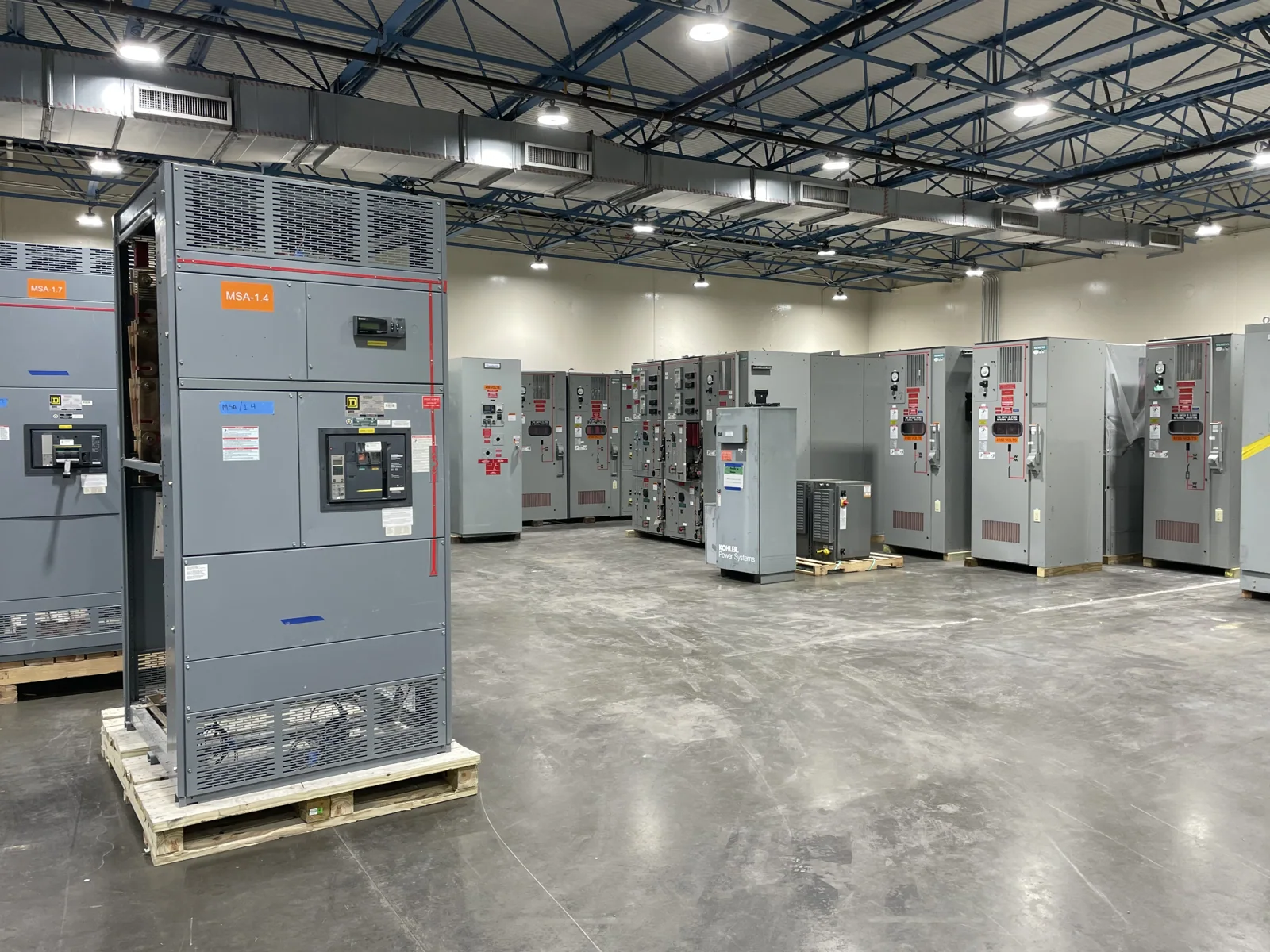
Count each vertical section and starter bucket separately. Record the section label, bucket position, visible device label, and schedule reference connecting the bucket to the lineup. Note empty spaces, reserved positions, loose buckets, and components stored elsewhere. A bucket schedule can describe intended contents rather than what remains, so reconcile it with safe exterior observations and available records.
Shared control circuits deserve their own note. A control transformer, interlock, network connection, or control power arrangement may serve more than one bucket. Identify that relationship without opening compartments or operating anything. Keep separately labeled control and power components distinct. If a loose control component has no confirmed association with a section, call it unknown.
Transformer markings need both sides
When a transformer is in the proposed lot, distinguish its primary marking from its secondary marking. Copy each documented value and identify its side. Do not treat a secondary 240-volt value as the assembly rating or infer a primary value from a common configuration. The same discipline applies to starters, drives, overloads, fuses, disconnects, and other devices whose markings may differ from the lineup label.
Sample inventory for a hypothetical release
Hypothetical example: an owner is reviewing a retired process area and believes one 240-volt motor control center can be released. Inventory:
- Three labeled vertical sections, with the complete documented assembly voltage marking copied from the available record.
- Eight installed starter buckets, two empty positions, and one separately stored bucket whose lineup association is not yet confirmed.
- One documented control-power transformer with primary and secondary markings listed separately.
- Two drives and a control enclosure identified as separate items, with no assumption that either belongs to every section.
- A shared control circuit noted between sections one and two, plus any reserved or retained controls identified as excluded.
This hypothetical example is not a claim about a particular Ohio site or manufacturer. It shows how a count becomes useful when it states what is installed, loose, missing, or uncertain. Include relevant record pages rather than relying on a remembered model or partial label.
Condition and offer factors without seller testing
Condition can be described from records and safe exterior views. Note enclosure damage, missing covers, corrosion, water or contamination evidence, storage exposure, removed devices, damaged labels, packaging, and documented service history. If a condition is unknown, say so plainly.
An offer reflects more than the words 240-volt. Completeness, identity, section count, bucket mix, separate control and power equipment, transformer information, dimensions, weight, storage condition, and handling complexity all matter. A lot with uncertain bucket associations may be valued differently from a matched, documented lineup. No seller testing or operation is required. After reviewing the lot, the buyer can provide a cash offer; once the seller accepts and the sale is agreed, payment is made upfront before the agreed pickup according to the transaction terms.
Ownership, release, and safe pickup planning
Before an evaluation advances, confirm who owns the lineup, buckets, drives, transformers, and stored spares. Identify landlord, tenant, plant owner, lender, utility, or decommissioning interests when applicable, and state which assets must remain. A proposed sale is not a release until the authorized party approves the exact lot boundary and timing.
Access is coordinated with the seller and site representatives. Share the room or storage area, doorway and aisle constraints, loading hours, security approvals, freight restrictions, and any outage window affecting entry. Do not ask the seller to open, operate, dismantle, disconnect, or test equipment. Qualified, authorized personnel establish safe conditions and handle disconnects. The buyer handles crane coordination, qualified disconnects, rigging, loading, freight, and hauling; the seller is not expected to perform removal. Access approvals coordinate entry, not removal costs for the seller.
Safe exterior photos of labels, section fronts, stored items, and visible damage can support review. Photos should be taken only from a safe position and should not require touching energized equipment or entering a restricted area.
Seller questions that clarify the real lot
- What is the complete documented voltage marking, including phase or multiple values where explicitly shown?
- How many sections, installed buckets, empty spaces, loose buckets, drives, control components, and transformers are included?
- Which control circuits are shared, and which controls or sections are reserved or retained?
- For each transformer, are primary and secondary markings available in the records?
- Are ownership, environmental, access, security, and release approvals complete for this exact boundary?
- What exterior condition, storage history, missing parts, or unknown associations should be disclosed?
Clear answers let the buyer evaluate the lot rather than a voltage assumption. Send records and safe exterior views, identify unknowns, and describe the release authority and access contact. This supports review while keeping responsibilities separate.