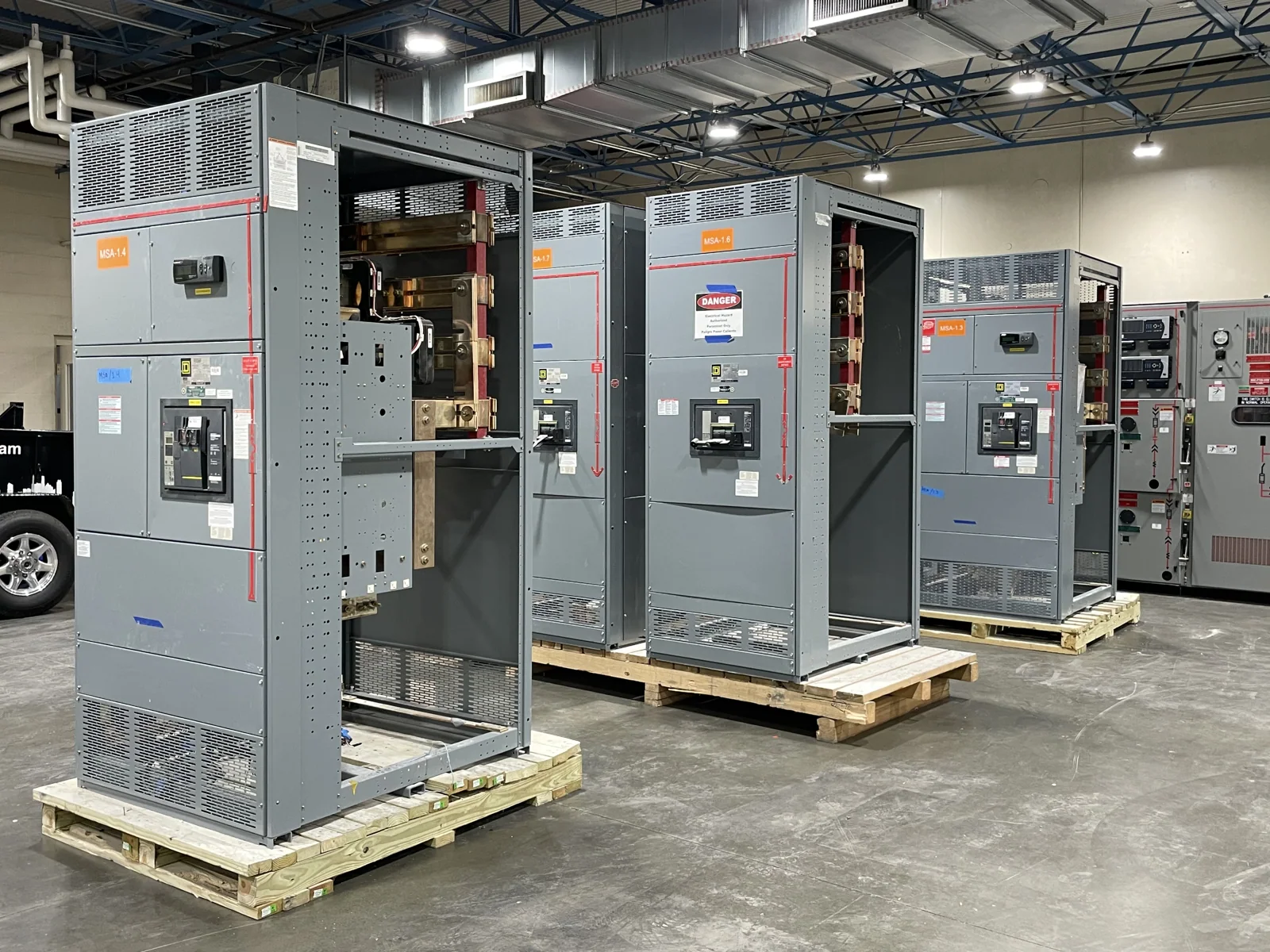
Surplus 480-volt motor control centers can represent a recovery opportunity when a facility is modernized, consolidated, or taken out of service. The useful starting point is a clean record of what the lineup actually contains. We buy motor control centers from settings including decommissioned data centers and shut-down power plants, and we consider equipment across voltage classes. For this Ohio route, documented 480-volt information, bucket count, ownership, and release conditions matter more than a description such as “old MCC.”
Identify the lineup from complete records
Copy the complete existing voltage marking exactly as shown on the assembly nameplate or available record. Include phase information, frequency, current, short-circuit information, or multiple voltage values only when documented. A single “480” does not establish every operating characteristic or suitability. If a transformer feeds the motor control center, separate its primary marking from its secondary marking; do not combine those values or infer a relationship from appearance.
Record the manufacturer name, lineup designation, section identifiers, approximate section count, and visible date or serial information. Safe exterior photographs of sections, labels, doors, and stored components can help, as can one-line drawings, schedules, purchase records, and decommissioning lists. Photos should not require opening compartments. Unknown information is preferable to an assumption.
Count buckets, controls, and the real sale boundary
A 480-volt MCC is evaluated as an assembly and as identifiable sections and starter buckets. List each vertical section, then count the buckets visibly installed. Separately identify loose or stored buckets, variable-frequency drives, overload units, control transformers, disconnects, and other documented controls. Note whether a bucket is labeled for a motor, pump, fan, process load, or another duty, but do not claim compatibility merely because labels look similar.
Shared control circuits deserve special attention. A bucket schedule may show common interlocks, remote signals, or control power serving more than one section. Mark those relationships as documented, unclear, or unknown. Also disclose reserved spaces, empty compartments, removed buckets, and missing units. Included and missing bucket counts can materially change how a buyer defines the lot.
Hypothetical inventory example
Hypothetical example: a facility record describes a 480-volt, three-phase lineup with four vertical sections, but the exterior view shows only three installed starter buckets and two empty spaces. A shelf holds two tagged buckets and one untagged control assembly. A useful inventory would state four sections; visible labels; tagged buckets and documented associations, if any; the untagged assembly with association unknown; empty spaces; complete voltage wording; and shared control circuits noted on drawings. It would not call the untagged item a matching spare or promise reuse.
Describe condition without testing
Condition reporting should rely on records and safe exterior observation. Mention missing doors, cracked windows, bent hardware, corrosion, water marks, contamination, removed labels, damaged cable-entry areas, or prolonged outdoor storage when visible. State whether buckets are installed, palletized, boxed, or loose, and whether packaging protects them. If interior condition, insulation condition, or operating history is unknown, say so plainly.
The seller does not need to test, energize, operate, open, dismantle, or touch the equipment. A qualified, authorized team must establish safe conditions and handle disconnection. No evaluation should be based on a seller attempting to prove that a starter, drive, interlock, or breaker functions.
What can affect an offer
Valuation may reflect complete and legible documentation, identifiable sections, included buckets, traceable spare components, physical condition, storage protection, and the likelihood that the lot can be released as described. It can also reflect missing units, uncertain associations, mixed equipment, damaged enclosures, environmental concerns, restricted access, and the cost or complexity of coordinating removal. The 480-volt designation alone does not establish value, construction, operating state, or future suitability. An offer is based on the documented lot and agreed release conditions, not on an assumed application.
Ownership, access, and coordinated release
Before discussing a pickup, identify the owner, party authorized to sell, and any landlord, utility, lender, contractor, or tenant boundary affecting release. Clarify included sections and stored components, what remains, and, for a phased shutdown, the portion that must stay in service and the authorized release date. These are coordination items, not an instruction for the seller to perform removal.
Once an agreement is reached, the buyer handles crane needs, qualified disconnects, rigging, loading, freight, and hauling. The site contact can help coordinate access approvals, security procedures, loading hours, escorts, ceiling or doorway restrictions, and a safe route to the truck. That coordination does not shift removal costs or technical work to the seller. After reviewing the lot, the buyer can provide a cash offer; once the seller accepts and the sale is agreed, payment is made upfront before the agreed pickup subject to the transaction terms, and testing by the seller is not required.
Questions to include with an evaluation request
- What is the complete documented voltage marking, including phase or multiple values where shown?
- How many vertical sections and installed buckets are present, and which buckets are stored separately?
- Which units are missing, reserved, damaged, untagged, or associated with shared control circuits?
- Are transformer primary and secondary markings separately documented?
- Who owns the equipment, who can authorize release, and what equipment must remain active?
- What safe exterior photos, drawings, schedules, and storage records are available?
- What access approvals, loading restrictions, and release window should be coordinated?
Clear answers make a 480-volt MCC evaluation more precise while keeping the seller’s role safe: provide records, describe the lot honestly, and coordinate authorized access while qualified personnel handle the electrical and physical release work.