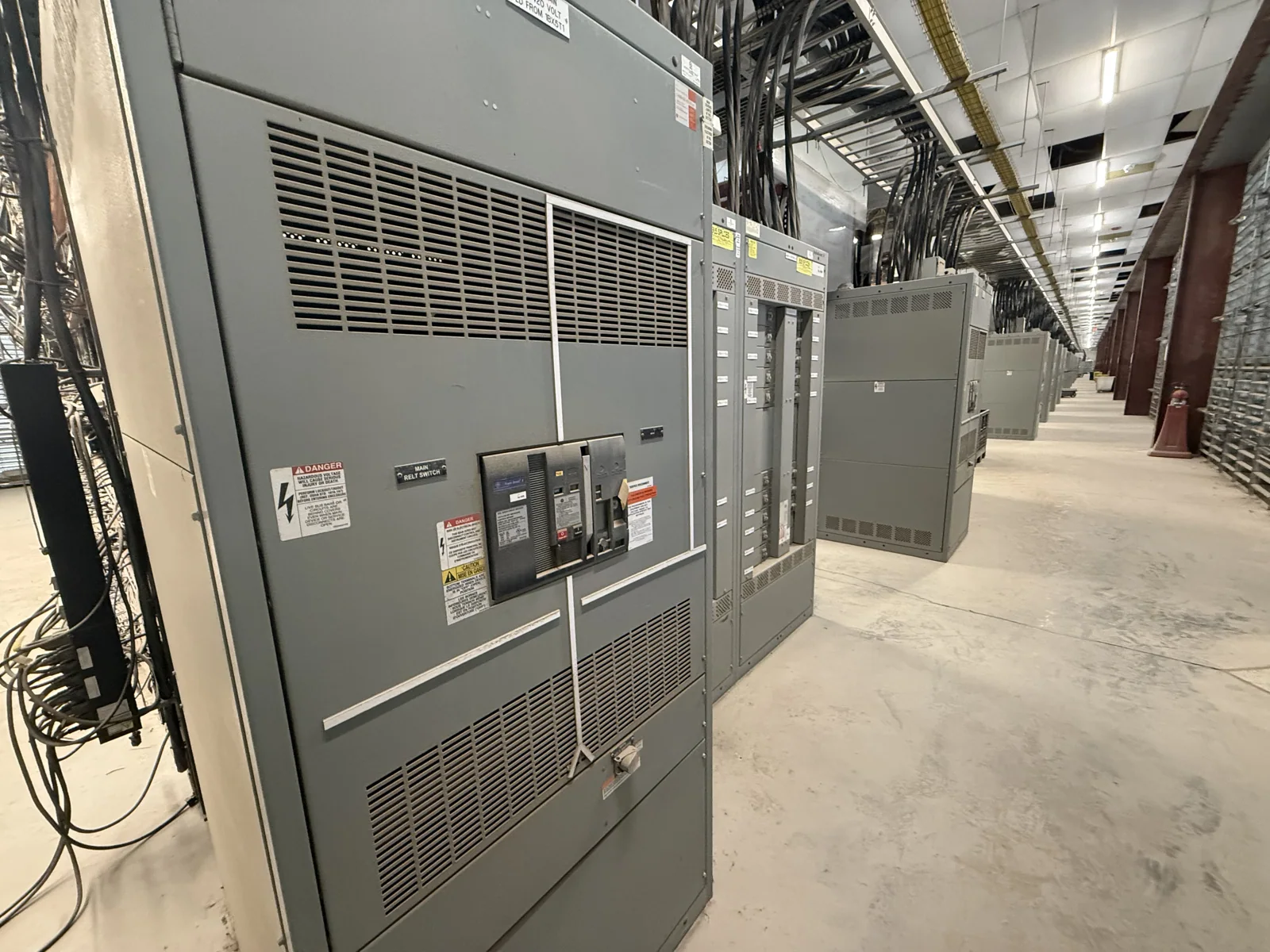
Selling a 600-amp motor control center in Ohio requires more than calling out the largest number on a lineup label. The 600-amp figure might describe the bus, incoming section, or another assembly component; it should not automatically be assigned to every starter, breaker, or bucket. Begin with documented labels, an honest lot boundary, and a distinction between installed and separately stored equipment.
Two hypothetical sale situations
Hypothetical situation one: a manufacturing facility has a vertical motor-control lineup scheduled for replacement during a process change. The visible lineup has six sections, with starter buckets installed in four and two positions marked reserved. An existing bucket schedule identifies several starters, while a drawing notes a shared control circuit. The potential sale is not simply “one 600-amp MCC.” It may include documented sections, installed buckets, visible controls, and only components the owner is authorized to release after the replacement boundary is established.
Hypothetical situation two: an industrial shutdown leaves a 600-amp-rated lineup in place and a pallet of spare starter buckets in a storage room. The spare buckets have tags, but their original positions are not fully confirmed. Installed and spare equipment should be listed separately, with each spare’s label, quantity, apparent association, and unknowns recorded. Similar appearance is not evidence that a bucket fits a section or shares its electrical characteristics.
Identify what actually carries 600 amps
Start with the exterior nameplate, lineup schedule, section labels, and available equipment records. Record the manufacturer exactly as shown, plus any visible series, assembly identifier, voltage class, current wording, section count, and location description. If documentation says 600 amps for the main bus, say “600-amp bus” rather than describing every feeder device as 600 amps. If a label is worn or unavailable, leave the value unknown instead of inferring it from enclosure size or bucket dimensions.
Count vertical sections independently from starter buckets. For each section, note installed buckets, empty compartments, reserved spaces, and controls that suggest a shared function. Include drives, soft starters, overload components, control transformers, or other accessories only when documented or clearly visible from a safe exterior view. Do not open compartments or move devices to improve the inventory.
Keep current, interrupting, and trip data separate
Continuous current, interrupting rating, and trip settings answer different questions. Continuous current concerns what a component or assembly is identified to carry. An interrupting rating concerns the fault current a protective device is identified to interrupt. A trip setting is a protection adjustment, not a substitute for either rating. A 600-amp bus therefore does not prove that each bucket has a 600-amp continuous rating, matching interrupting rating, or particular trip setting. List each value beside the component and source that support it.
Also flag shared control circuits. Control power, interlocks, common terminals, or remote-control wiring can affect completeness. Existing schedules may identify these relationships even when the exterior does not. If records do not resolve a circuit’s purpose or ownership, identify it as unknown rather than promising reconfiguration.
Condition, completeness, and an example inventory
A documented example might read: one six-section lineup identified by a manufacturer label; a 600-amp assembly or bus rating, with the exact rated component stated separately; four installed starter buckets with legible labels; two empty or reserved positions; three loose spare buckets in a labeled storage area; one control-power section; and shared control wiring noted on the schedule. This example is hypothetical. Any unverified voltage, interrupting value, trip setting, bucket compatibility, or original position remains unknown.
Describe condition without testing. Note exterior corrosion, dents, missing covers, cracked viewing windows, water staining, storage exposure, unreadable labels, loose packaging, or schedule-listed components not visibly present. Mention whether doors, barriers, bucket handles, and nameplates appear present from outside, without concluding anything about internal operation. Completeness depends on matching sections to schedules, retaining associated covers and hardware, and separating included spares from excluded material.
Factors in a potential offer
A potential offer may reflect the documented manufacturer and series, identified voltage class, actual component carrying the 600-amp rating, section and bucket counts, known accessories, record quality, condition, and whether installed and spare equipment form a coherent lot. Ownership and release authority matter as much as quantity. Equipment belonging to a landlord, utility, lender, contractor, or another department should not be represented as available until the authorized owner confirms the boundary.
Timing, staging, and access also matter. Identify whether the lineup is in an operating area, decommissioned data center, or shut-down power plant, without assuming an Ohio address. Note doorway constraints, floor or dock conditions, loading hours, security approvals, and escort needs. Access approvals are coordination items; they do not transfer removal costs to the seller.
Release and freight questions
- How many sections and installed starter buckets are included?
- Which spare buckets are separate, and what records associate them with a section?
- Are shared control circuits, reserved positions, drives, or controls shown on schedules?
- Who owns the equipment and who can approve release?
Which component or assembly bears the 600-amp rating?
Provide existing schedules, nameplate information, ownership records, and safe exterior photos when available. Sellers do not need to operate, test, open, dismantle, or touch energized equipment. Qualified, authorized personnel establish safe conditions and handle isolation and removal. After agreement, the buyer handles qualified disconnects, crane coordination where needed, rigging, loading, freight, and hauling; the seller coordinates authorized access and release information. Payment is made upfront after agreement under the buyer’s process, without requiring seller testing.