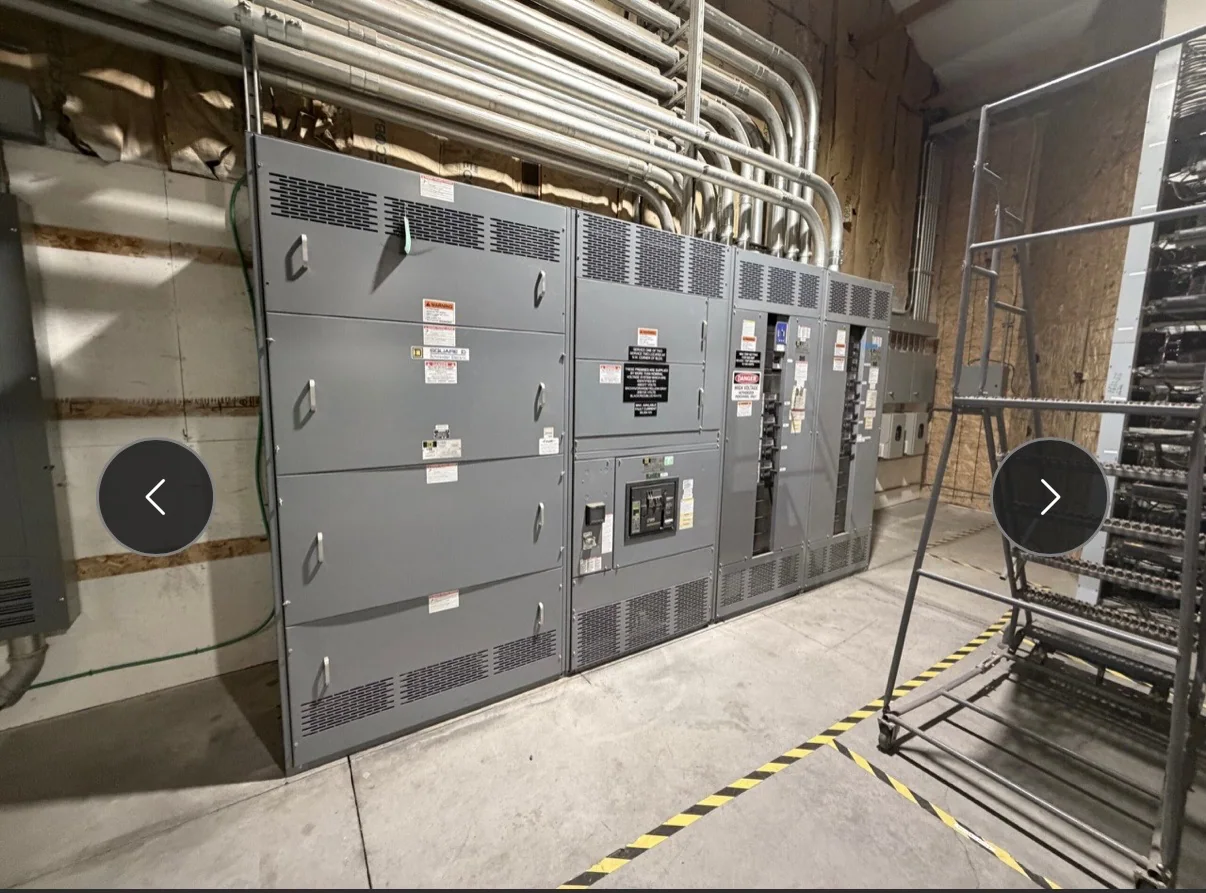
Selling a metal-clad switchgear lineup for removal in Ohio requires more than a section count. This guide is for owners, contractors, industrial operators, and facility representatives who may have a large lineup available after a shutdown, replacement, or property transition. Cash payment is made upfront after agreement; the seller is not asked to test the equipment. The buyer coordinates qualified disconnects, rigging, loading, freight, and hauling, while the seller helps coordinate authorized access and release approvals.
Identification starts with records, not appearance
Metal-clad construction should be supported by existing drawings, schedules, nameplate information, or prior equipment documentation. Appearance alone does not establish construction, voltage class, interrupting capability, manufacturer, or breaker fit. Please provide the wording that is already documented for voltage, current, frequency, short-circuit or interrupting information, lineup designation, section count, and installed protective devices. Do not infer missing values from nearby equipment.
For an installed lineup, identify the main, incoming, bus-tie, feeder, metering, and spare sections where those functions are documented. Record visible section labels and removable-device labels separately. A breaker stored beside a lineup may belong to it, another assembly, or an unknown source; keep that distinction explicit. Drawings can show whether a section is included, retained, or outside the sale boundary.
A practical large-lineup inventory
A useful inventory pairs each section with its label, approximate dimensions, documented weight, device position, and release status. For example, a hypothetical release might list eight connected sections, one bus-tie section, two documented spare breakers, and a cabinet of loose control components. That example does not establish an actual Ohio site, brand, rating, or purchase decision. It shows the level of separation that prevents a complete lineup from being confused with a mixed lot.
- Lineup identity: manufacturer as documented, assembly designation, voltage and current wording, and available drawings.
- Section data: label, function, approximate width, height, depth, documented or estimated weight, and whether it is installed or stored.
- Devices and accessories: breaker labels, relays, fuses, shutters, barriers, grounding equipment, covers, hardware, and known loose parts.
- Release status: included, retained, pending approval, unknown, or available in a later stage.
Dimensions and weights matter because doorways, turning radii, floor loading, elevators, ramps, and staging areas can constrain the removal plan. Existing shipping data is preferable to a guess. If weights are unknown, say so rather than treating a rough estimate as a certified value.
Completeness and condition need a careful boundary
Completeness is not simply “all sections present.” Note missing doors, covers, barriers, truck assemblies, shutters, control wiring, relays, hardware, nameplates, or separately stored breakers when they are known. State whether maintenance records, spare parts, and shipping supports are available. Incomplete accessories may still warrant review, but uncertainty affects valuation.
Describe condition from safe exterior observation and existing records only. Useful notes include storage indoors or outdoors, visible corrosion, water staining, impact, paint loss, contamination, rodent evidence, damaged louvers, missing panels, and packaging quality. Do not open compartments, operate mechanisms, touch conductors, or perform tests for an evaluation. A qualified, authorized team must establish safe conditions and handle electrical and physical work.
Offer considerations, ownership, and staged release
An evaluation can consider documented ratings, section count, identifiable devices, completeness, condition, demand for the configuration, recoverable accessories, and the cost and complexity of safe logistics. It can also consider whether the lineup is intact, records support its identity, and access is available during a workable release window. None of these factors creates an automatic purchase, fixed price, compatibility claim, or test result.
Ownership must be clear before equipment is committed. Confirm whether the seller owns the lineup, whether a landlord, lender, utility, former tenant, insurer, or demolition contractor has an interest, and who can authorize release. A hypothetical phased shutdown may make some sections available first and retained sections available later. List each stage, its boundary, target access window, and approving contact without claiming that any particular Ohio project exists.
Access coordination and removal logistics
For a large lineup, describe the route from its current location to the loading point: door and corridor dimensions, thresholds, stairs, overhead obstructions, dock or yard conditions, security rules, escort requirements, traffic restrictions, and a possible staging area. Include known floor limitations and whether a crane or other lifting arrangement may be needed. These details support coordination; they do not ask the seller to dismantle or move energized equipment.
The buyer handles crane coordination, qualified disconnects, rigging, loading, freight, and hauling. The seller’s role is to identify ownership, provide existing information, and coordinate approvals, outage permissions, escorts, and access with the responsible facility personnel. An outage window is an authorization issue, not a promise that the seller must absorb removal work. Safe release conditions must be established by qualified, authorized personnel.
Questions to answer before review
- Who owns the lineup, and who can approve its release and each stage?
- Which drawings, schedules, nameplate records, weights, and dimensions already exist?
- How many sections and removable devices are present, and which are stored separately?
- What is known about corrosion, moisture, impact, contamination, missing parts, or prior storage?
- What doorways, clearances, staging areas, outage permissions, and site access rules affect coordination?
For an initial review, send existing documents and safe exterior photographs showing labels, overall sections, visible damage, and the proposed lot boundary. Avoid photographs that require entering restricted areas or opening equipment. Clear records and honest unknowns make removal evaluation more practical while keeping safety, authority, and access in view.