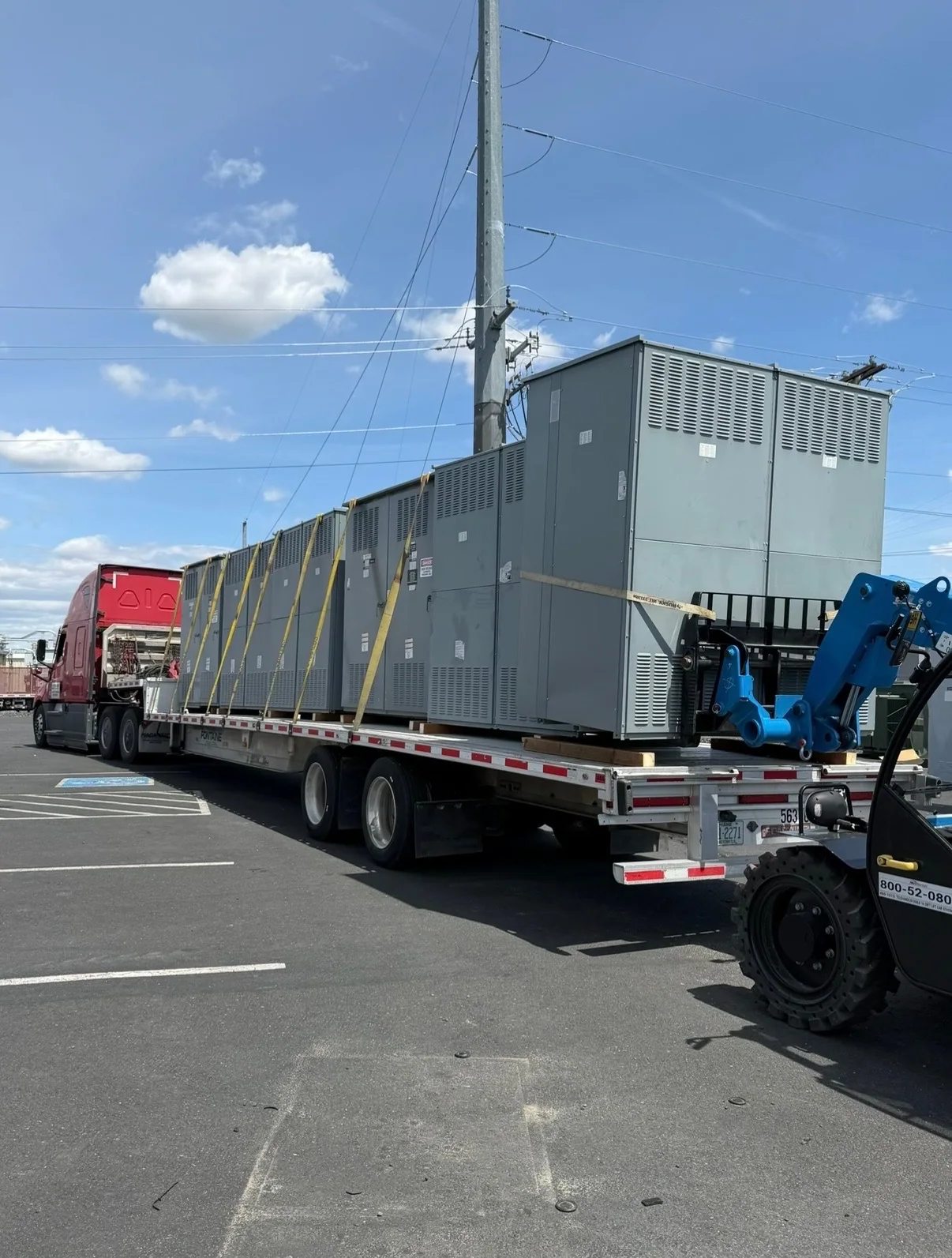
If you have surplus switchgear in Licking County, Ohio, start with a complete, documented description of what is actually available. Existing records identify Newark as the county seat, but the pickup site may be elsewhere. A county reference is not an assumed address, project, or completed transaction. The buyer evaluates records, visible identification, condition, ownership, and the release boundary.
Start with the lineup and its recorded ratings
Metal-clad construction should be supported by an existing drawing, equipment schedule, or nameplate documentation rather than inferred from a cabinet’s appearance. Share the manufacturer name, assembly designation, section count, serial information when available, and the exact voltage and current wording shown on the records. A main bus rating describes the assembly’s bus; a breaker rating describes an individual device; an interrupting rating is a separate value. None should be guessed from a similar-looking lineup, a remembered specification, or a photograph.
For a useful inventory, identify the main section and each feeder section by its visible label or drawing reference. Record breaker positions, removable breakers, relays, fuses, shutters, ground switches, control components, barriers, and stored accessories only when documentation or clear external identification supports the description. A separately stored breaker is not automatically a match for the lineup. Its voltage, continuous current, interrupting capability, connection arrangement, manufacturer, and position association must remain documented or be marked unknown.
Define the sale lot during an assumed renovation
The assigned scenario is an assumed renovation, not a claim about a particular Licking County facility. In that situation, separate the proposed sale lot from equipment that continues serving an occupied area. List the sections intended for release, the sections retained in place, and any breaker or control stored elsewhere that belongs to either boundary. If the proposed schedule is preliminary, label it preliminary. A room number, building name, owner, tenant, utility boundary, and release date are unknown unless the seller supplies them.
Useful records may include one-line diagrams, equipment schedules, maintenance records, breaker lists, and a site release plan. They help reconcile the drawing with the lineup without asking the seller to open compartments or operate anything. Safe exterior photographs can show nameplates, section labels, doors, visible damage, stored-device tags, and the access route. Do not photograph energized interiors or handle covers, devices, cables, or controls.
Completeness and condition affect valuation
A complete lot can be more intelligible than a larger but mixed collection. Note whether each lineup section has its doors, panels, barriers, hardware, lifting provisions, drawout components, and documented removable devices. Identify missing covers, bent frames, corrosion, water exposure, contamination, impact, heat marks, damaged insulation visible from the exterior, or prolonged outdoor storage. State whether packaging is present and whether loose parts are bagged and labeled. Unknown condition is preferable to an unsupported assurance.
Brand information matters when it is recorded, not when it is inferred. For example, a hypothetical inventory could describe “six documented metal-clad sections, manufacturer and model shown on the nameplate, one labeled main breaker, four labeled feeder positions, and two separately stored breakers with unconfirmed association.” That wording preserves what is known while separating the unverified items. The buyer can consider all voltage classes, but the seller should provide the actual recorded class instead of using a generic term such as high voltage.
What supports an offer
Valuation may reflect documented ratings, manufacturer and model, section count, breaker completeness, protective-device records, age, condition, storage environment, ownership authority, and the complexity of safe release. A coherent lineup with matching records may be evaluated differently from mixed sections or unidentified loose devices. Location within Licking County matters for planning, but it does not establish a price; final value depends on the specific lot and supplied facts.
Coordinate a safe release and freight plan
The seller does not need to test the equipment. A qualified and authorized team must establish safe conditions and handle disconnecting or isolating equipment as required. Never open, operate, dismantle, or touch energized switchgear. Once the sale and release terms are agreed, the buyer handles qualified disconnects, crane work, rigging, loading, freight, and hauling. Access approvals, escort rules, outage coordination, dock reservations, security procedures, and renovation sequencing are coordinated with the authorized site contact; they do not shift removal costs to the seller.
For planning, provide known doorway and route constraints, floor or loading-area restrictions, overhead clearance, staging limits, truck rules, and access windows. Do not estimate section weights or shippable dimensions unless records establish them. The buyer can plan lifting and freight after the sections, release boundary, and site conditions are understood. A pickup date remains proposed until access is authorized and the equipment is safely released.
Example inventory and seller questions
- What are the recorded manufacturer, assembly designation, voltage, continuous current, bus rating, and section count?
- Which main and feeder sections are included, and which remain serving an occupied area?
- Which removable breakers are installed, which are stored separately, and what records associate each device with a position?
- Are drawings, schedules, maintenance records, nameplate photographs, and ownership documents available?
- What damage, moisture exposure, missing hardware, contamination, or packaging limitations are known?
- Who can authorize release, establish safe conditions, approve access, and confirm the proposed renovation schedule?
After agreement, payment is made upfront, and the buyer arranges removal and transportation. A clear record of ratings, condition, lot boundaries, and release authority gives the evaluation a reliable basis without requiring the seller to test or disturb the switchgear.