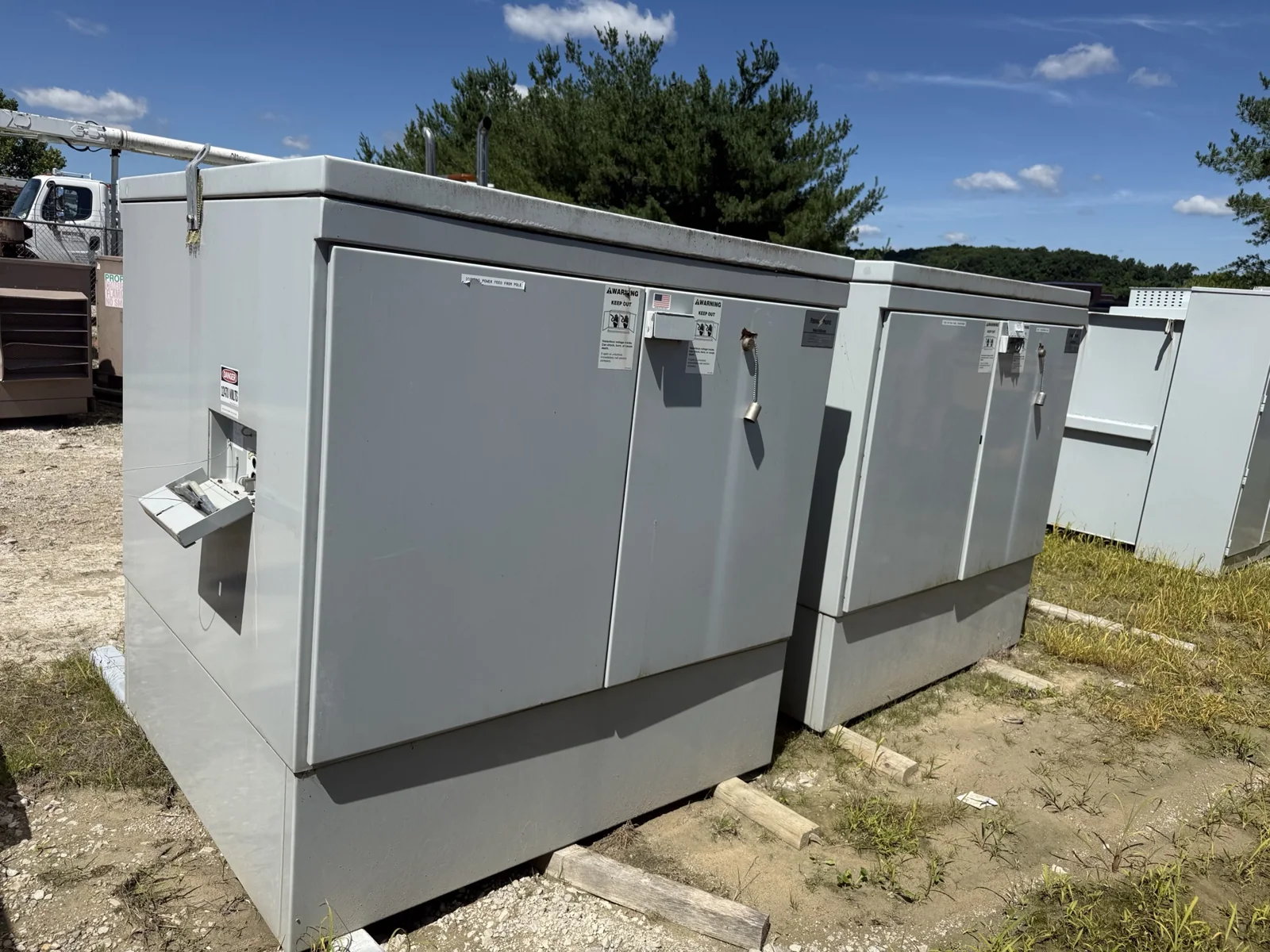
Define the replacement lot before discussing value
A medium-voltage switchgear replacement lot is more than a row of cabinets waiting for removal. It may include an installed lineup, separately stored breakers, instrument transformers, control cabinets, transition pieces, or documents explaining how sections were arranged. Start by drawing a plain boundary around the proposed sale: identify the old equipment, identify what replaces it, and state what remains in service. That boundary prevents an active feeder, a utility-owned section, or a retained spare from being counted accidentally.
For a hypothetical Ohio plant renewal, the old lineup might be released after a new lineup is accepted in stages. That is only an example, not a claim about a particular facility. The owner would need to identify customer-owned sections, utility or other-party interfaces, and release approvals still outstanding. Unknown ownership or timing should remain clearly marked as unknown.
Record ratings and identification from existing evidence
Use existing nameplate photographs, one-line diagrams, equipment schedules, purchase records, and section drawings when available. Record the manufacturer, lineup or assembly designation, section labels, documented voltage class, continuous current, interrupting or withstand information where stated, and protective devices associated with each section. Do not infer a medium-voltage rating from cabinet height, paint, bus shape, or a familiar brand name. A breaker rating is not automatically the rating of the complete assembly.
Visible labels can be useful without anyone opening or operating equipment. A safe exterior photograph may show a section identifier, device label, manufacturer plate, shipping mark, or stored-breaker tag. Note whether a device is installed, separately stored, or merely found nearby; use records to establish its association rather than assuming similar-looking devices fit. If a rating or model field cannot be read, say so. Missing data is preferable to an invented specification.
A practical inventory example
Consider this hypothetical inventory format: six labeled lineup sections; two documented incoming sections; three feeder sections; one transition or auxiliary section; four removable breakers tagged to specific positions; one separately stored control cabinet; and drawings with some revisions identified. Count each section label and documented rating, then list loose devices separately. Identify sections that remain active until a later release milestone.
- Installed sections: label, manufacturer, documented voltage and current, and visible enclosure damage.
- Stored devices: tag or serial information, stated rating, associated section if documented, and whether the relationship is unknown.
- Accessories and records: relays, control cabinets, shutters, hardware, drawings, manuals, and known missing items.
- Release status: available now, available after an outage or approval, or not included.
This structure separates a complete lineup from a collection of cabinets and loose parts. It also supports evaluation of section separation, packing needs, and lot incompleteness without promising compatibility with another system.
Completeness and condition affect the evaluation
Describe condition from records and safe exterior observations only. Useful notes include indoor or outdoor storage, weather exposure, corrosion, dents, missing covers, damaged paint, signs of moisture, removed nameplates, altered wiring visible from outside, and whether doors or panels are present. Report known contamination or environmental concerns instead of minimizing them. Do not ask the seller to energize, test, open, dismantle, or inspect inside energized equipment. A seller does not need to perform testing for an evaluation.
Completeness is often more important than a section count. A lineup with documented protective devices, matching labels, intact shipping supports, and records may be easier to evaluate than a larger lot with unidentified breakers. A partial release can still be considered when missing sections, retained devices, and later release dates are plainly listed. Valuation can reflect documented ratings, manufacturer and age information, quantity, condition, record quality, handling complexity, and uncertainty about ownership or completeness; no fixed price follows from one field.
Ownership, access, and staged release
Confirm who has authority to sell the equipment and who controls the building, electrical room, yard, or storage area. Utility interfaces and customer-owned boundaries deserve particular care. A replacement project may have milestones for release approval, outage and qualified disconnect, section separation, rigging access, and final pickup. These are coordination items, not a transfer of removal costs to the seller.
Once an agreement is reached, the buyer handles the crane, qualified disconnects, rigging, loading, freight, and hauling. The seller provides accurate records, authorized contacts, and access coordination. Report door dimensions, route restrictions, floor or dock limitations, overhead obstructions, security procedures, escort requirements, and loading windows. Do not move equipment to improve access unless separately authorized and performed by qualified personnel.
Questions to include with a lot submission
- Which sections, devices, cabinets, accessories, and records are included, and what explicitly stays?
- Who owns each portion, including any utility or landlord interface?
- What voltage, current, protective-device, manufacturer, and section information is documented?
- Which parts are installed, separately stored, missing, damaged, or of unknown association?
- What approvals, outages, release milestones, and access contacts govern each stage?
- Can you provide existing documents and safe exterior photographs without touching the equipment?
After review, the buyer can discuss whether the lot fits its purchasing criteria and what coordination is needed. Any cash offer and payment terms are established only after agreement on equipment and scope; do not assume an automatic purchase, test result, compatibility conclusion, or fixed valuation before review.