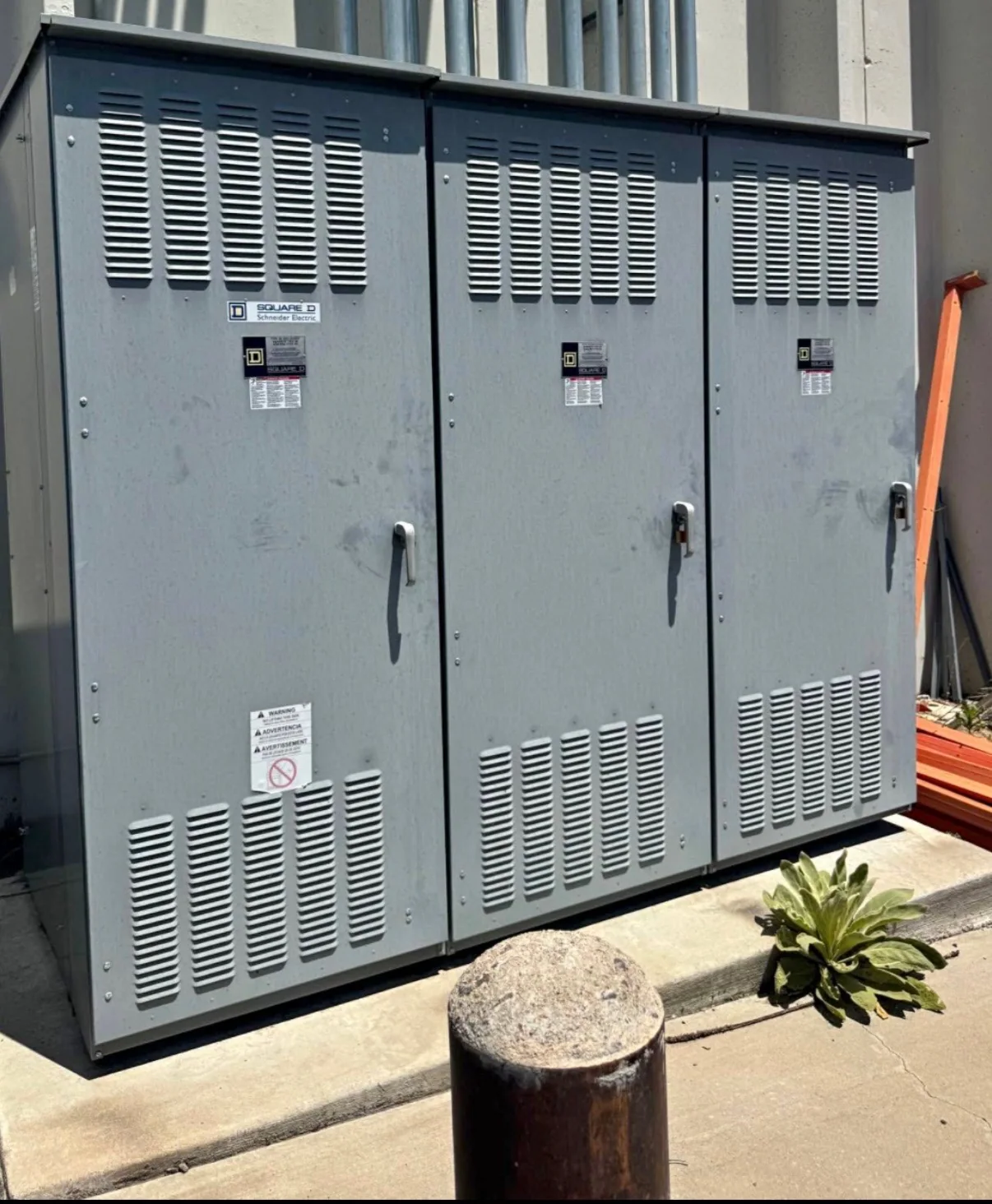
When a plant shutdown leaves medium-voltage gear behind
Imagine a hypothetical plant shutdown in Summit County, Ohio. Production has ended, a replacement power arrangement is planned, and an electrical room contains a multi-section medium-voltage switchgear lineup. Several removable breakers are in labeled storage positions, while other breakers are loose on pallets. At first glance, this looks like one sale lot. The practical question is: which breaker belongs to which lineup section, and which equipment is actually released?
A buyer evaluates equipment that can be identified, transferred and safely released, not merely the apparent size of a room. Existing records can turn a shutdown inventory into a workable list. The seller is not asked to operate, open, dismantle or test energized equipment.
Identify the documented assembly
Start with available nameplate or schedule wording for voltage and current, manufacturer, section count, lineup designation, protective-device descriptions and drawings. Medium-voltage appearance alone does not establish a voltage class, interrupting capability or future suitability. Record exact documented language rather than guessing a specification.
List each lineup section separately. Note the incoming, feeder, tie or auxiliary sections only when records identify them. A breaker’s ratings are not automatically the complete assembly’s ratings. A stored device should not be assigned to a lineup because its enclosure looks similar. Manufacturer and series information, cubicle position, drawing references and matching tags are stronger evidence.
Safe exterior photographs may show overall labels, already-exposed nameplates, storage tags, pallets and visible enclosure condition. Do not remove covers or enter restricted areas for a better image.
Reconcile breakers and lot completeness
For the hypothetical shutdown, create two linked lists: installed or formerly installed devices by lineup position, and separately stored devices by tag or documented association. Include section identifier, breaker identifier, quantity, documented manufacturer, and whether each device is mounted, racked out, crated or loose. If a breaker has no reliable association, mark it unknown rather than counting it as a matched spare.
- Count switchgear sections and protective devices independently.
- Identify shutters, covers, controls and visible accessories when records or exterior views support inclusion.
- Separate equipment released for removal from gear retained for another service, even in the same room.
- Flag missing, damaged, untagged or undocumented parts instead of treating the lot as complete.
Ownership matters as much as quantity. A plant owner, landlord, lender, utility or another party may control different portions. Identify the authorized decision-maker and exact lot boundary. Utility-owned or customer-retained equipment remains outside the offer unless release is documented.
Condition information without unsafe testing
The review can use records and safe exterior observations; the seller does not need to test equipment. Report storage conditions, water exposure, corrosion, impact marks, missing doors or hardware, damaged packaging and known contamination. State whether the lineup was installed in service, kept as a spare, or stored after removal. A clean enclosure does not prove internal condition, and a dusty exterior does not prove a device is unusable.
Do not open compartments, operate mechanisms or touch conductors. A qualified, authorized team must establish safe conditions and handle any required disconnection. Unknown operating history, incomplete records and uncertain breaker-to-section matches are useful valuation facts when stated plainly.
What shapes a cash offer
Value reflects more than section count. Documented voltage and current, manufacturer, protective-device population, lineup completeness, identifiable breaker associations, service history when records support it, and physical condition all influence review. The buyer considers all voltage classes, but a specific documented rating is essential.
Logistics also affect practical value: section dimensions and weights, mounted versus separately packed devices, storage setting, and the route from room to loading point. These are planning inputs, not a request for the seller to move anything. After agreement, payment is made upfront as agreed; the buyer handles crane coordination, qualified disconnects, rigging, loading, freight and hauling. Access approvals, escorts, outage coordination and site rules are coordinated with the owner and facility rather than shifted to the seller.
Access planning and seller questions
Before release, share the pickup address or site description, authorized contact, access restrictions, loading hours, floor or doorway constraints, overhead clearances and known security or permit process. These facts support a safe removal plan without promising that a route, crane position or shipping method will work before review.
- Which sections, breakers and protective devices are included, and which must remain?
- What documents show voltage, current, manufacturer, section positions and breaker associations?
- Are loose breakers tagged to a lineup, or are those matches unknown?
- Who owns the equipment and who can authorize release and site access?
- What visible damage, storage exposure, contamination or missing parts are known?
- What access rules, coordination windows and loading constraints apply?
An inventory with those answers, existing documentation and safe exterior photos gives the buyer a clearer evaluation basis. In this hypothetical Akron shutdown, separating installed equipment from stored devices and preserving each documented association is more reliable than an unsupported count.