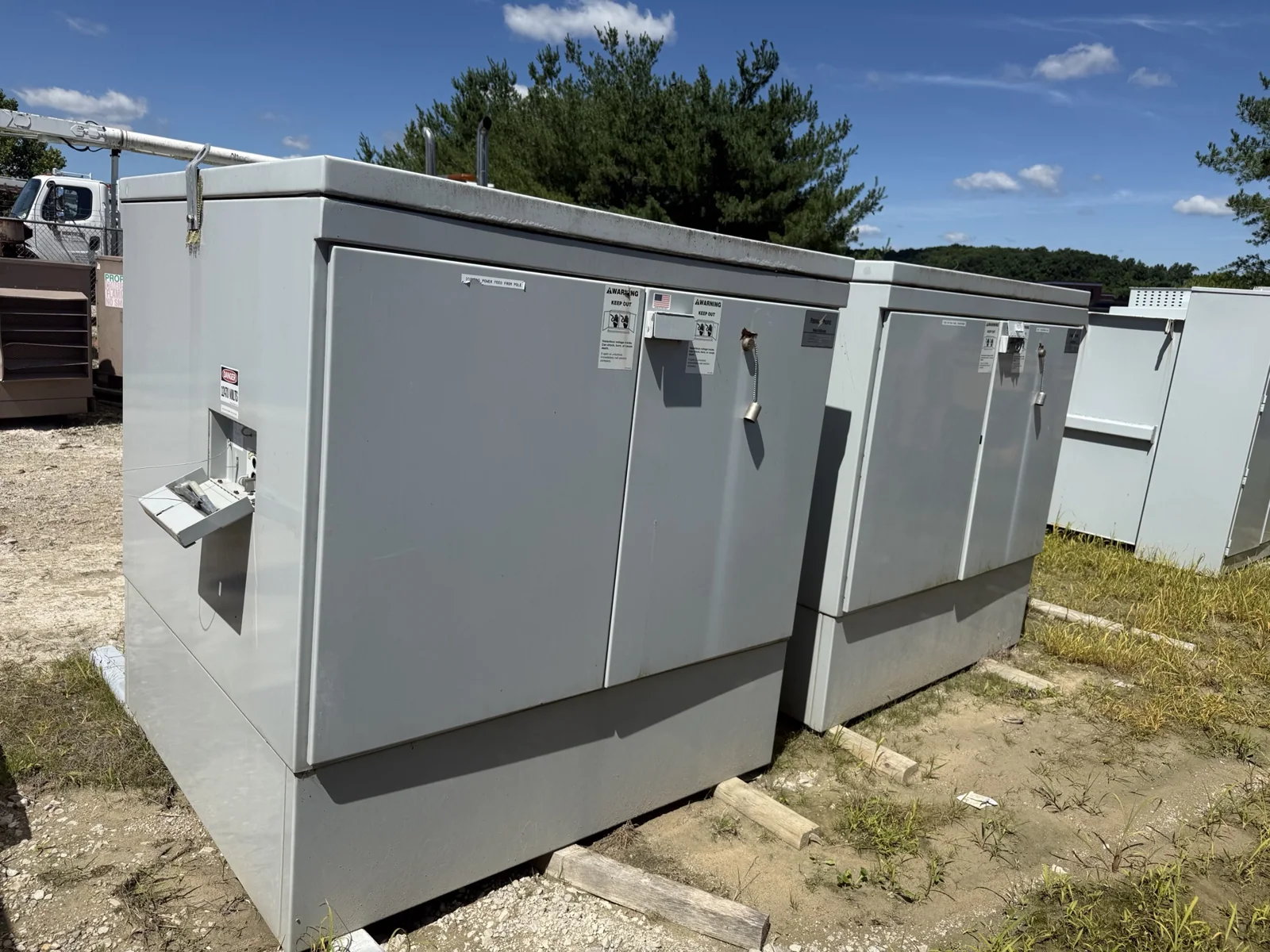
Selling surplus medium-voltage switchgear in Lucas County starts with a decision sequence, not a guess based on cabinet size or a familiar label. A buyer needs to establish what the equipment is, who owns it, what belongs in the lot, and when it can be released. That process can apply to equipment from an industrial facility, a decommissioned data center, or a shut-down power plant. Unknown details should be identified as unknown rather than filled in by assumption.
1. Identify the assembly from records and exterior evidence
Begin with existing one-line diagrams, equipment schedules, purchase records, nameplate transcriptions, and decommissioning inventories. Useful facts include documented system voltage, continuous current, manufacturer, lineup or section count, bus arrangement, and the protective devices assigned to each section. Record relay or fuse descriptions when already documented, along with breaker or switch identifiers. Do not infer a voltage class from appearance, paint, enclosure height, or building type.
Safe exterior photographs can supplement records: show the overall lineup, section labels, nameplates, device fronts, shipping tags, and stored equipment labels without opening compartments or touching anything. Documented ratings prevent an assembly rating from being confused with an individual device rating.
2. Define ownership and the release boundary
Medium-voltage equipment may sit at a boundary between utility service and customer-owned distribution. For a hypothetical service upgrade, an old customer-owned lineup might be scheduled for removal while utility-owned incoming equipment remains. “Adjacent” does not mean “included.” Ask the owner, utility representative, landlord, or authorized facility contact to identify the ownership boundary, sections approved for release, and devices reserved for continuing service.
The seller should confirm it can transfer the equipment and that any lender, landlord, successor operator, environmental coordinator, or utility approval has been addressed. If ownership, utility responsibility, or retained equipment is unresolved, mark that item pending rather than treating it as available.
3. Reconcile the lot and its completeness
Count installed sections separately from stored devices. List each lineup section, its visible designation, and documented function, then create a second list for loose breakers, switches, fuses, relays, control cabinets, mechanism parts, barriers, and shipping crates. A stored protective device is useful only when its identity and association are reasonably supported; a loose unit with no traceable section or rating should be called unverified.
For example, a hypothetical shutdown plant inventory could contain six documented lineup sections, two removable breakers on pallets, one relay cabinet, and several unconfirmed control components. State which breakers belong to which sections, whether the relay cabinet is included, and which components have no confirmed match. “Six sections plus spares” is less useful than a section-by-section schedule with an explicit unknown column.
4. Describe condition without testing
Condition reporting can rely on records and safe exterior observation. Note whether equipment is installed or stored, indoors or outdoors, clean or dusty, packaged or exposed, and whether labels are legible. Report visible corrosion, water staining, impact damage, missing doors, altered wiring, incomplete hardware, or documented contamination, fire, flood, or environmental history.
The seller does not need to test, energize, operate, open, dismantle, or touch the equipment. A qualified, authorized team must establish safe conditions and handle any required disconnection. If internal condition, insulation integrity, mechanism operation, or relay functionality is unknown, say so plainly rather than claiming the gear is operational.
5. Understand what shapes the offer
Valuation reflects more than a manufacturer name. Documented voltage and current, recognized protective devices, complete section identity, matching stored components, condition, age, storage quality, and demand for the configuration all matter. A complete lineup with traceable devices may evaluate differently from a partial assembly with unidentified breakers. Freight dimensions, weight, packaging needs, access complexity, and multiple pickup locations can also affect the offer.
Do not present a price based on an assumed Toledo project, local customer, model compatibility, or unverified brand endorsement. The buyer makes an offer after reviewing the available facts.
6. Coordinate access, removal, and freight
After agreement, release planning should identify the authorized site contact, approval sequence, access hours, security or escort rules, loading restrictions, and any outage or exclusion-zone coordination required by the facility. These are coordination items, not instructions for the seller to remove equipment. The buyer handles qualified disconnects, crane services, rigging, loading, freight, and hauling. The seller should not dismantle the lineup or arrange heavy removal work.
Share practical information such as door and route dimensions, floor-level changes, dock limitations, overhead obstructions, and whether sections are accessible from the loading area. Final access remains subject to site approval and qualified personnel.
7. Send a decision-ready inventory
A useful submission can include the general Lucas County site description, ownership contact, release authority, documented voltage and current, manufacturer, section list, protective-device list, storage location, visible condition notes, and exterior photographs. Add the expected release date only if authorized, and separate installed gear from stored inventory. Include these questions:
- Which sections are customer-owned and approved for sale?
- Which protective devices are installed, and which are stored separately?
- Are drawings, schedules, nameplate records, or shipping documents available?
- What condition concerns or environmental history are documented?
- Who can coordinate access, approvals, and the safe release window?
After agreement, payment is made upfront, and the buyer coordinates the qualified removal and hauling plan. Release only the documented lot, leave retained or utility-owned equipment undisturbed, and let authorized professionals establish safe conditions. Clear records turn an uncertain asset into an evaluable medium-voltage switchgear opportunity.