Sell MCC Starter Bucket Inventory in Ohio
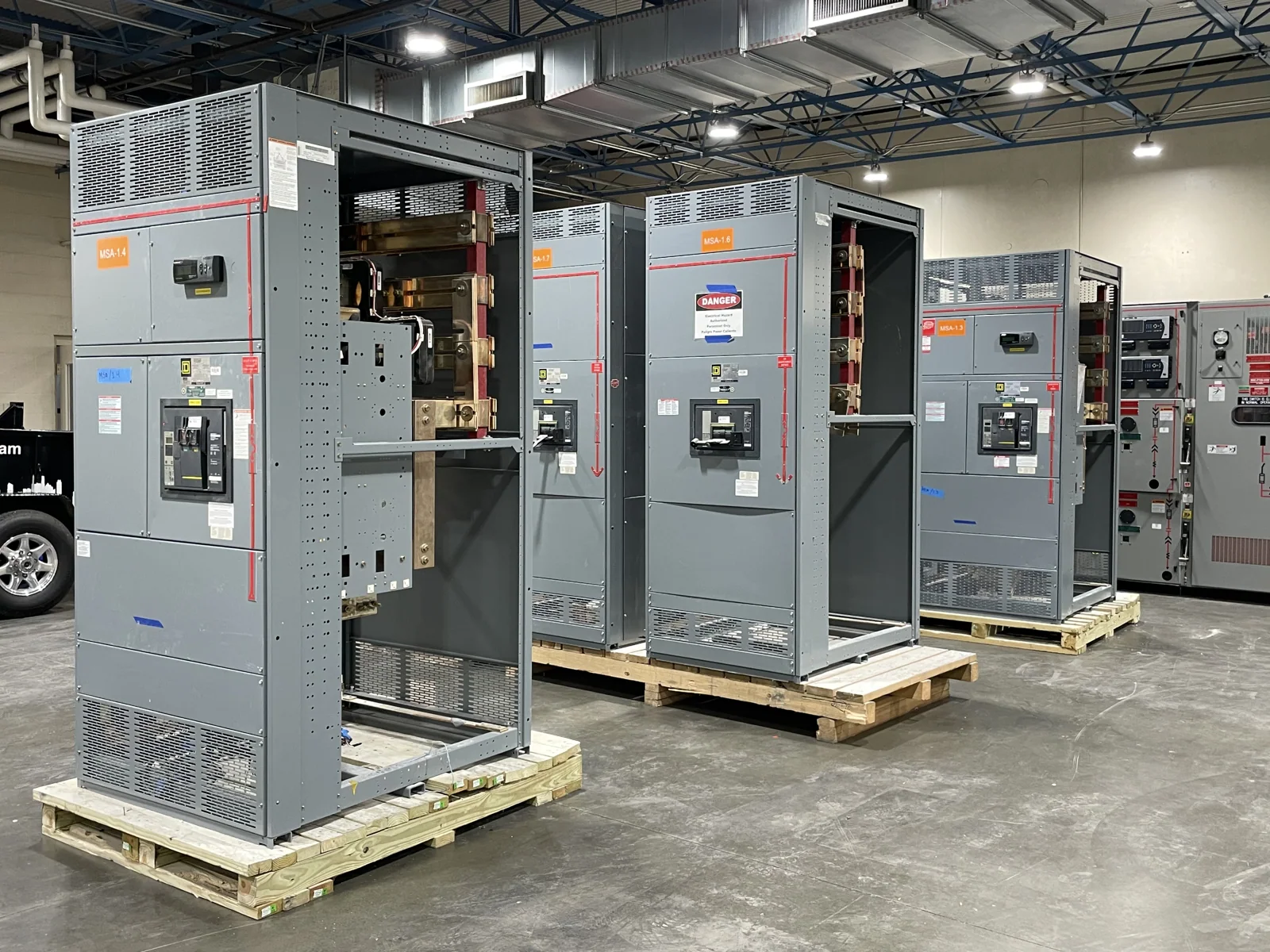
Motor control center inventory is easy to overstate when a spreadsheet, empty spaces and loose parts are treated as one lot. A useful evaluation separates what is documented, visibly present and unknown. We buy electrical equipment from Ohio sellers, including material released from decommissioned data centers and shut-down power plants. We consider all voltage classes. After reviewing the lot, the buyer can make a cash offer; once the seller accepts and the sale is agreed, payment is made upfront before the agreed pickup, and the seller does not need to test the equipment.
Start with the bucket schedule and safe identification
An existing MCC bucket schedule is the best starting point because it may connect each position to a motor designation, starter size, overload information, drive, control package or spare designation. Send it as it exists rather than rewriting uncertain entries, then compare it with safely identifiable stored units. A tag, cabinet label or exterior nameplate may establish manufacturer, section reference, voltage, current, starter size or catalog identifier, but appearance alone cannot prove a rating or compatibility.
Starter buckets, variable-frequency drives and reduced-voltage starters should be listed separately unless records clearly identify their relationship. Controls may include a contactor, overload assembly, control transformer or interface module, but an empty enclosure does not prove a complete package. Note whether a bucket is installed, stored separately, reserved or missing. Do not open, operate, dismantle or touch energized equipment. Qualified, authorized personnel must establish safe conditions and perform electrical or physical work.
A practical inventory example
Hypothetical example: an owner has a six-section MCC and a cabinet of loose buckets after a process change. The records list two documented starter buckets for each of three sections, one spare bucket, and two drive assemblies. A careful inventory would identify the six visible section positions, tag the loose spare separately, record the two drives as drives rather than starters, and flag one schedule entry that has no matching physical unit. It would also state whether control components are present, whether covers and hardware are included, and which associations are confirmed versus unknown. This is an illustration only, not a claim about an Ohio facility.
Completeness and condition affect the evaluation
Completeness is more than a bucket count. Describe vertical sections, available positions, installed and loose buckets, spare doors, trim, bus plugs, control components and documented accessories. Identify missing buckets, blank spaces, removed devices and parts that may belong to another lineup. If inherited tags use different numbering, preserve those distinctions instead of forcing a match.
Condition notes should be limited to what can be observed safely from the exterior or supported by records. Note indoor or outdoor storage, dust, moisture, corrosion, impact marks, damaged doors, missing covers, visible cut wiring, packaging and whether the unit has been moved. A clean exterior does not establish operating condition, and the seller is not asked for test results. Unknown condition should remain labeled unknown.
What shapes an offer
Valuation can reflect documented voltage and current, manufacturer and series, starter size, quantity, completeness, condition, storage history and confidence in each bucket-to-section match. Drives and controls are assessed on their own documentation. A coherent lot with schedules, legible tags and separated spares may be easier to value than a larger mixed pile; missing covers, uncertain ownership or an incomplete lineup can change the assessment. No price, purchase decision or compatibility conclusion should be assumed before review.
Ownership, access and staged release
Confirm that the seller has authority to release the MCC, buckets and loose components. This matters when a facility is leased, when equipment is shared between tenants, or when a shutdown leaves building-owner assets beside process equipment. Mark the exact sale boundary: section numbers, bucket tags, spare cabinets and excluded controls. If production or another building system remains active, describe which sections are retained and which are proposed for release.
Staged release is workable when each stage has a written list, a planned date or window, an authorized site contact and a clear distinction between equipment released now and equipment retained until a later shutdown. Those details are coordination points, not a request for the seller to remove anything. After agreement, the buyer handles crane needs where applicable, qualified disconnects, rigging, loading, freight and hauling. The seller should coordinate site approvals, security, escorts, outage planning and access hours with the people who control the property.
Questions to answer before review
- What sections, bucket positions and loose units are included, and which are explicitly excluded?
- Is there an original bucket schedule, one-line drawing, maintenance list, purchase record or decommissioning document?
- Which voltage, current, starter-size, drive or control details are documented, and which are unknown?
- Are the units installed, stored indoors, packaged, exposed to moisture, or affected by visible damage?
- Who owns the equipment and who can authorize release, access, disconnection and loading coordination?
- Will the release occur in one stage or several, and what equipment must remain in service until each stage?
For an initial review, provide the schedule and other existing documents plus safe exterior photographs of labels, section fronts, stored units and packaging. Do not create new hazards to obtain a photo. Once the lot, authority and release conditions are understood, the buyer can discuss an evaluation and, if mutually agreed, provide upfront payment while coordinating the qualified work and transportation needed to move the equipment safely.