Start with the changeout boundary
Imagine a hypothetical Ohio processing facility replacing one motor control center lineup during a process changeout. The new lineup is planned, but not every old section is immediately free: production loads may remain on selected starters, and control wiring may still serve instruments or interlocks. First draw a boundary around what is actually released. Mark sections scheduled for removal, sections that remain in service, and buckets already stored elsewhere. This prevents a seller from describing an entire lineup when only a staged portion is available.
This is an evaluation, not a guaranteed purchase. The business considers Ohio MCC lineups across all voltage classes. Existing records and safe exterior photographs are enough to begin; the seller does not need to test equipment. Qualified, authorized personnel must establish safe conditions and handle electrical work.
Identify the lineup without guessing
Use accessible nameplates, lineup labels, bucket tags, schedules and drawings. Record the manufacturer exactly as shown, lineup or section identifiers, documented voltage and current information, section count, starter or feeder designations, and visible drive or control equipment. A vertical section is not the same thing as a starter bucket, and a bucket label is not proof that it fits another section. Preserve the wording of records rather than turning an unknown value into an estimate.
For each changeout section, note whether it is a main, feeder, combination starter, control section or another documented function. Flag shared control circuits, common incoming arrangements and reserved positions. If a label is faded or a drawing unavailable, call it unknown. Do not open compartments, operate handles or touch energized equipment to improve an inventory.
Practical inventory example
A hypothetical inventory might read: Lineup A, five documented vertical sections, with two released on the first stage date; three remain tied to production loads. Four removable buckets appear in the schedule, while two additional buckets sit in a labeled cabinet whose association is not confirmed. One section has a documented control enclosure, but its contents and wiring status are not inferred from the exterior. List the main or incoming section, each feeder or starter section, loose buckets, drives, control parts, doors, covers and storage cabinets separately.
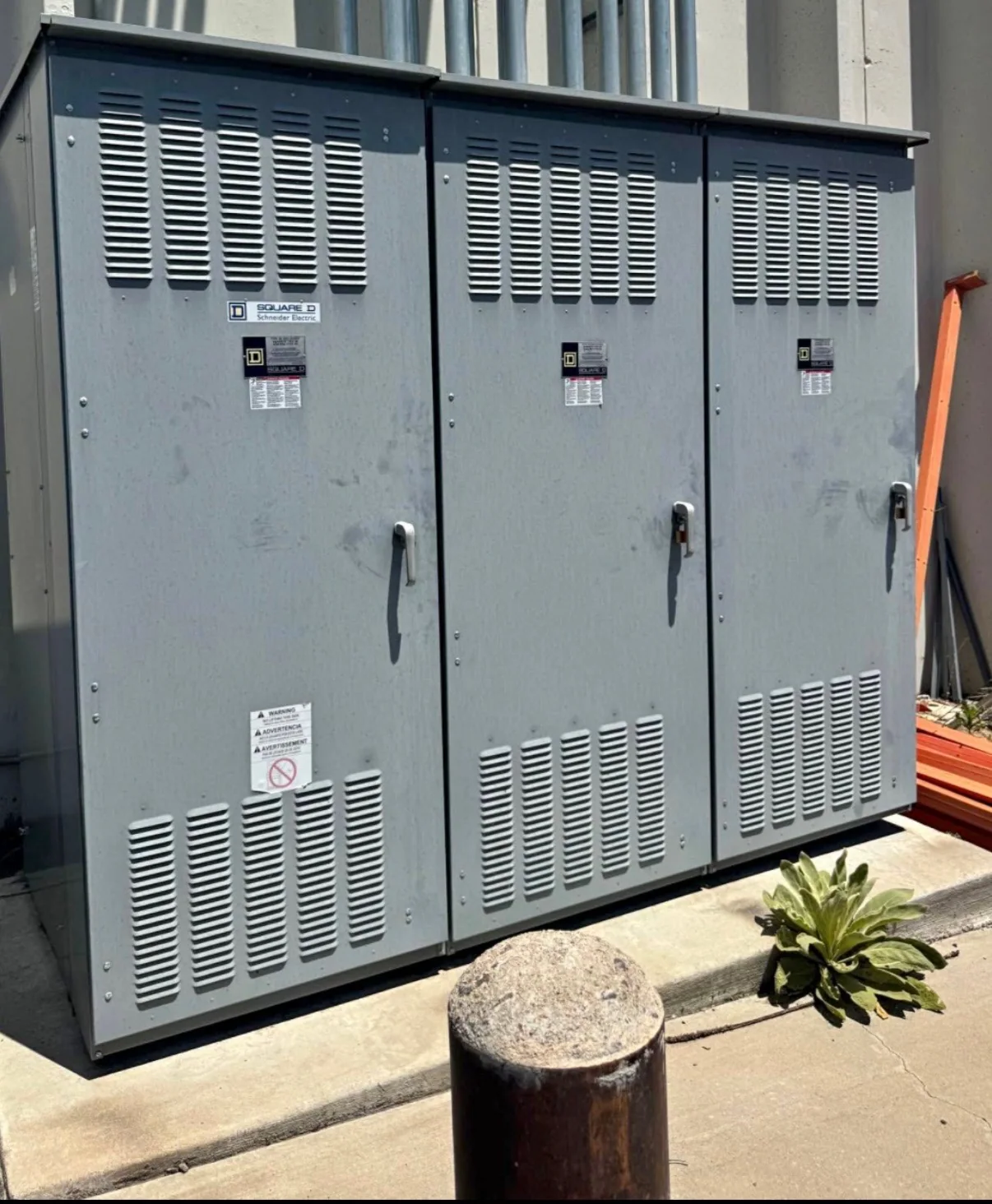
That is more useful than reporting only “one MCC, five sections.” Compare the physical lineup with records using safe exterior photographs, with labels readable when possible. A photograph cannot establish internal condition, bucket compatibility or an electrical test result, so those matters remain subject to review.
Completeness and condition notes
Completeness is both a counting exercise and an ownership question. Reconcile released sections with doors, trim, hardware, buckets, control components and separately stored spares. Identify missing buckets, removed covers, bent or dented enclosures, corrosion, moisture evidence, contamination, damaged labels and deteriorated packaging. Describe what is visible without assigning a performance conclusion: “exterior cover is present; internal status unknown” is stronger than an unsupported condition grade.
If known, mention whether the lineup was indoors, under cover or exposed during storage, whether a changeout paused, and whether records show prior modifications. Unknown history does not automatically disqualify a lot, but it affects scope and valuation.
What can affect an offer
Valuation may reflect documented voltage class, current information, manufacturer and configuration, number of complete sections, identifiable buckets, demand for components, visible condition, storage history, and logistics complexity. A coherent section-and-bucket record can be more useful than a larger count with uncertain identities. Separately stored buckets may add value when labels and association are documented; an unverified match should remain marked uncertain.
The lot boundary matters. Equipment still carrying production loads or control wiring cannot be counted as available merely because replacement is planned. Staged release dates, ownership approval and condition at release may affect evaluation. Do not imply an automatic purchase, fixed price, compatibility conclusion or test result before the information is reviewed and agreement is reached.
Ownership, access and staged release
Confirm who owns the MCC, who owns separately stored buckets, and whether a landlord, operator, lender or other party must approve release. Identify the authorized site contact and the boundary between equipment being replaced and equipment that must remain. For a staged changeout, provide dates for each group of sections, the expected production-load transfer, and blackout periods or access approvals. These are coordination details, not seller removal work.
After agreement, the buyer handles coordination of qualified disconnects, crane or other lifting needs, rigging, loading, freight and hauling. The seller is not asked to dismantle, test or move energized equipment. Share site rules, escorts, loading-hour limits, permits and security procedures early so release can be planned responsibly.
Questions to answer before review
- Which sections are released, and which remain connected to production loads or control wiring?
- What documented voltage, current, manufacturer, identifiers and bucket schedule are available?
- Which buckets, drives, controls, doors, covers and spares are included, and which matches are unknown?
- Are the items owned by the seller, and who can authorize each staged release?
- What exterior condition, storage history, visible damage or contamination is known?
- What access approvals, site contacts, release dates and loading restrictions must be coordinated?
Send existing documents and safe exterior photographs when available, without opening, operating, dismantling or testing anything. With a clear boundary, honest unknowns and a staged inventory, an Ohio MCC changeout can be evaluated as a defined surplus lot rather than an uncertain promise about an entire electrical room.