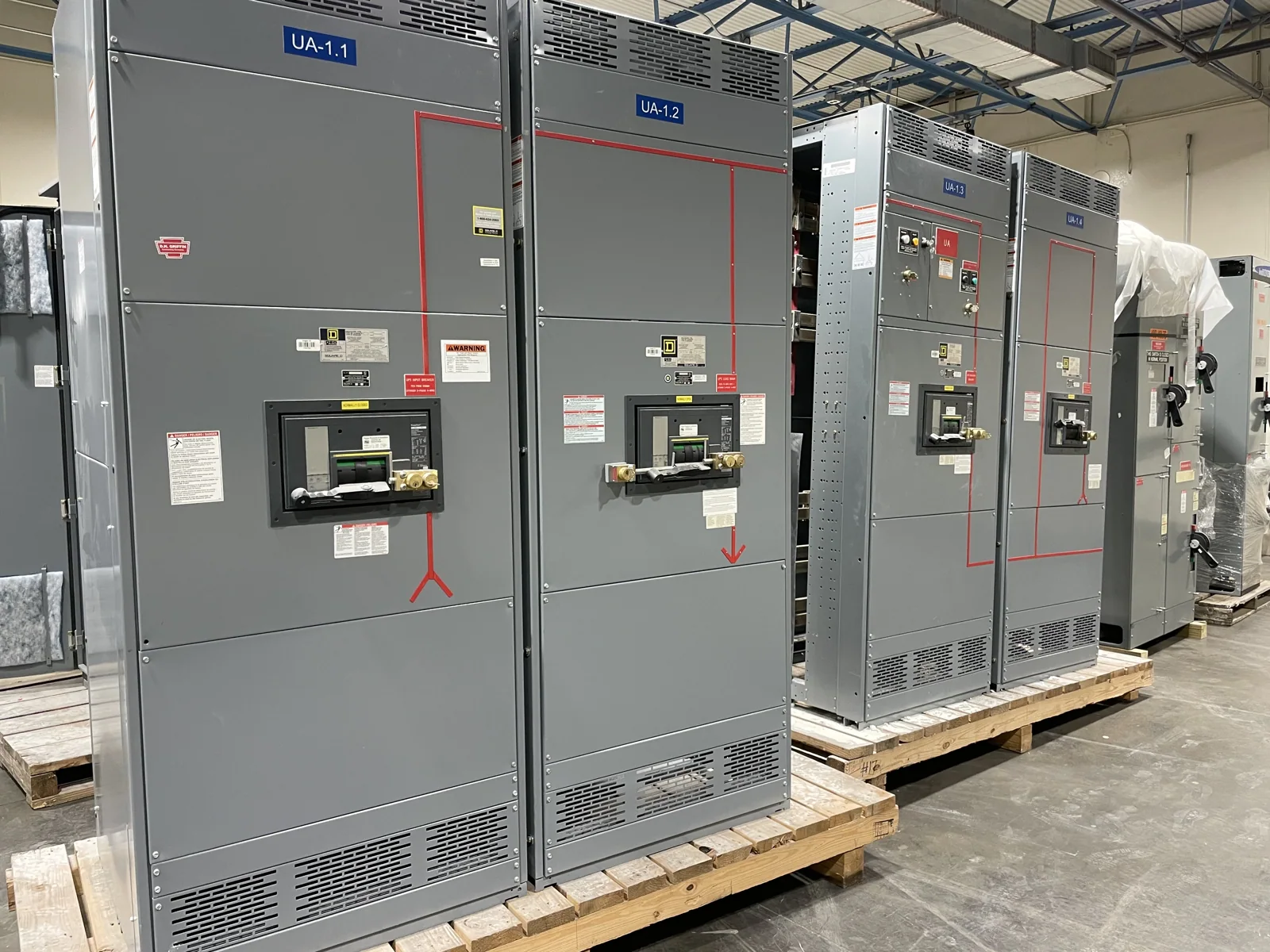
Start with an item-level identification pass
Selling surplus motor-control-center material in Ohio begins with a careful inventory, not a guess based on the size of a lineup. A proposed lot may include spare buckets, combination starters, variable-frequency drives, soft starters, control transformers, overload components, or loose hardware. Count each proposed item separately. Record the visible manufacturer, catalog or model label, voltage and current wording, enclosure information, and any serial or asset number that can be read without opening or operating anything. A bucket’s label is more useful than an assumption that it fits a nearby section.
Keep installed equipment, stored equipment, and material that belongs to another department in separate groups. Note the MCC lineup or section associated with each spare when that relationship is documented. If an item has no known association, say so plainly. The buyer can evaluate all voltage classes, but the evaluation depends on what the records and exterior labels actually establish; appearance alone does not prove a rating, control scheme, or future compatibility.
Build a practical inventory that can be reconciled
A useful list gives every item its own line and preserves uncertainty instead of hiding it in a total. For example, a hypothetical Ohio process facility might identify twelve spare starter buckets, three variable-frequency drives, two soft starters, and a carton of loose control components. The list could state: bucket A, visible label and documented association with MCC section 2; bucket B, label readable but association unknown; drive C, model label visible and stored on a pallet; and so forth. This is an example of organization, not a claim about any particular facility or available stock.
Include quantity, storage location, dimensions if already documented, and whether packaging is original, replacement packaging, or absent. List reserved items and excluded material separately. A site-owned PLC, network switch, custom panel, spare fuse cabinet, or control wiring may be outside the sale even when it sits beside the MCC spares. Mark those boundaries in writing. If a staged release is expected, identify which items are available now, which remain needed for operations, and which have a later authorized release date.
Check completeness and condition without disturbing the equipment
Completeness means more than counting metal boxes. For a starter bucket, note whether the exterior shows a starter, overload device, disconnecting means, control components, or a missing faceplate, while avoiding conclusions about internal condition. For a drive, record the visible keypad, enclosure, cooling openings, documentation, and accessories only when they are already evident. Identify loose manuals, mounting hardware, line or load components, and separately stored bypass equipment as separate entries rather than silently bundling them.
Condition notes should be factual: clean and dry storage, dust, corrosion, impact marks, cracked covers, water exposure, incomplete packaging, or an unreadable label. Photograph only safe exterior views and existing documents. Do not open compartments, energize a drive, rotate a disconnect, remove covers, or test a bucket. No seller testing is required; qualified, authorized personnel establish safe conditions and handle electrical and physical work.
What shapes an offer
Valuation reflects the quality of the identification as well as the equipment itself. Clear model information, traceable association to a documented MCC, complete visible accessories, orderly storage, and a well-defined lot boundary can make an inventory easier to evaluate. Unknown model data, mixed manufacturers, damaged enclosures, missing buckets, environmental exposure, and uncertain ownership can reduce confidence or require a more cautious assessment.
The business buys equipment rather than sells it and considers all voltage classes. After reviewing the lot, the buyer can make a cash offer; once the seller accepts and the sale terms are agreed, payment is made upfront before the agreed pickup. This is not a promise of an automatic purchase, fixed price, test result, or compatibility with another MCC.
Confirm ownership, access, and a staged release
Before identifying a release date, confirm authority to transfer the material. In a leased building, shutdown plant, decommissioned data center, or power-plant closure, ownership may be divided among the property owner, operator, contractor, lender, or equipment owner. State who can approve the sale, authorize access, and identify exclusions. If inventory is shared across buildings, list the exact room, lineup, and responsible contact for each portion.
Access planning is coordination, not a request for seller removal. The buyer handles crane needs, qualified disconnects, rigging, loading, freight, and hauling. The seller should identify approval requirements, security procedures, loading restrictions, available hours, and known route constraints. A staged release can be recorded as separate groups with separate approval points while preserving each bucket and drive’s identity.
Questions to answer before review
- How many spare buckets, starters, drives, soft starters, and loose components are proposed, counted individually?
- What manufacturer, model, voltage, current, horsepower, serial, or asset markings are visible on each item?
- Which items are documented as associated with a particular MCC section, and which associations are unknown?
- What material is excluded, reserved for operations, site-owned control equipment, or awaiting a later release?
- Where is each group stored, what condition is visible, and are there known moisture, corrosion, impact, or packaging concerns?
- Who owns the inventory, who can approve transfer, and who can coordinate access and release permissions?
- Can the seller provide existing schedules, invoices, drawings, asset lists, and safe exterior photographs without disturbing the equipment?
Answers to these questions give the buyer a defensible starting point for an Ohio MCC spares and drives evaluation while keeping unknown facts clearly labeled. The safest process is identification, documentation, agreement, and coordinated release—never seller-led testing or energized work.