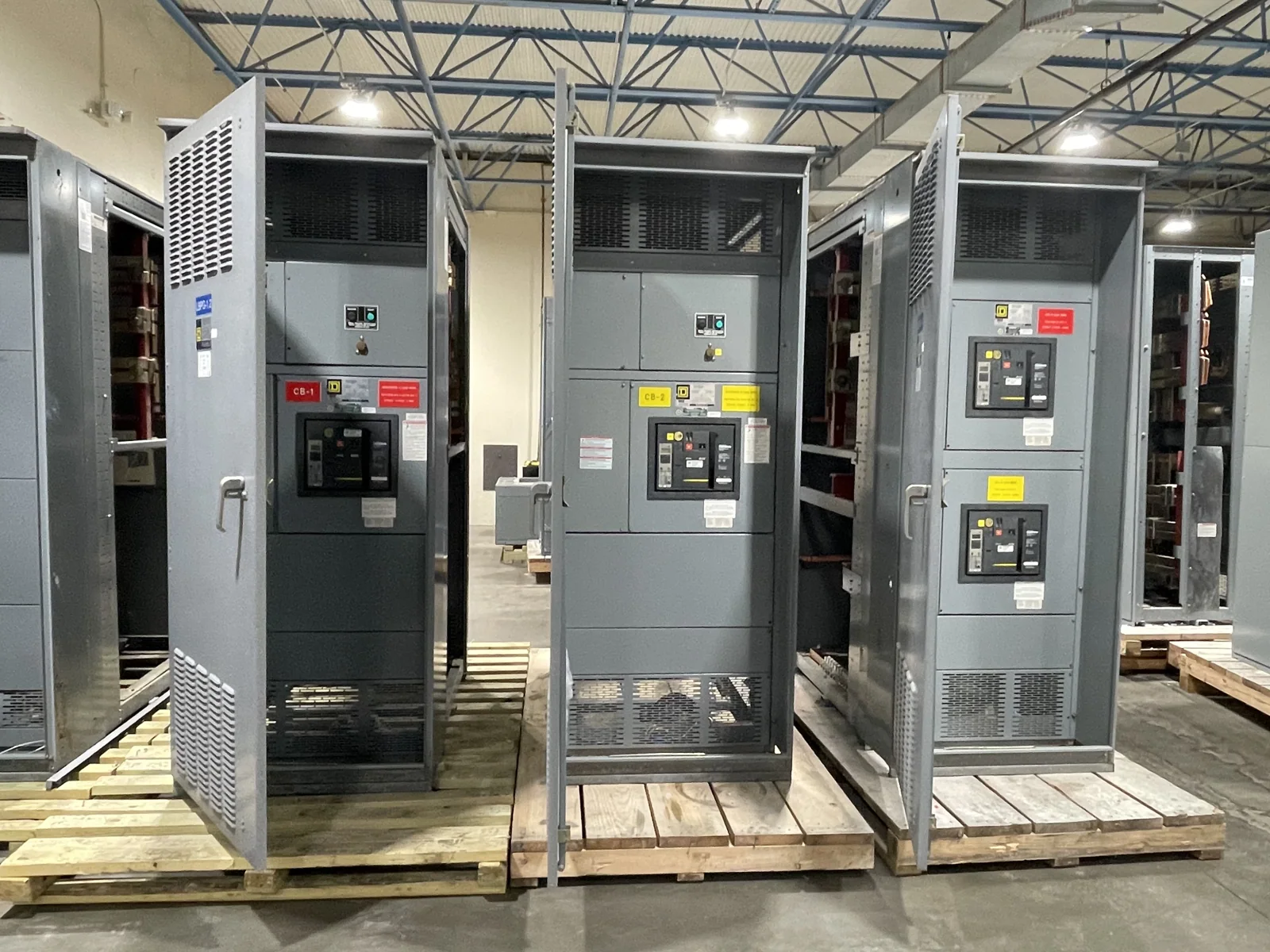
When a low-voltage lineup becomes surplus
Imagine a hypothetical Ohio operating building preparing a planned electrical upgrade. In one room, a complete low-voltage switchgear lineup is still identified by section labels, while removable breakers and spare devices sit in a nearby cabinet. Some sections may remain necessary until a later release stage. That inventory deserves a careful review rather than a guess based on enclosure size or one breaker nameplate.
A buyer evaluates what is available, who owns it, and when it can be released. The business buys equipment; it does not ask the seller to test, operate, open, dismantle, disconnect, rig, load, or haul anything. After reviewing the lot, the buyer can make a cash offer; once the seller accepts and the sale is agreed, payment is made upfront before the agreed pickup, with terms depending on the documented lot and release conditions. No purchase is automatic, and an initial description is not a fixed price.
Start with the full lineup and documented ratings
List the manufacturer, lineup designation if documented, section count, approximate arrangement, and every visible identification label. Record the full voltage and continuous-current wording from the assembly documentation or exterior nameplate. Do not infer a voltage class from appearance, age, paint, or a familiar brand.
The continuous-current rating describes how much current the assembly or device is designed to carry under stated conditions. The interrupting rating addresses the fault current a protective device can interrupt under specified conditions. They are different facts. Record a main-bus rating, main breaker rating, feeder breaker rating, and interrupting rating in separate fields. If a value is unreadable or absent, call it unknown rather than estimating.
Separate main, feeder, and stored devices
Identify the main device, each feeder position, and visible compartment labels. Note whether removable breakers are installed, stored separately, or associated with a position only by a schedule. A loose breaker is not a match merely because its frame looks similar. Existing drawings, schedules, bills of material, and maintenance records can help establish association without operating equipment.
A practical inventory example
For the hypothetical building, an organized inventory might read: six lineup sections; one documented main section; four feeder sections with exterior position labels; one section whose function is unconfirmed; three removable breakers stored on shelves; two labeled spare devices; and a packet containing an equipment schedule and purchase records. The list should identify which sections are proposed for the first release and which remain in service for a later stage.
- Record each section identifier, visible label, approximate dimensions, and whether it is installed or stored.
- For every main or feeder device, copy documented voltage, continuous current, frame, trip, and interrupting information when available.
- Count covers, barriers, doors, drawout parts, hardware, controls, and loose spares separately; do not assume missing pieces are included.
- Mark uncertain matches, reserved sections, and unknown ownership boundaries plainly.
Completeness and condition affect the evaluation
Condition is more than whether front doors look clean. Existing records may show service history, storage dates, modifications, or prior fault-related work. Safe exterior photographs can show labels, doors, handles, visible corrosion, impact marks, water staining, missing covers, packaging, and surrounding clearance. Photographs should remain exterior-only. Do not open compartments, remove covers, touch conductors, operate handles, or test energized or de-energized equipment.
Describe storage honestly. Dry protected indoor storage differs from outdoor exposure, and a wrapped device may still have unknown internal condition. Note known contamination, fire or water exposure, missing hardware, cut conductors, altered control wiring, and sections that cannot be verified. A buyer may consider the lineup, removable devices, documentation, handling complexity, and unknowns together; no cosmetic observation determines value.
Ownership, access, and staged release
Confirm the seller has authority to transfer each item. In a multi-tenant or leased building, the electrical room, tenant improvements, landlord-owned service equipment, and separately purchased spares may have different owners. Identify the authorized decision-maker and exact lot boundary. If a main or feeder still serves an occupied area, list it as retained until the authorized release date.
Share the proposed sequence, earliest approved release, shutdown coordination, and contact who can approve access at each stage. Access approvals are coordination, not a request for the seller to absorb removal costs. The buyer handles qualified disconnects, crane or other lifting arrangements, rigging, loading, freight, and hauling. Seller personnel provide records, safe exterior views, ownership information, and access coordination through authorized channels.
What supports a responsible offer
Useful documents include nameplate transcriptions, one-line diagrams, lineup and breaker schedules, ownership records, maintenance summaries, and storage notes. A drawing can clarify section order, but it does not replace confirmation of what is physically present. State whether documents cover the entire lineup.
Offer considerations may include documented ratings, complete sections, included devices, condition, ownership, release timing, access, dimensions, and moving complexity. There is no implied compatibility or promised price before review.
Common seller questions
- Do I need to test it? No. Provide existing information and safe exterior photographs only. Qualified, authorized personnel establish safe conditions and handle electrical work.
- What if breakers are separate? List each with visible documentation and known association; keep uncertain matches marked unknown.
- Can equipment be released in phases? Yes, as a staged plan with retained sections and approved dates separated from the first lot.
- Who handles removal and transportation? After agreement and coordination, the buyer handles qualified disconnects, rigging, lifting, loading, freight, and hauling.
- What should I send first? Send the inventory, ownership information, existing documents, release constraints, and safe exterior photos. Never manipulate equipment to create better photos.