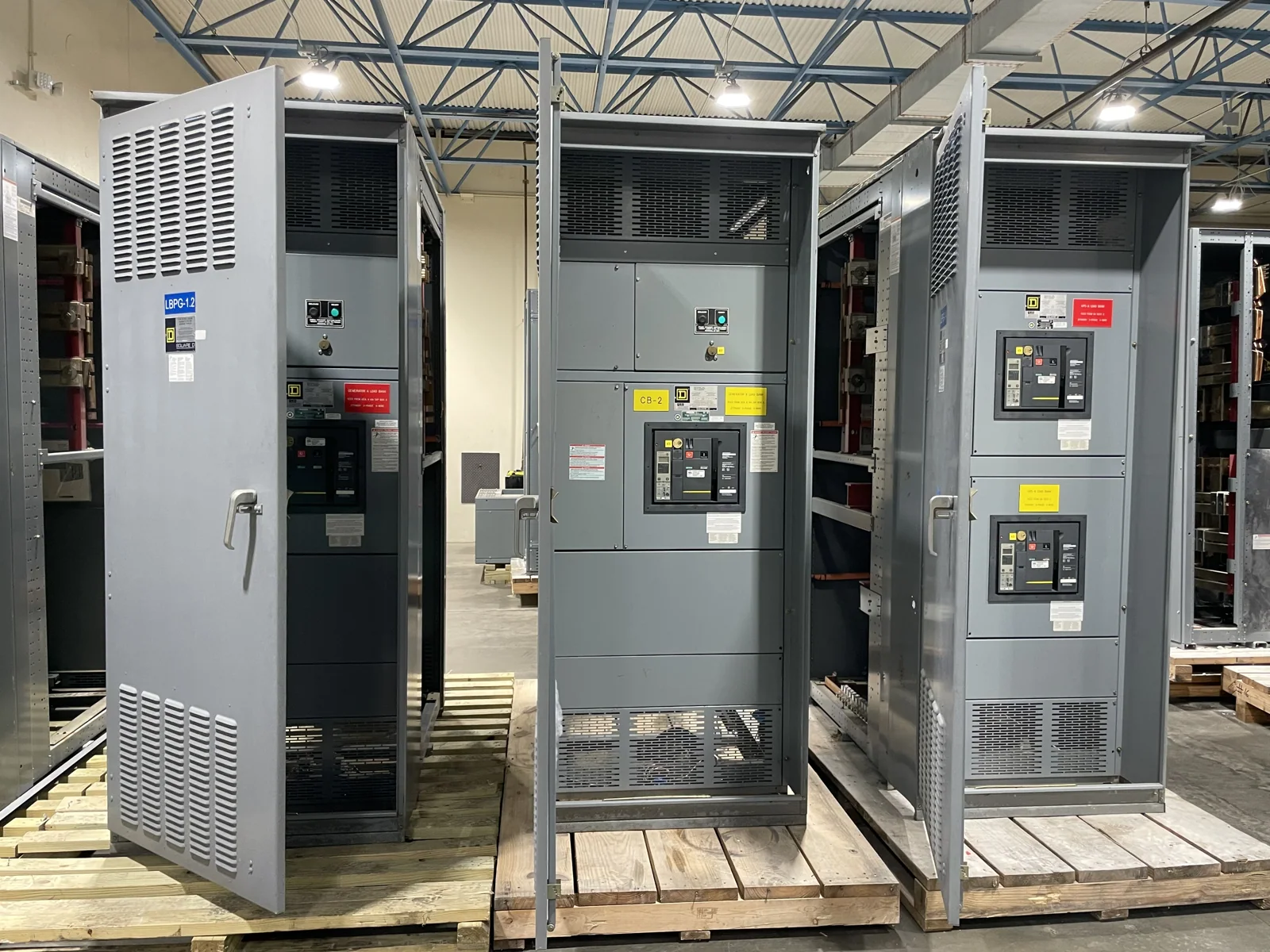
1. Identify the switchboard before discussing release
Industrial decommissioning can produce a valuable switchboard lot, but a lineup is not one undifferentiated item. Start with the records and exterior nameplates already available to the owner or authorized contractor. Note the manufacturer, assembly designation, section count, documented voltage class, current rating, and any date or series information that is legible without opening equipment. We consider all voltage classes; do not infer a rating from cabinet size, paint, or the apparent age of a facility.
Describe the lineup by function. Separate the main section, metering section, and feeder sections, then list the main device and each feeder device as documented. A main breaker, a metering compartment, and a feeder breaker can have different markings. Record the wording from the labels rather than converting it into an assumed specification. If a marking is unreadable, say so. That uncertainty is more useful than a confident guess.
2. Define the lot and its boundaries
Decommissioning often involves several parties: a plant owner, a landlord, a tenant, a demolition contractor, or an asset manager. Confirm who owns the switchboard and who has authority to release it. A possible industrial shutdown is only a hypothetical example here, not a claim about a particular Ohio facility. In that example, an owner might release an old service lineup while retaining a smaller board that feeds an occupied office or a neighboring process. The sale boundary should identify the exact sections included and the retained service that must remain.
Ask whether loose devices, covers, barriers, keys, hardware, and spare parts belong to the same lot. Include separately stored breakers only when their documented association is known. If a tenant-installed metering section is excluded from a landlord-owned service board, list that boundary plainly. Before sharing drawings or photographs, remove sensitive operational, security, network, process, or access information. Safe exterior images of labels and cabinets are enough for an initial review.
A practical inventory example
Hypothetical inventory: one documented main section, one metering section, three feeder sections, two removable devices stored nearby, and a pallet of covers and hardware. The inventory should state which device is installed in which position, which items are loose, what is missing, and whether the stored devices are confirmed matches or unknown. It should also identify the building area, not an invented address, plus the expected release stage.
- Section label and function: main, metering, or feeder.
- Visible nameplate wording, voltage class, current information, and manufacturer.
- Installed and separately stored devices, with documented locations or uncertain matches.
- Missing covers, barriers, doors, instruments, hardware, or records.
- Retained equipment, ownership boundary, authorized release contact, and target milestone.
3. Describe condition without operating the equipment
Condition affects an offer, but the seller does not need to operate, open, dismantle, or test the switchboard. Report visible cabinet dents, corrosion, water staining, contamination, missing doors, damaged paint, storage exposure, and whether sections appear intact from the outside. Disclose known environmental issues, such as a documented spill or suspected contamination, rather than sampling or disturbing anything. If a facility contains dust, chemicals, fire damage, or other hazards, identify the known condition and let the responsible site team address it.
4. Sequence the release around project milestones
Give the expected sequence: de-energization or shutdown milestone, qualified disconnect milestone, access approval, equipment release, and any demolition or building turnover date. These are coordination points, not instructions for the seller to work on energized equipment. Qualified, authorized personnel establish safe conditions and handle disconnection. No seller-operated tests, energized access, or verification procedure is requested.
A data center closure or power-plant shutdown may be a hypothetical source, but evaluation still depends on the actual owner, documentation, and release authority. Separate equipment available now from sections needed until a later milestone; do not promise a pickup date.
5. Plan access, rigging, and transport
Describe the route from the switchboard room or storage area to loading: doors, ramps, stairs, height restrictions, floor protection, dock availability, and controlled access. Note dimensions and weights only when documented; do not ask a seller to handle equipment to measure it. Coordinate approvals with the owner, plant representative, security team, and contractor.
After agreement, the buyer handles the crane, qualified disconnects, rigging, loading, freight, and hauling. The seller should not arrange removal labor or touch the equipment. Share known restrictions, escort requirements, shutdown windows, or staging limits so the removal plan can be coordinated with the site. These details help avoid surprises without shifting removal costs to the seller.
6. What supports a well-defined offer
Offer factors include documented voltage and current information, section count, main and feeder configuration, identifiable manufacturer, completeness, device associations, visible condition, ownership clarity, release timing, and practical access. A large enclosure alone does not establish value. A lot with missing feeder devices may be evaluated differently from a complete lineup with matched loose spares, while an unknown rating or uncertain ownership may require clarification before agreement.
Useful seller questions include: Who owns each section? Which service remains active? Who authorizes access and disconnection? What milestone releases the equipment? Are drawings current and scrubbed of sensitive details? Which parts are missing or stored separately? Are environmental issues known? What route restrictions and loading approvals apply? Once the lot and release conditions are clear, the buyer can review them and provide a cash offer; once the seller accepts and the sale is agreed, payment is made upfront before the agreed pickup, and the seller is not asked to test first.