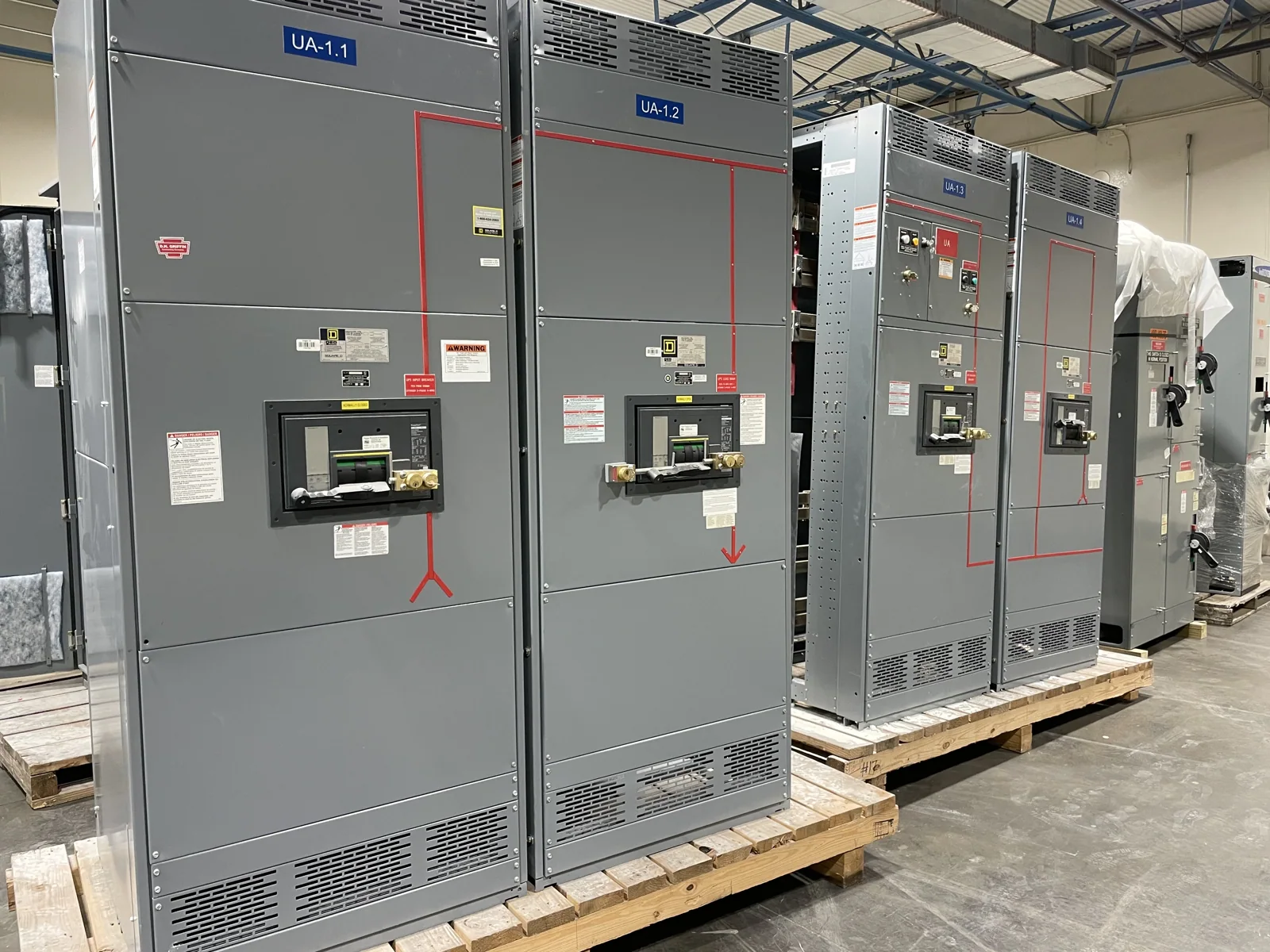
Evaluate the MCC as a complete decommissioning lot
Motor control centers released during an industrial shutdown can look like a straightforward row of cabinets, but the saleable value is usually in the documented relationship among sections, buckets, controls and spares. A hypothetical Ohio process facility might retire a lineup after production ends, while a few adjacent sections remain assigned to a remaining utility or safety process. The shutdown itself does not prove that any equipment is electrically isolated. A qualified, authorized team must establish safe conditions and handle disconnection; the seller is not asked to operate, open, dismantle or test the MCC.
Begin with the proposed lot boundary. Identify the lineup or section numbers, the vertical sections included, and any equipment reserved for the remaining process. A starter bucket, variable-frequency drive, transformer, overload unit or control power component may be physically nearby without belonging to the sale. Conversely, a loose bucket or spare control may be essential to a complete lot. This is an equipment-matching exercise, not a cabinet-count exercise.
Build an identification record before release
Existing drawings, one-line diagrams, schedules and maintenance records can make an evaluation more accurate. Record the manufacturer, lineup designation, section identifiers, nameplate voltage and current information, and the visible bucket labels. Note whether the schedule describes across-the-line starters, reduced-voltage starters, drives, soft starters or blank spaces. Do not infer a rating, bucket fit or interchangeability from appearance. A control component that resembles another unit may use a different series, wiring arrangement or mounting scheme.
For a practical inventory, list each section on its own line and then list its installed buckets by position. Add a separate list for spare buckets, spare starters, drives, control transformers, overload relays and loose parts. Mark every association as documented, visibly labeled or unknown. If a schedule says section M-03 has six starters but only four are visibly present, record the two as missing or unverified rather than silently counting them. Controls reserved for the remaining process should be clearly excluded from the offered lot.
Hypothetical inventory example
Hypothetical example only: a decommissioning package could contain four documented vertical sections, twelve labeled starter buckets, one separately stored drive, two spare buckets with uncertain section association and a control cabinet retained for a continuing water-treatment process. The useful submission would identify each section, show which buckets are included, state that the two spare associations are unknown, and explain that the retained cabinet is excluded. That level of separation helps prevent a mixed lot from being valued as a complete lineup.
Describe condition without unsafe inspection
Condition information can come from existing records and safe exterior observations. Report storage location, indoor or outdoor exposure, dust, moisture staining, corrosion, impact, missing doors, damaged viewing windows, removed labels, bent hardware and evidence of prior water entry. Disclose known oil, chemical, asbestos-related, PCB-related or other environmental concerns; do not sample, open compartments or disturb residue to investigate them. A seller may provide safe exterior photos after removing sensitive operational or security information from drawings and images. No seller-operated electrical test is required.
Completeness deserves its own review. State whether buckets, doors, handles, drawout hardware, control fuses, wiring diagrams, spare parts and factory tags are present, absent or unknown. A clean enclosure with many missing buckets is not equivalent to a documented, populated lineup. Likewise, a dusty but complete stored lot may warrant a different evaluation from equipment exposed to moisture or a process environment.
What affects an offer
Valuation may reflect the documented voltage class, ampacity, short-circuit information where available, manufacturer and series, section count, bucket mix, control content, completeness, condition, age information and likely demand for the configuration. A common starter arrangement may be easier to match than an unusual control scheme, but no fit or resale outcome should be promised before review. Unknown ratings, missing schedules, mixed manufacturers, reserved components and environmental disclosures can reduce certainty. The business considers MCCs across voltage classes and can make a cash offer after reviewing the lot. Once the seller accepts and the sale is agreed, payment is made upfront before the agreed pickup; the seller does not need to prepare a test report.
Coordinate ownership, milestones and access
Decommissioning often involves an owner, tenant, plant operator, electrical contractor and site security contact. Confirm who owns the MCC, who can authorize its release, and whether a tenant or landlord retains sections, feeders or controls. Useful milestones include final operating date, approved lot boundary, qualified disconnection, access approval, release of records, loading window and any demolition deadline. These dates may be provisional; label unknown timing as unknown.
Access planning should describe the route rather than assume a truck can reach the electrical room. Share door and corridor clearances, floor or dock restrictions, overhead obstructions, security check-in and loading hours, while omitting sensitive details from public-facing materials. Access approvals are coordinated with the site. The buyer handles crane needs, qualified disconnects, rigging, loading, freight and hauling, so the seller is not asked to arrange removal equipment or perform electrical work.
Questions to include with a submission
- Which sections, buckets, drives, controls and spares are offered, and which remain with the facility?
- What nameplate, drawing and bucket-schedule information is available for each section?
- Which items are documented matches, and which associations or ratings remain unknown?
- Are ownership, tenant boundaries, environmental concerns and release authority confirmed?
- What qualified party will establish safe conditions and coordinate disconnection?
- What access approvals, dimensions, loading restrictions and target milestones should be coordinated?