Start with the spare-breaker record, not the room
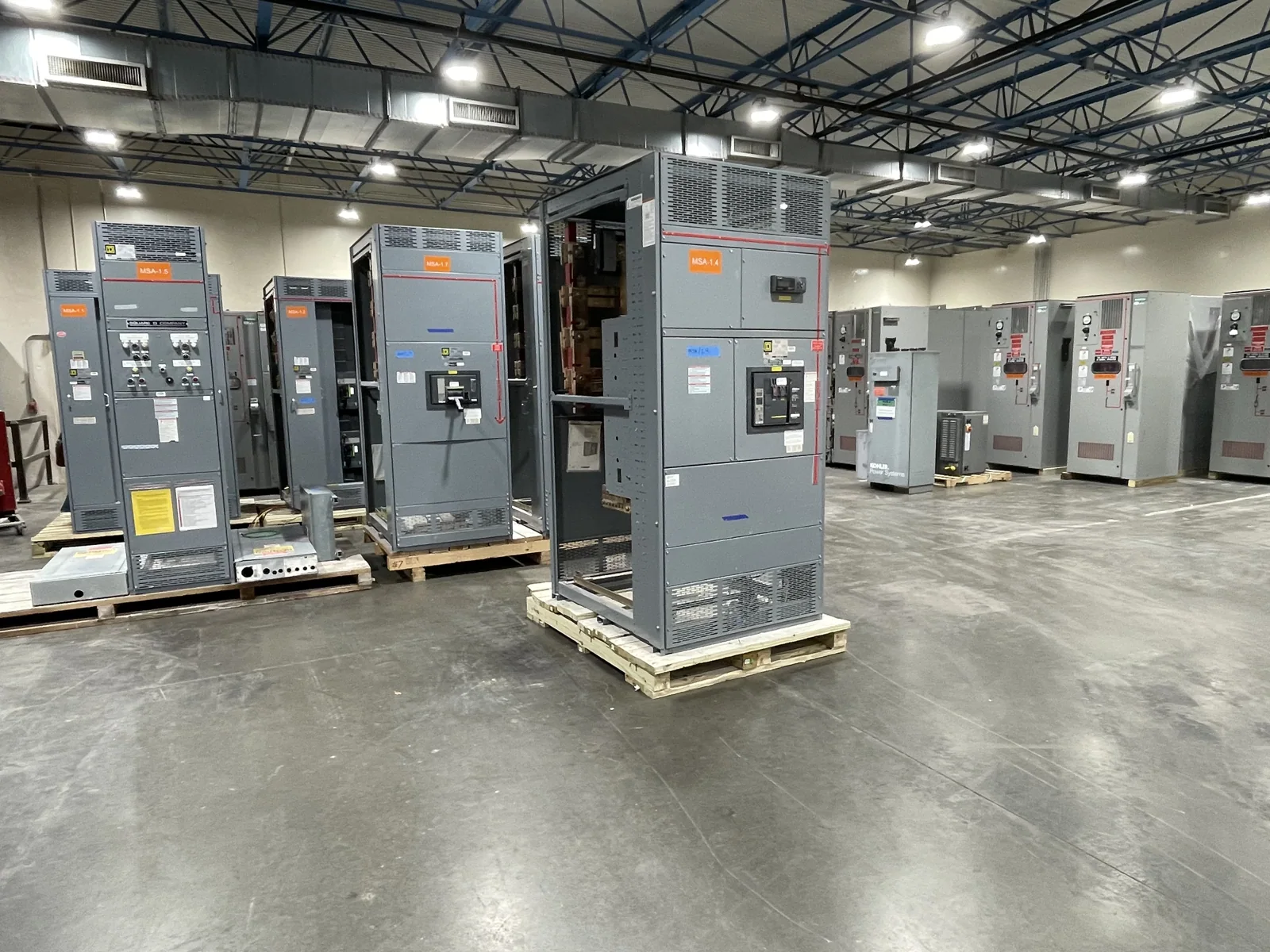
Industrial closures can leave a confusing mix of loose circuit breakers, withdrawable units, stored buckets and parts still associated with a lineup. For an evaluation, sort each spare by the manufacturer marking, catalog or type number, quantity and visible condition. Record voltage and current wording exactly as shown when available; do not assign a voltage class from size or appearance. A breaker’s markings are not automatically the rating of the switchgear assembly where it once belonged.
Separate breakers documented as part of a lineup from spares offered independently. A shutdown inventory may include units reserved for a particular section and general maintenance stock. That distinction prevents an uncertain match from being presented as confirmed compatibility.
Protect sensitive drawings while proving identity
Useful records can include nameplate transcriptions, breaker schedules, purchase documents, storage lists, removal drawings and exterior-label photographs. Before sharing drawings or photos, the owner should remove sensitive operational or security information, including access instructions, network details, protective settings, camera views and unrelated process information. A cropped exterior nameplate or redacted schedule is usually more useful than an unrestricted facility plan.
For each item, note whether the marking is readable, partly obscured or unknown. Include the original lineup or section reference only when records support it. If a breaker is crated, photograph the crate label and breaker label separately without opening or manipulating energized equipment. Unknown information is acceptable; clearly marked uncertainty is safer than a guessed catalog number.
Check completeness and boundaries
Completeness means more than counting metal cases. List breakers, drawout elements, escutcheons, shutters, stored hardware, control plugs and documented accessories separately. Note known missing covers, trip units, mounting hardware or labels. If several units look alike, preserve storage tags and identify which count is verified and which is provisional.
Ownership deserves its own line. A closing plant may contain owner equipment, a tenant’s maintenance stock, a landlord-retained lineup or assets subject to a lender, utility or project agreement. Do not combine those categories because they share a room. The authorized owner should confirm the sale boundary, and tenant or landlord approval should be recorded before a release date is set.
Hypothetical example: a former manufacturing site has six loose breakers tagged for two documented feeder sections, four untagged breakers in a maintenance cage and one lineup scheduled for removal. The first group can be described with section references, the second remains an unidentified subgroup pending records, and the lineup is not assumed to include every loose breaker.
Describe condition without seller testing
Condition notes should cover storage environment, visible corrosion, dents, cracked insulation, missing hardware, moisture evidence, contamination and packaging. State whether an item is installed, indoors in storage, crated, weather-exposed or of unknown storage history. Do not ask the seller to operate a mechanism, open a compartment, access energized equipment or perform a test. Qualified, authorized personnel must establish safe conditions and handle any required disconnection.
Known environmental issues should be disclosed rather than sampled by the seller. Identify reported oil, chemical, dust, fire, water or other contamination concerns and the affected area if that can be stated safely. Avoid declaring an item clean, tested, serviceable or ready for reuse when records do not establish that fact.
What shapes an offer and release plan
Evaluation factors include verified manufacturer and catalog information, quantity, documented lineup association, completeness, condition, packaging, storage history and the proportion of unidentified items. All voltage classes may be considered, subject to available information and ownership. A clear schedule can matter as much as a count: distinguish inventory date, outage or shutdown milestone, authorization date, disconnect window, staging period and final release.
Access is a coordination issue, not a request for the seller to absorb removal work. The buyer handles crane needs, qualified disconnects, rigging, loading, freight and hauling. The seller should identify the site contact, approval path, permitted access hours, loading restrictions, floor or doorway limits, and whether equipment must remain until a shutdown milestone. Those details coordinate safe release; they do not transfer disconnection or removal duties to the seller.
A practical inventory to send
- Loose breaker group A: manufacturer, catalog or type number, documented voltage and current, quantity, storage location, lineup association and visible condition.
- Loose breaker group B: the same fields, with uncertain fields labeled unknown rather than inferred.
- Lineup-associated devices: section identifiers, included accessories, known missing components and whether devices remain installed or are separately stored.
- Release information: owner, tenant or landlord boundary, approval contact, milestone dates, access constraints, staging area and known environmental concern.
Helpful seller questions include: Which records establish ownership? Which spares are reserved for a named lineup? Are storage tags attached? What components are missing? What shutdown or approval event controls release? Can the authorized site contact explain the safe access boundary? Partial answers are useful when they distinguish documented facts from assumptions.
Coordinate a safe handoff
Once the lot and authority are clear, the parties can discuss payment and release conditions. After reviewing the lot, the buyer can provide a cash offer; once the seller accepts and the sale is agreed, payment is made upfront before the agreed pickup, and the seller is not expected to test equipment or dismantle it. The buyer coordinates qualified disconnect work, rigging, crane service when needed, loading, freight and hauling. A concise, redacted inventory and an honest list of unknowns gives a decommissioning lot a more defensible starting point than claiming every breaker in a closed facility is included.