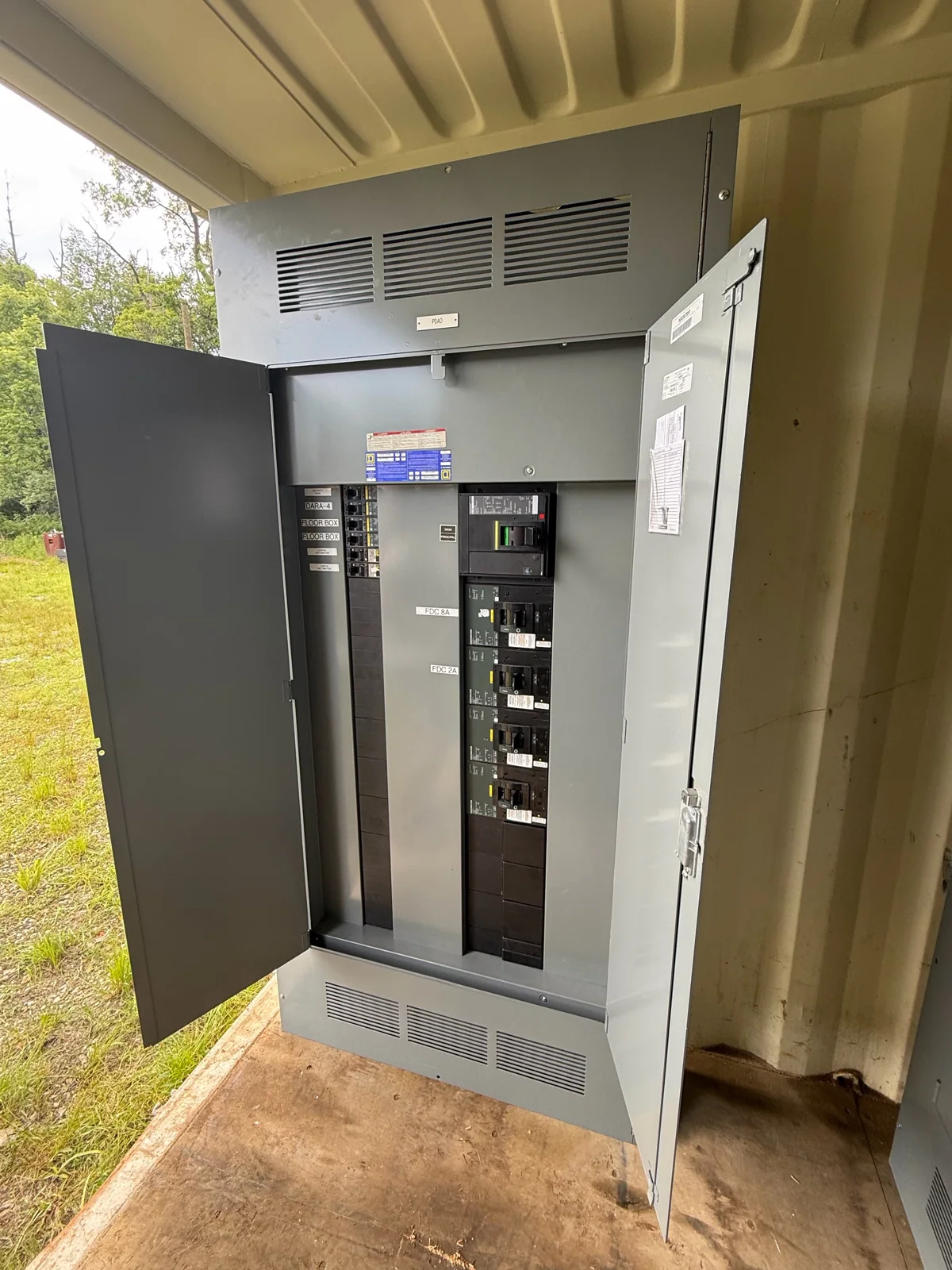
A realistic starting point: imagine an Ohio facility preparing to retire an electrical room after a production change. The visible lineup appears to be an 800-amp switchboard, but the number may describe only the bus, service main, or another documented component. Several feeder devices remain in place, one cover is stored nearby, and a separate breaker cabinet contains loose devices with uncertain associations. That is enough to begin an evaluation, not enough to call every item an 800-amp component.
Confirm what actually carries the 800-amp rating
Start with the exterior nameplate, lineup schedule, one-line drawing, or other existing record that identifies the assembly. Record the manufacturer, assembly designation, voltage wording, bus rating, current rating, and any visible series information exactly as shown. Do not infer a rating from enclosure width, a familiar appearance, or the size of a nearby conduit. An 800-amp bus and an 800-amp main device are separate facts; either may be documented while the other remains unknown.
Identify the main section, metering section, and each feeder section where the records support those labels. Continuous current capability, interrupting rating, and trip settings describe different characteristics. Capture each one only when it is visible or supported by existing schedules, and leave unavailable values unknown rather than filling gaps with assumptions.
Build a documented inventory, not a rough equipment count
A useful inventory pairs each section with its devices and physical condition. For example, a hypothetical lot could include one lineup identified in records as an 800-amp switchboard, a main device with an 800-amp marking, three feeder sections with separately documented ratings, a metering compartment, installed covers, and two loose breakers in a labeled storage area.
- List the number of main, metering, and feeder sections, using the facility’s labels where available.
- Describe installed devices separately from stored breakers, fuses, trip units, barriers, covers, and hardware.
- Flag missing devices, open positions, damaged covers, removed instruments, incomplete labeling, and records that do not match the visible lineup.
- Note whether loose parts have section numbers or other documented associations; an unverified match should remain unverified.
Safe exterior photographs of nameplates, section labels, closed doors, stored-part tags, and overall access paths can help. Existing schedules and drawings are also valuable. If a label cannot be read safely, report it as unreadable.
Condition and completeness affect the evaluation
Describe what is observable without disturbing the equipment: indoor or outdoor storage, moisture exposure, corrosion, impact marks, dust, missing paint, warped doors, damaged viewing windows, and packaging quality. The useful distinction is between observed condition and unknown internal condition; do not represent unverified internals as tested or service-ready.
Completeness also has several layers. A full lineup may lack its original main device, while a spare breaker may be present but undocumented. A metering section may remain with the assembly even when instruments are absent. State those facts plainly. Manufacturer and series documentation, matching section labels, device nameplates, and coherent drawings can make a lot easier to identify. Missing records, mixed lots, or uncertain ownership reduce confidence and may change the proposed scope.
What can shape a potential offer
An evaluation may consider the documented assembly rating, the separately identified device ratings, voltage class, manufacturer and series, section count, completeness, condition, and the usefulness of included spares. It can also reflect whether the equipment is a coherent lot or a mixture assembled over time. A clear ownership trail matters as well: identify the owner, any landlord or tenant boundary, liens or restrictions if known, and the person authorized to release the equipment.
The proposed release date, outage status, storage location, and access rules influence planning. Unknown values should be marked unknown. A seller may receive a cash offer after the buyer reviews the equipment and release conditions; once the seller accepts and the sale is agreed, payment is made upfront before the agreed pickup. No seller testing is required.
Coordinate a safe release and practical freight plan
Removal begins with coordination, not seller dismantling. Qualified, authorized personnel must establish safe conditions, complete any required isolation and disconnection, and determine how the lineup can be removed. The buyer handles qualified disconnects, crane service, rigging, loading, freight, and hauling. The seller’s role is to provide accurate records, confirm ownership, identify approvals, and coordinate access with the responsible facility contact. If an electrical room has controlled entry, restricted loading hours, a lift limitation, or an approval process, share those requirements early; they are coordination details, not a request that the seller perform removal work.
Useful planning information includes the building and room location, doorway and corridor constraints, dock or yard rules, overhead clearance, floor protection requirements, and the available staging area.
Questions to include with the inventory
- Which document identifies the 800-amp component, and does it refer to the bus, main device, or another section?
- What are the documented ratings for the main and each feeder device, and which values are unknown?
- Are metering components, covers, barriers, spares, and loose breakers included, excluded, or unverified?
- Who owns the equipment and who can authorize release, access, isolation, and scheduling?
- What condition is visible from the exterior, and where has the equipment been stored?
- What access approvals, staging limits, and release date should be coordinated?
Those answers let an Ohio seller present an 800-amp switchboard lot honestly without overstating its rating or condition. They also give the buyer a practical basis for scope, safe removal, freight planning, and a potential offer.