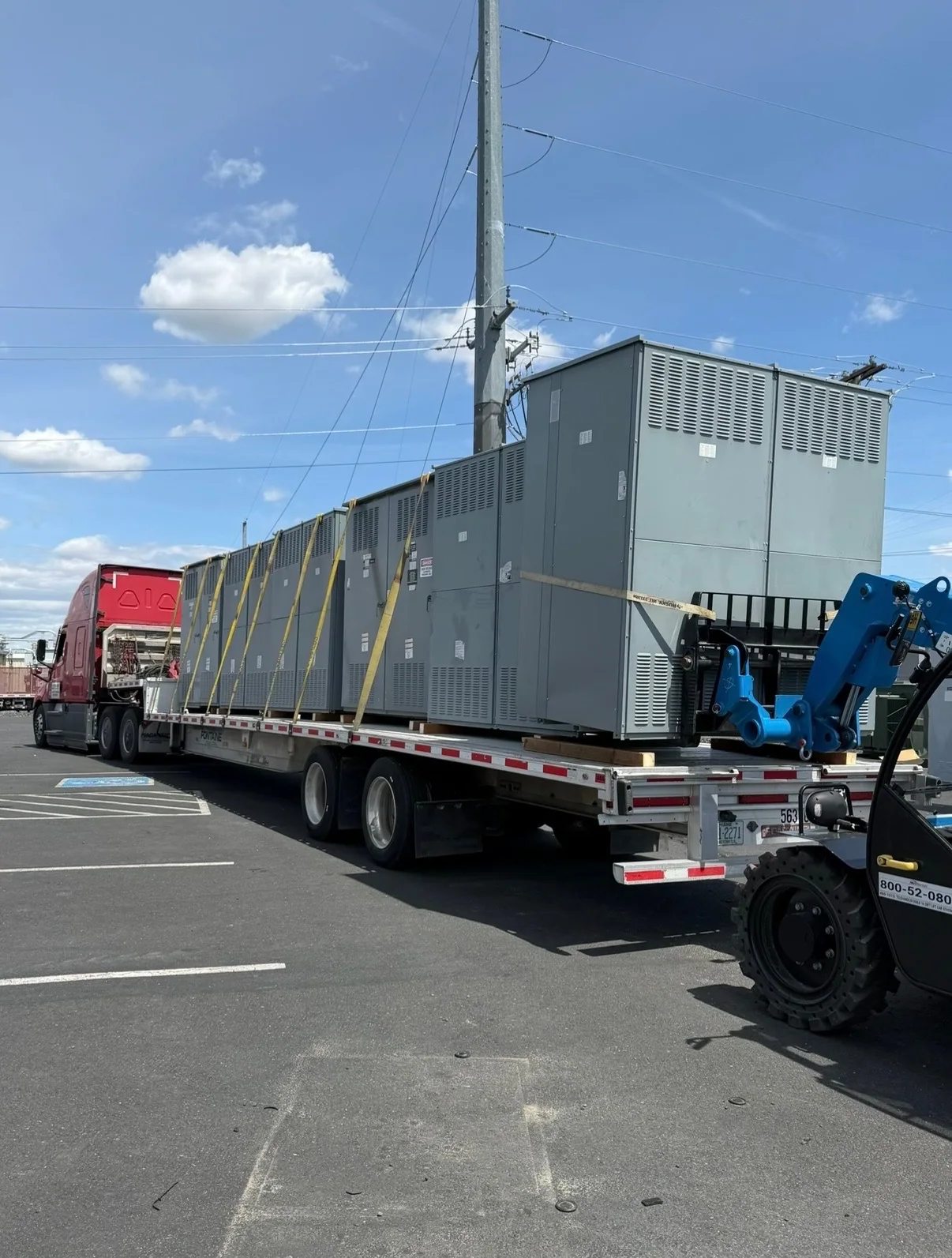
If you are evaluating 208-volt switchboards anywhere in Ohio, the most useful starting point is the record already attached to the equipment. A single “208” marking does not establish the complete configuration, operating state, or suitability of a section. We buy electrical equipment rather than sell it, and we consider all voltage classes. For an evaluation, copy the complete existing voltage wording exactly as shown, including phase information, line-to-line or line-to-neutral values, frequency, and any multiple values documented on the nameplate or drawings.
Identify the complete switchboard, not just its largest number
Record the manufacturer, identification or serial information, lineup designation, section count, and any dates shown on the labels. Then separate the lineup into its documented main, metering, and feeder sections. Note the main device, each feeder device, visible bus labeling, covers, barriers, and loose or separately stored components. A panel width or enclosure height is not a rating. Likewise, a breaker marking is not automatically the rating of the assembly.
Where a transformer is part of the electrical arrangement, distinguish its primary marking from its secondary marking. A transformer may have a 208-volt secondary while its primary is marked at a different voltage; do not collapse those two sides into one description. If the records show multiple voltages or phases, copy every documented value and identify which value belongs to which section. If phase, wire arrangement, amperage, interrupting rating, or construction is not legible or documented, label it unknown rather than guessing.
Example inventory for an Ohio evaluation
The following is a hypothetical example, not a claim about a particular Ohio site. A seller might describe one lineup as: two documented switchboard sections; a nameplate showing a complete 208Y/120 V, three-phase marking; one main device; four feeder devices; a metering compartment; three intact covers; and one separately stored cover with an unknown association. A drawing may identify two feeder positions as retained and two as proposed for release. That distinction matters more than calling the whole enclosure “208 volt.”
- List each section by its label or drawing reference, with the documented voltage and phase wording.
- Count installed main, metering, and feeder devices separately, and identify positions that are empty or missing devices.
- Match loose breakers, barriers, shutters, trim, control components, and spare parts to a section only when existing records support the match.
- Separate equipment included in the proposed lot from adjacent gear, transformer components, or service equipment that must remain.
This kind of inventory is useful for equipment from a decommissioned data center, a shut-down power plant, an industrial changeout, or another facility transition. It also prevents a stored device from being represented as installed equipment when its history is not documented.
Condition records and factors that affect an offer
Describe condition from records and safe exterior observation. Useful details include indoor or outdoor storage, packaging, corrosion, dents, water staining, missing covers, labels that are faded or obscured, evidence of prior removal, and whether parts are loose, palletized, or still associated with a lineup. State what is known, what is visible, and what remains unknown. Do not open compartments or remove covers to improve the description.
Offer consideration can reflect completeness, documented ratings, identifiable manufacturer and section history, device count, accessory availability, storage protection, location, handling complexity, and whether the lot is released as a whole or in defined sections. A complete record of a 208-volt marking is valuable, but it does not by itself prove compatibility, operability, code acceptance, or future application. The buyer may consider equipment with incomplete information; uncertainty is simply recorded rather than silently resolved.
Ownership, release, and removal coordination
Before an agreement, confirm who owns the switchboard and who can authorize release. Clarify whether the equipment is part of a landlord system, utility boundary, tenant property, or a plant asset. Identify the proposed release date, outage or shutdown boundary, access approvals, loading restrictions, and a contact who can coordinate entry. These are coordination details, not a request for the seller to perform removal.
After agreement, payment is made upfront according to the agreed arrangement. The buyer handles crane planning, qualified disconnects, rigging, loading, freight, and hauling. Site access, escorts, security procedures, and lift scheduling still need to be coordinated with the authorized owner or facility representative. The seller should not dismantle, touch energized equipment, operate devices, or test anything. Qualified, authorized personnel establish safe conditions and handle disconnection and removal.
Questions to include with your records
- What is the complete voltage and phase marking for each section, copied from the label or drawing?
- Which sections are main, metering, and feeder sections, and which devices or covers are missing?
- Are transformer primary and secondary markings documented separately?
- Is the equipment installed, stored, reserved, or already disconnected, and who can verify that status?
- What ownership documents, one-lines, schedules, photographs, or removal records are available?
- What release date, access approval, loading route, and site contact should be coordinated?
Safe exterior photos of labels, section fronts, stored parts, and the access area can accompany existing records. Keep photographs observational and do not expose anyone to energized equipment. With complete markings, honest condition notes, and a clearly authorized release boundary, an Ohio 208-volt switchboard lot can be evaluated without asking the seller to test or operate it.