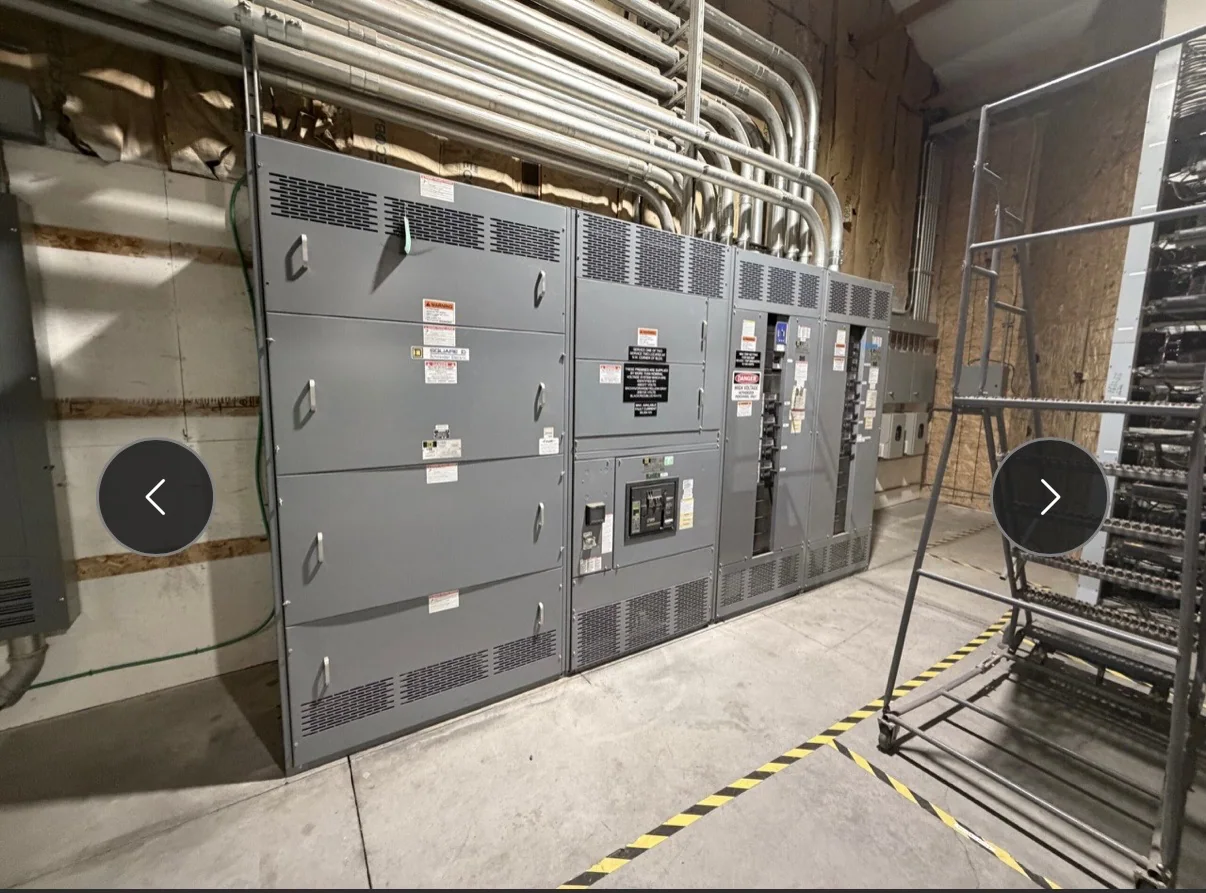
Sell 480-Volt Switchboards in Ohio
A 480-volt switchboard can look straightforward from across an electrical room, yet a useful evaluation depends on details that a single number cannot provide. We buy electrical equipment from Ohio facilities, including decommissioned data centers and shut-down power plants, and we consider equipment across voltage classes. For this route, the starting point is the exact documentation and visible labeling on the board, its sections, and its individual devices. A clear description helps separate a complete, releasable assembly from a cabinet with important pieces already removed.
Identify the Board Without Guessing
Please copy the complete existing voltage marking as it appears on the nameplate or record. Include phase information or multiple voltage values only when they are documented. A board marked 480 volts does not, by itself, establish its phase, current rating, interrupting capability, construction, or operating state. The main device, metering section, and feeder devices may each have their own markings. Those labels should be recorded separately rather than summarized as one rating for the entire lineup.
Transformer information needs the same discipline. If the board is associated with a transformer, distinguish the documented primary marking from the secondary marking. Do not use a transformer’s primary voltage to describe the switchboard, or assume that a secondary value proves suitability for another installation. Manufacturer, identification number, section count, approximate dimensions, and available drawings are useful when known.
Sample Inventory for a 480-Volt Lot
A practical inventory names what is present and what is absent. For example, a hypothetical lot might be described this way: one 480-volt main switchboard lineup with documented phase information unknown; one main device with its visible label copied; one metering section with meters present; four feeder sections; two feeder devices installed; one feeder position empty; and a separate group of covers and loose parts with ownership not yet confirmed. This is a hypothetical example, not a description of an Ohio installation.
- List each lineup or section in sequence, using the existing section labels where available.
- Record the main device, metering equipment, feeder devices, spare devices, covers, barriers, and loose hardware separately.
- Note missing devices, blank positions, removed instruments, damaged enclosures, and parts whose association is uncertain.
- Identify whether records describe the same assembly that is physically present, rather than combining unrelated inventories.
A stored breaker or meter should not automatically be counted as included in the board. Its documented association, condition, and ownership matter. Photos of labels and the safe exterior are helpful; please do not open compartments, operate devices, or touch energized equipment.
Condition and Offer Factors
Condition is more than paint quality. Evaluation can consider whether the lineup is indoors or outdoors, how it was stored, whether doors and covers are present, and whether there is visible corrosion, impact, moisture exposure, contamination, or altered wiring. The completeness of bus barriers, metering components, feeder devices, hardware, and nameplates can materially affect value.
Offer factors also include the documented voltage and current information, manufacturer and age when verified, section dimensions and weight information, quantity of associated devices, and the cost and complexity of safe release. Equipment from a data-center decommissioning may have organized schedules and spare devices; a plant shutdown may involve mixed additions, retained sections, or records from several project phases. We can review the facts as provided, and no seller testing is required.
Ownership, Release, and Site Logistics
Before an evaluation becomes a sale, confirm that the seller owns the equipment or has authority to transfer it. Clarify whether the board is customer-owned, leased, part of a landlord’s building service, or subject to another party’s approval. Identify the exact sale boundary: a complete lineup, selected sections, loose devices, or a combination. If adjacent equipment must remain in service, mark that retained boundary in the records without disturbing the installation.
Release planning should cover the authorized contact, access rules, outage or shutdown coordination, loading-hour restrictions, security approvals, dock or doorway limitations, and any required site paperwork. These are coordination items, not a request that the seller pay for removal. After agreement, the buyer handles the crane, qualified disconnects, rigging, loading, freight, and hauling. Qualified, authorized personnel establish safe conditions and perform disconnection; the seller should not dismantle, test, energize, or operate the switchboard.
Payment is arranged upfront after the agreement under the agreed terms.
Questions to Include With Your Records
- What complete voltage, phase, and current markings are documented for the assembly and for its main and feeder devices?
- Which sections are included, which remain in service, and which devices or covers are missing?
- Are transformer primary and secondary markings available, and are they clearly separated from switchboard ratings?
- Who owns the equipment and who can authorize release, access, and qualified disconnection?
- Where is the board located within the facility, and what doorway, dock, crane, security, or scheduling constraints are known?
- Are existing drawings, schedules, shipping records, condition notes, or safe exterior photos available?
Send what already exists rather than creating new tests or handling the equipment. With precise labels, an honest inventory, documented authority, and realistic access information, a 480-volt switchboard in Ohio can be evaluated on its actual identity and release condition instead of on an unsafe assumption.