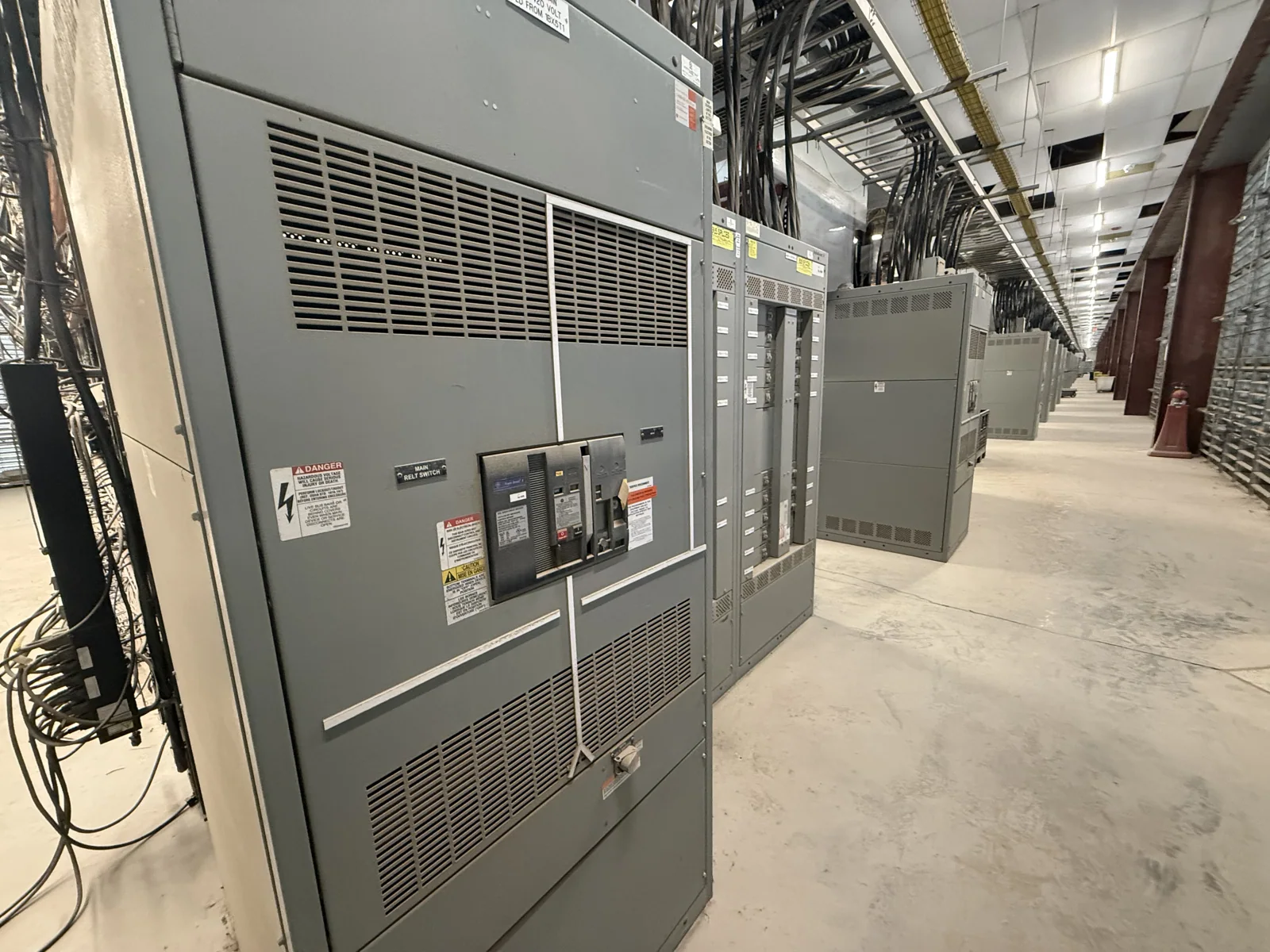
What does “240 volts” actually tell a buyer?
A 240-volt marking is an important starting point, not a complete description of a switchboard. What should a seller copy from the equipment? The complete existing voltage wording from the nameplate, drawing, schedule, or other record, including phase information when documented. If the equipment shows multiple voltage values, preserve each value and identify where it applies rather than choosing one number. Do not infer suitability, construction, or operating state from a single marking.
A switchboard may contain service, metering, and feeder sections with different roles inside one lineup. The main device controls the incoming portion; feeder devices distribute power onward. A large enclosure is not proof of a particular rating, and a device label is not automatically the rating of the entire assembly. Existing records help establish those boundaries without anyone operating or testing the equipment.
How should a 240-volt switchboard lot be identified?
Begin with an exterior inventory that follows the lineup from one end to the other. Record the manufacturer and visible series or catalog wording, number of sections, nameplate information, and labels assigned to main, metering, and feeder positions. Note whether covers, trim, barriers, doors, bus-access panels, and device compartments appear present from the outside. If a label is unreadable, say so; an unknown is more useful than an invented specification.
Main and feeder devices deserve separate lines. List each documented position, visible identification, and whether the device is installed, stored separately, or missing. A loose breaker or switch should not be assigned to a section merely because its dimensions look similar. Existing one-lines, schedules, purchase records, and changeout documents can establish an association. They may also reveal retained sections that are not part of the proposed sale.
What if a transformer is in the records?
When a transformer is associated with the switchboard, distinguish its primary marking from its secondary marking. A 240-volt secondary does not make the primary 240 volts, and a transformer reference does not prove every adjacent enclosure belongs in the lot. Share the documented relationship and identify any unknown boundary.
What might a sample inventory look like?
Hypothetical example: a proposed lot could be recorded as one lineup with three sections: a documented main section, a metering section, and two feeder sections. The inventory might separately state the complete visible voltage wording, main device label, each feeder device label, two stored devices with unknown section association, and one cover reported missing. It could also note that a transformer record lists different primary and secondary values, without assuming the transformer is included.
This format prevents “one switchboard” from hiding important differences. It shows what is visible, what records support, and what remains unresolved. If a building still needs a main or feeder section, identify that retained boundary before proposing a lot. The buyer considers all voltage classes, but accurate documentation determines how this 240-volt material can be evaluated.
How do condition and completeness affect an offer?
Condition review can begin with safe exterior photos and existing records only. Useful photos show the full lineup, nameplates, device labels, doors, covers, stored components, visible corrosion, impact damage, water staining, dirt, and packaging. Keep the camera outside the equipment; do not open compartments, touch components, operate handles, or test anything. Qualified, authorized personnel must establish safe conditions and handle disconnection.
Offer factors can include documented voltage and phase, manufacturer information, completeness of main and feeder devices, matching records, physical condition, storage environment, section dimensions, and the effort required to coordinate release. Missing covers or uncertain device associations may reduce certainty even when an enclosure appears sound. A well-documented lot with clearly separated parts is easier to value than a mixed pile of unverified devices. No seller testing is required.
Who owns the equipment, and when can it be released?
Confirm who has authority to sell the switchboard and which parts are excluded. Ownership may involve a facility owner, tenant, contractor, lender, utility, or another party; possession alone does not establish ownership. Ask whether any section remains in service, supports an occupied area, or is reserved for a future project. These are release questions, not instructions to change the electrical system.
After agreement, payment is made upfront under the agreed sale terms. The buyer handles crane coordination, qualified disconnects, rigging, loading, freight, and hauling. The seller does not need to dismantle or prepare energized equipment. Site access approvals, escort rules, loading hours, insurance requirements, and a safe release date should be coordinated with the authorized contact. Approval coordination does not shift removal costs to the seller.
Which questions should a seller answer?
- What is the complete existing voltage marking, including documented phase or multiple values?
- Which sections are the main, metering, and feeders, and which main and feeder devices are missing or stored separately?
- Do drawings, schedules, nameplates, or records identify the manufacturer, construction, device positions, and transformer primary and secondary markings?
- Who owns each proposed component, and what equipment must remain active or on site?
- What exterior condition issues, storage history, water exposure, corrosion, contamination, or missing covers are known?
- Who can approve release, coordinate access, and confirm when qualified personnel may disconnect the equipment?
Those answers, safe exterior photos, and existing records give the buyer a practical basis for evaluation without asking the seller to test, operate, dismantle, or touch the switchboard. Unknown details can be marked for follow-up.