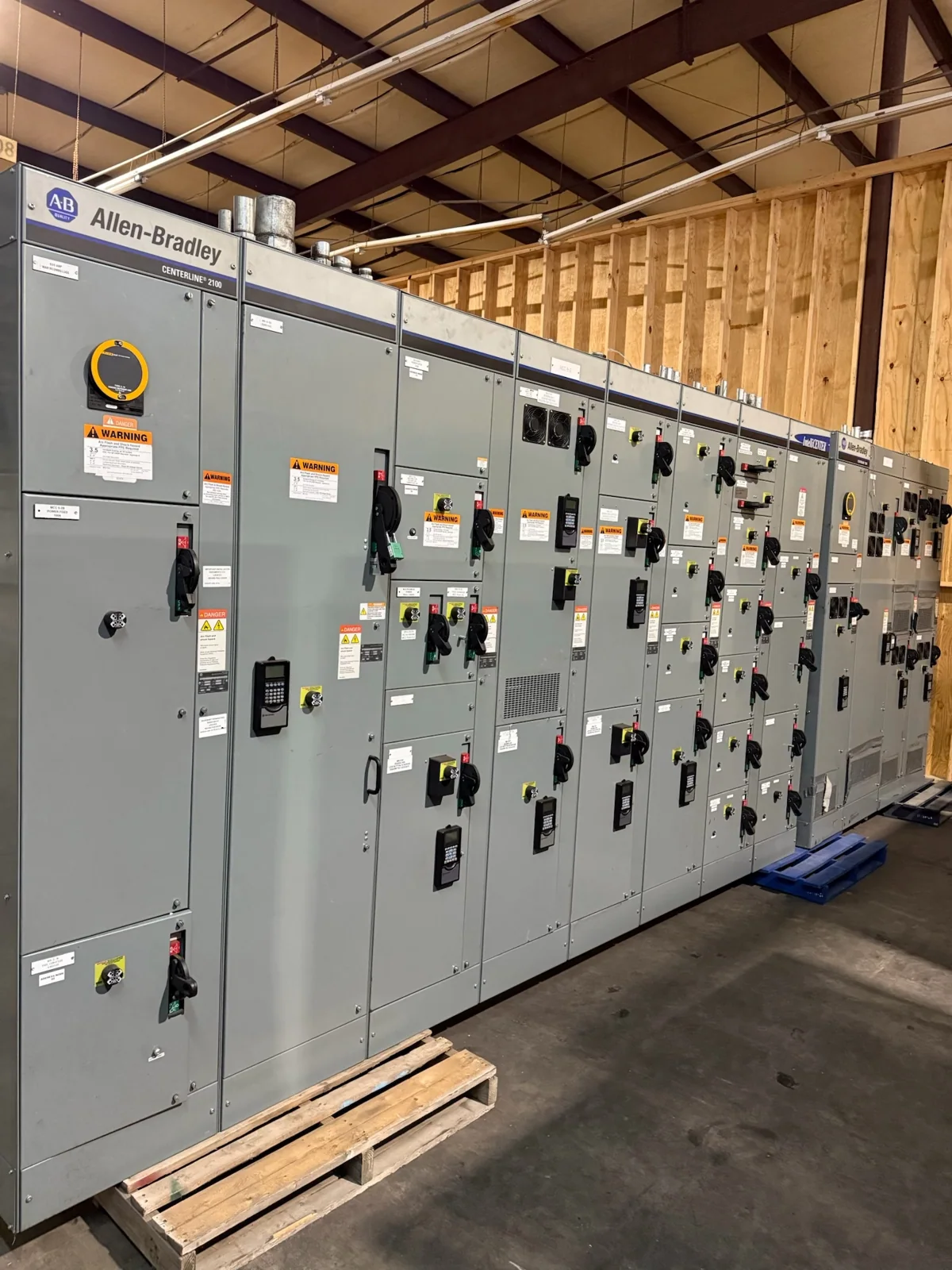
A 600-Volt Switchboard Inventory With a Clear Boundary
Hypothetical example: An Ohio facility is replacing an older service lineup while part of the building remains occupied. The proposed lot includes a main section, metering section, feeder sections, loose covers and a separately stored device. The right starting point is a written inventory showing what belongs to the sale and what must remain connected. Equipment from a decommissioned data center, shut-down power plant or industrial site still requires a clear release boundary before valuation.
The business buys electrical equipment rather than selling replacement gear. It considers all voltage classes, including 600-volt switchboards, and can make a cash offer after reviewing the lot. Once the seller accepts and the sale is agreed, payment is made upfront before the agreed pickup. The seller does not need to test the equipment. Qualified, authorized personnel establish safe conditions and handle disconnection.
Copy the Complete Documented Marking
Copy the full voltage wording from the existing nameplate, drawings or records. Include phase information, frequency, current and other values only when documented. “600 V” is a useful lead, but it does not establish every characteristic of the assembly. The main bus, service device and feeder devices may carry different ratings. Do not infer construction, suitability for a future installation or operating state from one number.
Keep transformer primary and secondary markings separate. A nearby transformer may have a primary voltage different from the switchboard's secondary voltage. State whether the transformer is included, adjacent, excluded or unknown. Manufacturer, catalog or series information helps only when visible in records or on an exterior label; a brand name alone does not prove that sections or breakers are interchangeable.
Map Main, Metering and Feeder Sections
Describe the lineup from left to right or by drawing labels. Identify the main, metering and feeder sections. Note each device designation, documented ampere rating and visible label. List blank spaces, spare positions, missing covers and removed devices instead of treating an empty compartment as complete.
- Main section: record the documented main-device description and whether it is present, separately stored or missing.
- Metering section: identify documented metering equipment and barriers, separating retained utility or owner equipment from the proposed lot.
- Feeder sections: list every feeder label, device position, cover condition and known missing part.
- Loose items: count covers, trim, hardware and stored breakers, stating when their section association is unknown.
This prevents enclosure length from being mistaken for a rating or completeness measure and gives the buyer a defensible picture of what can be released.
Sample Inventory for Evaluation
Hypothetical inventory: one documented 600-volt switchboard lineup with four visible sections; one labeled main section; one metering section retained pending approval; two feeder sections with exterior labels; one absent feeder device; three loose covers; and one stored device with an uncertain section match. State whether the lineup is installed, staged or stored, and whether any transformer, conduit, bus connection or protective barrier is included.
If records conflict with exterior labels, identify the conflict rather than choosing the more favorable description. Existing one-lines, equipment schedules and nameplate photographs can resolve questions without opening a compartment.
Condition Information Without Testing
Provide observable exterior facts only: dents, corrosion, water staining, missing doors, damaged hinges, removed trim, labeling quality, storage environment and whether parts are boxed or loose. Mention known contamination, fire exposure or flooding when applicable. Do not ask a seller to operate a breaker, open a compartment, energize anything or perform an electrical test. Qualified, authorized personnel must establish safe conditions and handle disconnection.
Condition affects valuation alongside completeness. A documented lineup with intact sections and identified accessories may be easier to evaluate than a clean enclosure with unknown devices. Long storage and mixed loose parts can increase uncertainty. The seller should not remove components before agreement.
Ownership, Occupancy and Release Logistics
In an occupied building, identify the exact boundary: sections proposed for sale, retained metering equipment and feeder paths serving occupied areas. Confirm who owns the switchboard, who can authorize release and whether a utility, landlord, tenant or plant operator has an approval role. A replacement date is not an authorized release date. Mark access rules and retained equipment unknown until coordination.
Access coordination includes loading hours, security procedures, escort needs, dock or door dimensions, floor restrictions and a route from the electrical room. The buyer handles crane arrangements, qualified disconnects, rigging, loading, freight and hauling. The seller is not expected to dismantle or move the switchboard. Access approvals are coordinated with the site; they do not shift removal costs or unsafe work to the seller.
What Shapes an Offer
Offer factors can include documented voltage and current, manufacturer, section count, completeness, metering boundaries, included devices, condition, ownership, release timing and access. Freight dimensions and lifting constraints matter because a large lineup needs careful handling. The buyer reviews the whole lot rather than assigning value from the 600-volt label alone. After agreement, payment is made upfront; seller testing is not required.
Seller Questions to Answer
- What is the complete documented voltage marking, including phase or multiple values where shown?
- Which main, metering and feeder sections are included, and which must remain?
- Are devices, covers, barriers or transformer components missing, retained or stored separately?
- Who owns the equipment and who can authorize release from the occupied or decommissioned site?
- What records and safe exterior photos show labels, layout, condition and lot boundary?
- What access approvals, loading restrictions and release date need coordination?
Share records and exterior views only.