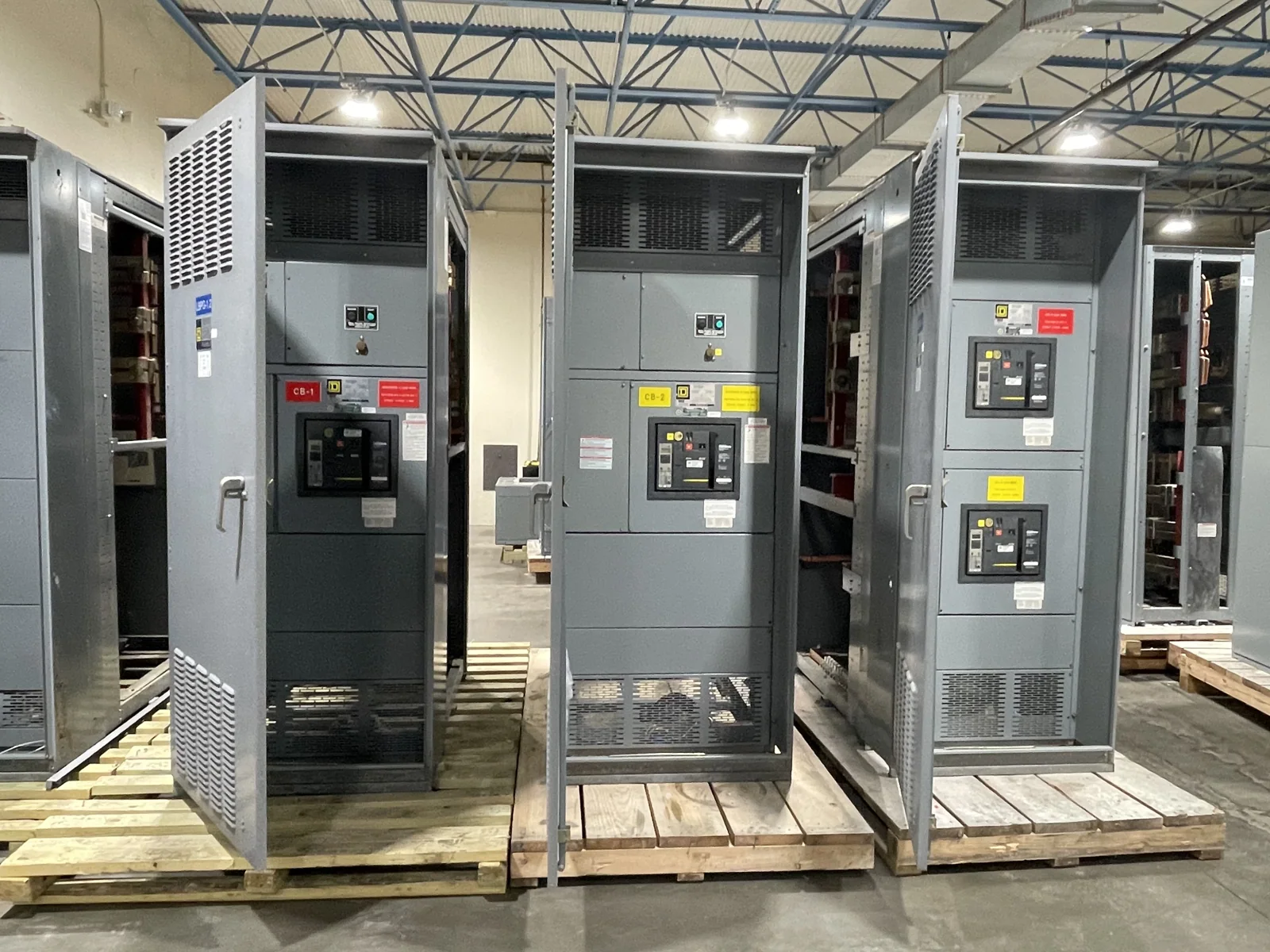
What exactly is being offered?
A 7,200-volt pad-mounted switchgear lot should be described from records and visible exterior markings, not from cabinet size or a single number. Copy the complete voltage marking exactly as shown on the nameplate or drawing. Include phase information, multiple voltage values, frequency, current, manufacturer, serial or asset identification, and date information only when documented. If a label lists several values, preserve their context instead of choosing the most convenient one.
Identify the outdoor enclosure, its number of cabinets or sections, visible switch handles or operating provisions, fuse compartments if documented, bushings, grounding provisions, and other recorded devices. Do not infer dead-front, live-front, metal-enclosed, or application suitability from appearance.
Which markings prevent a misunderstanding?
Does the 7,200-volt figure belong to switchgear, a transformer primary, or another installation component? Where a transformer is nearby or integrated into the documented arrangement, separate its primary marking from secondary voltage, phase, and connection information. A primary value does not establish secondary characteristics, and neither number proves compatibility, condition, or operating state.
Existing one-lines, schedules, nameplate transcriptions, purchase records, and decommissioning documents can clarify boundaries. Request safe exterior photos only. Do not open doors, remove covers, operate handles, touch components, or test anything. Keep unknown information identified as unknown.
What might a useful inventory contain?
A practical inventory separates items rather than calling everything “one switch.” A hypothetical record might list one outdoor enclosure with an asset tag, two documented switch devices, three separately identified compartments, stored operating parts, and drawings describing a nearby transformer connection. This is only an example, not a claim about an available Ohio lot. If devices are loose, list their tags and documented association with the enclosure instead of assuming they belong together.
- Record complete voltage wording, phase or multiple values, current, manufacturer, serial information, and section identifiers that are visible or documented.
- Count enclosures and devices separately; note whether each is installed, stored beside the equipment, or shown only on a drawing.
- List nameplates, drawings, manuals, spare parts, fuses, keys, barriers, and shipping supports only when their presence is known.
- Mark missing, unreadable, mismatched, or unverified items plainly; do not turn an assembly rating into a device rating.
How does condition affect the evaluation?
Condition includes more than paint. Describe visible corrosion, dents, cracked insulators, damaged doors, missing hardware, water intrusion, cabinet distortion, contamination, fluid concerns, and storage exposure. If a fluid issue or environmental concern is known, disclose it with available documentation; do not open the enclosure to investigate. Note whether the equipment was installed, preserved in storage, abandoned, or removed from service, while leaving present operating state unverified unless qualified personnel establish it.
The buyer does not require the seller to test switchgear. Qualified, authorized personnel establish safe conditions and handle disconnection. Missing documentation, uncertain device identity, corrosion, or contamination may affect value.
What determines the offer?
Valuation may reflect documented identity, completeness, voltage and phase information, device count, manufacturer, age, physical condition, storage history, and whether the enclosure and devices form a coherent lot. Removable components may have a different value from a complete pad-mounted assembly. Drawings that establish boundaries and records matching visible tags reduce uncertainty.
Restricted access, uncertain ownership, fluid concerns, unusual dimensions, missing lifting information, or required approvals can affect evaluation. An offer is based on the available information and agreed lot, not an assumed project or unverified performance claim.
Who owns it, and when can it be released?
Is the equipment customer-owned, utility-owned, leased, or subject to another party’s approval? Identify the documented owner and any utility, landlord, insurer, lender, environmental, or facility restrictions. A hypothetical redevelopment might place an enclosure beside active service. Then the proposed sale boundary, authorized release date, and approving contact must be separated from equipment that remains.
Release planning is coordination, not hazardous work for the seller. After agreement, the buyer handles crane service, qualified disconnects, rigging, loading, freight, and hauling. The seller can identify access rules, escorts, gate hours, overhead restrictions, pavement limits, and approvals.
What should a seller send first?
- A complete exterior nameplate transcription and safe exterior photos of the enclosure, labels, doors, visible devices, base, and damage.
- Existing one-lines, schedules, manuals, purchase or asset records, decommissioning notes, and ownership or release-boundary documents.
- Counts of enclosures and documented devices, plus a separate list of loose parts, spares, keys, drawings, and known missing items.
- Access restrictions, approval requirements, release date, and the person authorized to coordinate entry.
Useful questions include: Which voltage values are written on the equipment? Are phase and secondary markings documented? Who owns each enclosure and device? Is a utility or active-service boundary involved? What contamination, fluid issue, storage exposure, or damage is known? Which records match each asset tag? What must remain? Clear answers support a safe evaluation without asking anyone to operate or test equipment.
How are payment and removal handled?
Once equipment, ownership, scope, and release conditions are clear, the buyer can review the lot and provide a cash offer; once the seller accepts and the sale is agreed, payment is made upfront before the agreed pickup. The buyer handles the enclosure’s lifting approach, authorized disconnect, rigging, loading, freight, and hauling. The seller is not expected to supply a crane, dismantle switchgear, disconnect energized equipment, or arrange transport. Responsible parties still coordinate access approvals and outages.
If you have 7,200-volt pad-mounted switchgear in Ohio, send documented markings, safe exterior views, records, condition notes, ownership information, and release restrictions. Facts that remain unknown are preferable to assumptions about transformer markings, device ratings, construction, or retained site assets.