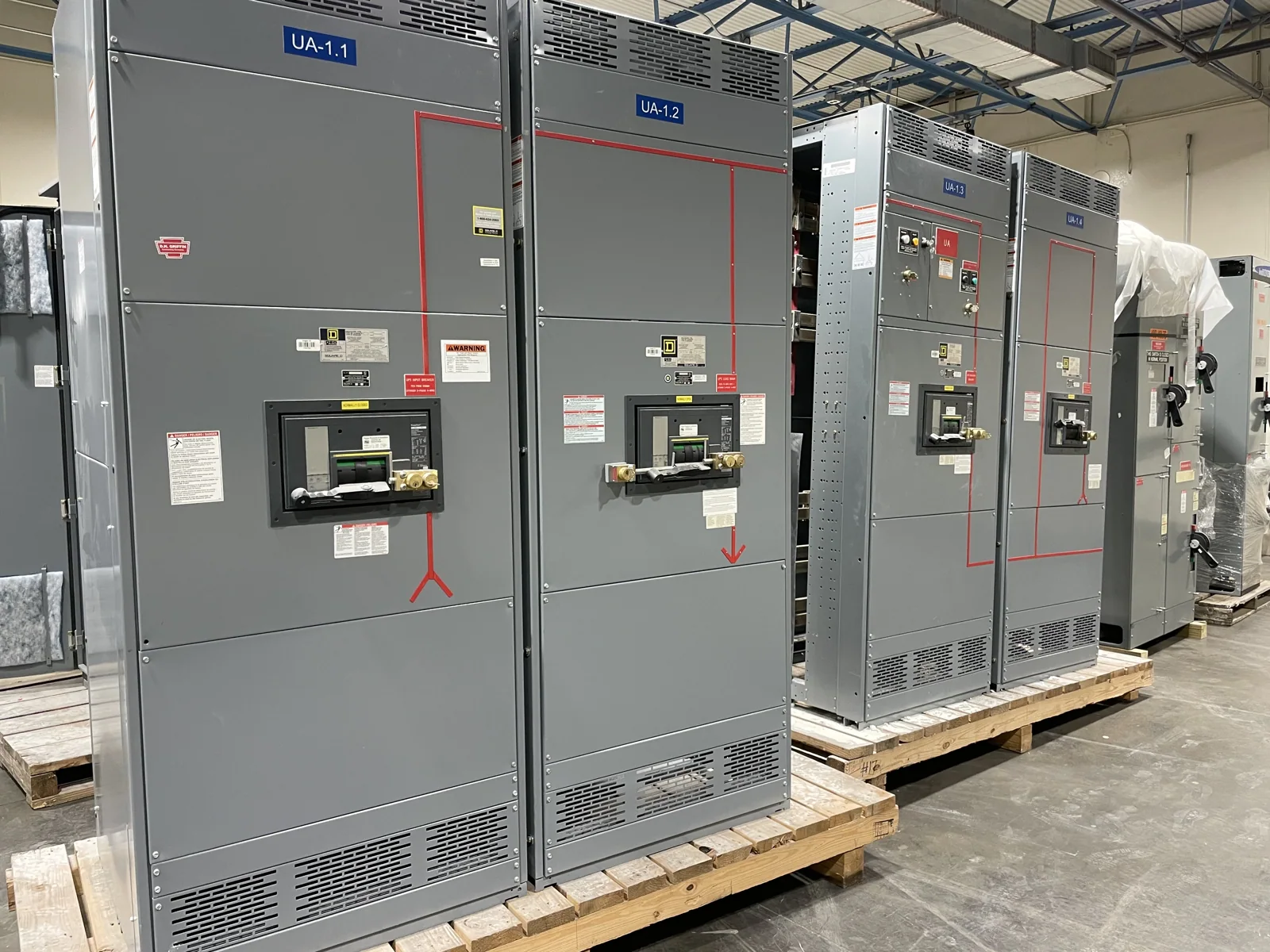
Start with the complete 4,160-volt identification
When a 4,160-volt pad-mounted switchgear lot is available in Ohio, the most useful first record is the equipment’s documentation. Please copy the full voltage marking exactly as it appears on the nameplate, drawing, or other existing record. Include phase information, frequency, continuous-current values, interrupting or fault-duty information, grounding details, and multiple voltage values only when they are actually documented. A single “4,160” on a label does not establish the complete rating or intended application.
Read the assembly label and the labels on visible switches, fuses, or other devices as separate records. If a transformer is nearby or associated with the installation, distinguish its primary marking from its secondary marking. Do not use the transformer’s number as the switchgear rating, and do not infer compatibility, construction, or operating state from appearance. The exterior enclosure may be weather-resistant, but that fact alone does not describe the internal equipment.
Build a useful sample inventory
A practical inventory identifies the complete outdoor enclosure, its manufacturer and serial or identification information when safely visible, the number of sections or ways, and each documented switch or other device. Record whether visible labels refer to the assembly, a compartment, a fuse set, or an individual switching device. Note bushings, cable-access areas, operating handles, interlocks, covers, ground provisions, and accessories only when the existing records or safe exterior view establish that they are present.
For example, a hypothetical inventory might describe one outdoor enclosure marked 4,160 volts, three documented switching positions, two visible device labels with their own ratings, and a separate folder containing a one-line drawing. It could also list loose, tagged fuses stored in a cabinet nearby, while marking their association with the enclosure as unconfirmed. That wording is more useful than combining every item into an assumed package. State what is installed, what is stored, what is missing, and what remains unknown.
Condition records that protect the evaluation
Condition affects the value of a 4,160-volt outdoor lot, but the seller does not need to open, operate, dismantle, energize, or test it. Safe exterior photographs can show cabinet surfaces, visible labels, signs of impact, corrosion, standing water, staining, vegetation, or contamination. Existing inspection reports, maintenance notes, outage records, and storage histories can add context without requiring new testing.
Disclose known fluid, oil, chemical, fire, flood, or environmental concerns plainly. Do not conceal damaged paint, distorted panels, missing hardware, inaccessible labels, or a door that cannot be safely viewed. A clean exterior does not prove that internal parts are complete or serviceable. Conversely, an aged appearance does not by itself determine whether the equipment can be valued. The evaluation can separate observed facts from assumptions and identify items requiring qualified review.
Ownership, boundaries, and release authority
Before an offer is finalized, establish who owns the pad-mounted enclosure and every device proposed for sale. Outdoor switchgear may sit near a utility service, transformer, easement, customer facility, or shared electrical yard. Proximity is not proof of ownership. Provide purchase, asset, lease, decommissioning, or transfer records when available, and identify any utility, landlord, lender, insurer, environmental, or site-owner approval that controls release.
A hypothetical redevelopment could place customer-owned 4,160-volt switchgear beside an active service that must remain. In that situation, the sale boundary should name the enclosure and included devices while excluding the retained service, cables, transformer, or utility-owned assets. The actual authority, safe-condition determination, and release date are facts to confirm; they should not be guessed from a photograph.
Offer factors and safe release logistics
Valuation may reflect complete ratings, traceable identity, documented ownership, section and device count, record completeness, exterior condition, contamination disclosures, storage exposure, and whether the proposed lot has a clear boundary. It can also reflect removal conditions: enclosure dimensions, approximate weight from records, surface access, overhead clearance, gate restrictions, loading hours, and whether a crane or specialized rigging arrangement will be needed. These are planning inputs, not instructions for the seller to handle the equipment.
After agreement, the buyer handles coordination for qualified disconnects, crane work, rigging, loading, freight, and hauling. The seller’s role is to identify the authorized contact, share access rules, and coordinate approvals or site windows. The seller does not need to arrange removal, dismantling, testing, or energized work. Qualified, authorized personnel must establish safe conditions and perform any required disconnection. Payment is made upfront after agreement under the agreed arrangement; the specific amount and schedule depend on the documented lot and release terms.
Seller questions to answer
- What is the complete voltage, phase, current, frequency, and duty marking for the assembly and for each separately labeled device?
- Is the equipment customer-owned, utility-owned, leased, shared, or subject to another release restriction?
- How many enclosures, sections, switches, fuses, accessories, drawings, and separately stored parts are included?
- Which items are installed, which are stored, and which matches are documented versus unknown?
- Are there known corrosion, impact, moisture, contamination, fluid, fire, flood, or environmental concerns?
- Who can authorize release, approve access, and confirm the date when the lot is no longer needed?
- What safe exterior photos and existing records show the labels, boundaries, access route, and known restrictions?
Send the records and safe exterior views available. No seller testing is required, and no one should touch or operate energized equipment. Clear documentation lets the buyer evaluate the 4,160-volt pad-mounted switchgear as a defined Ohio lot rather than as an unsupported rating guess.