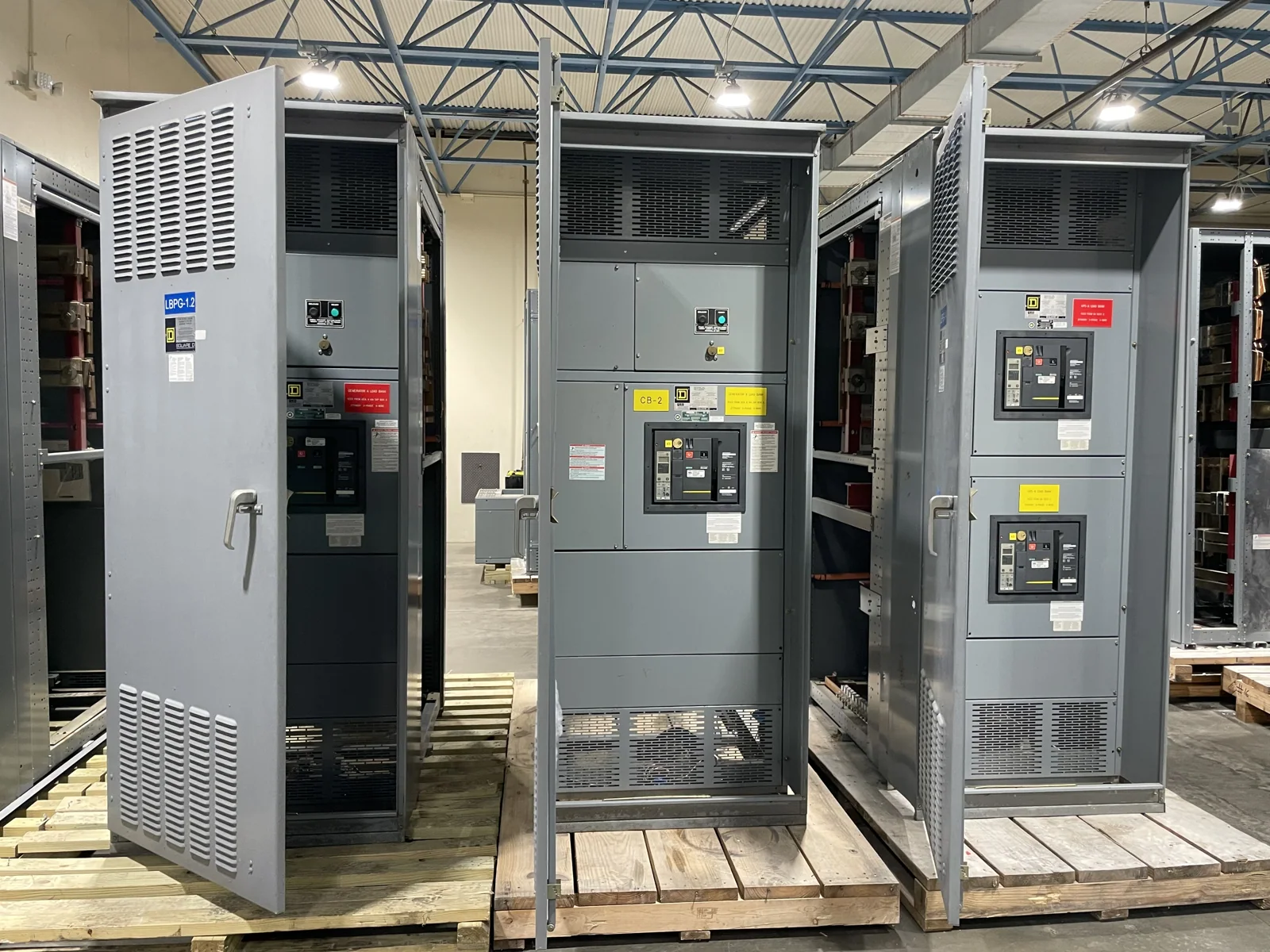
Start with the complete equipment identity
When a 12,470-volt pad-mounted switchgear unit becomes surplus in Ohio, the useful first step is recording what the existing paperwork and exterior nameplate actually say. Copy the full voltage marking, including phase information or multiple voltage values only when documented. A single number can describe one part of a system and does not, by itself, prove the construction, suitability, or operating state of the complete assembly.
Describe the outdoor enclosure as a complete item: manufacturer, catalog or serial information if visible, number of ways or compartments, approximate dimensions, and attached handles or indicators visible from a safe exterior position. Existing one-line diagrams, purchase records, inspection records, photographs, and asset registers can help reconcile the label with the proposed lot. The buyer considers equipment across voltage classes, so a clear record is more useful than an assumption about application.
Separate primary and secondary information
Some pad-mounted equipment is associated with a transformer or broader distribution arrangement. If transformer information is present, keep the primary marking separate from the secondary marking, and transcribe each documented value with its side of the equipment. A secondary rating is not automatically the switchgear voltage. Do not infer a transformer configuration from enclosure size, bushing appearance, or a familiar number. If records do not establish the relationship, mark it as unknown.
This distinction matters when matching a 12,470-volt primary switchgear lot. Identify what is physically inside the enclosure, what is mounted beside it, and what remains in the service boundary. Adjacent equipment should not be included merely because it is nearby.
Example inventory for a hypothetical surplus lot
Hypothetical example: A property owner may describe one outdoor enclosure as “12,470 volts” and offer a one-line drawing, nameplate photograph, and old asset record. A useful inventory would list the enclosure as one unit; documented manufacturer and serial or catalog reference; switch positions shown on the record; each visible device or fuse designation; associated transformer primary and secondary markings, if documented; removable or separately stored components; and covers, barriers, keys, or accessories known to belong to the lot.
- Record each enclosure separately instead of combining several units into one count.
- List loose parts by description and documented association; an unmarked component remains unconfirmed.
- Note whether records describe the equipment as installed, removed, stored, or awaiting release.
- Identify adjacent transformer, meter, cable, or utility equipment as excluded, retained, or unknown until ownership is confirmed.
This inventory supports matching and handling plans without asking the seller to open, operate, dismantle, or test anything.
Condition details that affect an offer
Safe exterior observations can reveal valuation factors. Describe cabinet corrosion, impact marks, damaged doors, missing visible hardware, cracked external insulators, bent lifting points, standing-water evidence, vegetation contact, or signs of fire and flooding. Report known oil, fluid, chemical, or other contamination concerns exactly as documented; do not sample, clean, drain, or disturb the enclosure. A clean-looking cabinet is not proof that internal components are complete, dry, or serviceable.
Documentation also affects value. A legible nameplate, consistent drawings, preserved device labels, and a clear component boundary reduce uncertainty. An incomplete record, mismatched serial information, unknown storage history, or missing covers can change the evaluation. The buyer does not require the seller to perform testing; qualified, authorized personnel establish safe conditions and equipment status.
Ownership and release logistics
Confirm who owns the enclosure and every proposed component before discussing a sale. Customer-owned switchgear may be surplus, while utility-owned assets, utility-side conductors, meters, or service equipment may remain outside the seller’s authority. A property owner, tenant, contractor, lender, utility, or another party may hold a different interest. Identify the authorized decision-maker and provide records showing the boundary where available.
For a hypothetical redevelopment, an outdoor unit might sit beside an active service needed by another occupant. The relevant questions are who can approve release, when the unit is available, what access restrictions apply, and which equipment must stay. Access approval is coordination; it does not shift crane, qualified disconnect, rigging, loading, freight, or hauling costs to the seller. After agreement, the buyer handles those removal and transportation arrangements, while qualified personnel establish safe conditions and complete disconnection.
The seller should not move the enclosure or prepare it for shipment. Instead, share gate procedures, escort requirements, surface conditions, overhead obstructions, restricted hours, staging limitations, and rules about trucks or cranes. These details help the buyer plan a safe outdoor release without treating an uncertain route as confirmed.
Questions to include with an evaluation request
- What is the complete documented voltage wording, including phase or multiple values?
- Which markings belong to the switchgear, and which belong to an associated transformer primary or secondary?
- Is the equipment customer-owned, utility-owned, leased, or subject to another release approval?
- What enclosure count, switch positions, devices, accessories, and stored parts are included?
- Are there known contamination, fluid, flood, fire, impact, corrosion, or missing-component concerns?
- What records exist, and what site restrictions govern an authorized pickup?
- When can the equipment be released, and who coordinates access with the buyer’s removal team?
Provide existing records and safe exterior photos only. Do not test or operate the equipment. Once the lot, ownership, condition, and release terms are understood, the buyer can evaluate the 12,470-volt pad-mounted switchgear and make a cash offer. Payment is made upfront after agreement, and the seller is not required to perform testing or arrange heavy removal work.