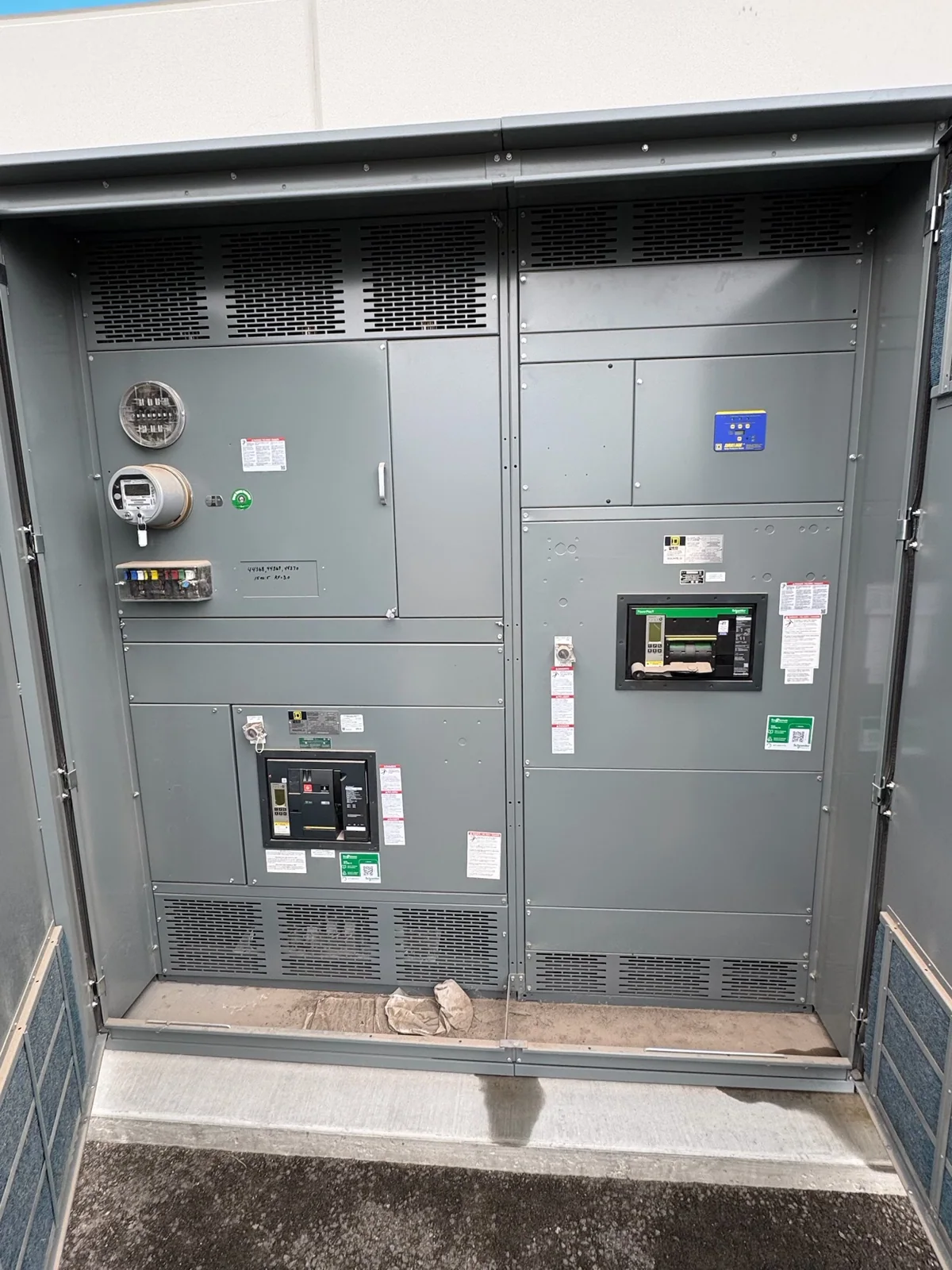
A redevelopment team has cleared a fenced equipment yard and finds an outdoor pad-mounted enclosure marked “13,800 V” on one visible plate. That is the right starting point when you want to sell 13,800-volt pad-mounted switchgear in Ohio: document what is visible, identify what is unknown, and let a qualified, authorized crew establish safe conditions.
Start with the complete documented identity
Copy the full voltage marking exactly as it appears in existing records or on an accessible exterior nameplate. Include phase information, frequency, continuous-current wording, fault or interrupting information, and multiple voltage values only when they are actually documented. A marking of 13,800 volts may describe a primary side, while a second plate may identify a different secondary arrangement or transformer relationship. Do not turn a partial label into a claim about suitability, construction, or operating state.
Record the manufacturer name, serial or identification number, approximate dimensions, section count, switch positions shown on labels, and any transformer reference. The enclosure itself is useful evidence, but appearance alone cannot establish whether the equipment is dead, serviceable, complete, or compatible with a future installation.
Sample inventory for a hypothetical Ohio release
Hypothetical example only: a property owner has one pad-mounted enclosure from a discontinued industrial service. The proposed lot description might read as follows:
- One outdoor pad-mounted switchgear enclosure, with the complete documented voltage marking recorded verbatim from the exterior plate.
- Three labeled switch compartments or positions, with the visible device designations and nameplate information listed separately rather than summarized as “13.8-kV gear.”
- One set of exterior doors and guards, with paint loss and a dented lower corner noted; interior completeness remains unknown.
- One folder containing an as-built drawing and ownership record, plus two loose tags whose association with the enclosure is unconfirmed.
- Known site restrictions: a locked gate, a narrow paved approach, overhead obstructions, and a release date that depends on property access approval.
This kind of inventory separates the enclosure, devices, documents, loose parts, and access facts. It also prevents a seller from accidentally including an adjacent transformer, utility asset, or active service component that is not part of the sale.
Condition and environmental information matter
Describe only conditions that can be observed safely from outside or supported by existing records. Useful notes include corrosion, coating failure, standing water around the pad, impact damage, missing exterior hardware, faded labels, evidence of prior flooding, and whether doors or barriers appear compromised. Report known oil, insulating-fluid, PCB-related, chemical, soil, or other environmental concerns directly. If the substance, quantity, or regulatory status is unknown, say so; do not guess from color or odor.
Safe exterior photos can show the nameplate, doors, base, visible damage, surrounding clearance, and route to the enclosure. Do not open compartments, operate handles, remove covers, touch conductors, or test anything. Qualified, authorized personnel establish safe conditions and handle disconnection when required.
What shapes an offer
Value depends on more than the 13,800-volt designation. The evaluation may consider documented identity, manufacturer and age, switch and fuse information, completeness of the lot, enclosure condition, traceable ownership, environmental disclosures, and whether records support the stated configuration. A clean, identifiable assembly with associated drawings may be easier to evaluate than a visually similar enclosure with missing labels and uncertain history. All voltage classes can be considered; the key is accurate documentation, not a seller’s assumption about resale use.
Separate installed equipment from stored accessories and distinguish a transformer’s primary and secondary markings when applicable. A cash offer can be made after the buyer reviews the equipment, ownership, condition, and release facts. Once the seller accepts and the sale is agreed, payment is made upfront before the agreed pickup according to the transaction terms; the seller does not need to fund testing or prepare the equipment for operation.
Ownership, access, and safe release
Confirm who owns the enclosure and every included device. Utility-owned assets, customer-owned gear, leased equipment, landlord property, and equipment serving a neighboring tenant may require different approvals. Ask the responsible owner or facility contact to identify the exact sale boundary. If an outdoor enclosure sits near an active service, provide the authorized release date, outage coordination status, gate or escort requirements, and any restrictions on truck positioning.
After agreement, the buyer coordinates the crane, qualified disconnects, rigging, loading, freight, and hauling. The seller is not expected to arrange demolition, dismantling, or transportation. Access approvals should be arranged with the owner and site contact so the safe removal plan matches the facility’s rules.
Questions to include with your records
- What is the complete documented voltage marking, including phase or multiple values where shown?
- Is the equipment customer-owned, utility-owned, leased, landlord-owned, or otherwise restricted?
- What devices, compartments, transformers, fuses, barriers, documents, or loose parts are confirmed included?
- Are there known fluid leaks, contamination concerns, flooding, fire exposure, corrosion, impact, or missing labels?
- What equipment must remain in service, and what authorized date defines the release boundary?
- Who can approve site access, qualified disconnection, crane positioning, loading, and pickup coordination?
Send existing records and safe exterior photos with those answers. That honest package gives the buyer a practical basis to evaluate the 13,800-volt pad-mounted switchgear without asking anyone to open, operate, dismantle, energize, or test it.