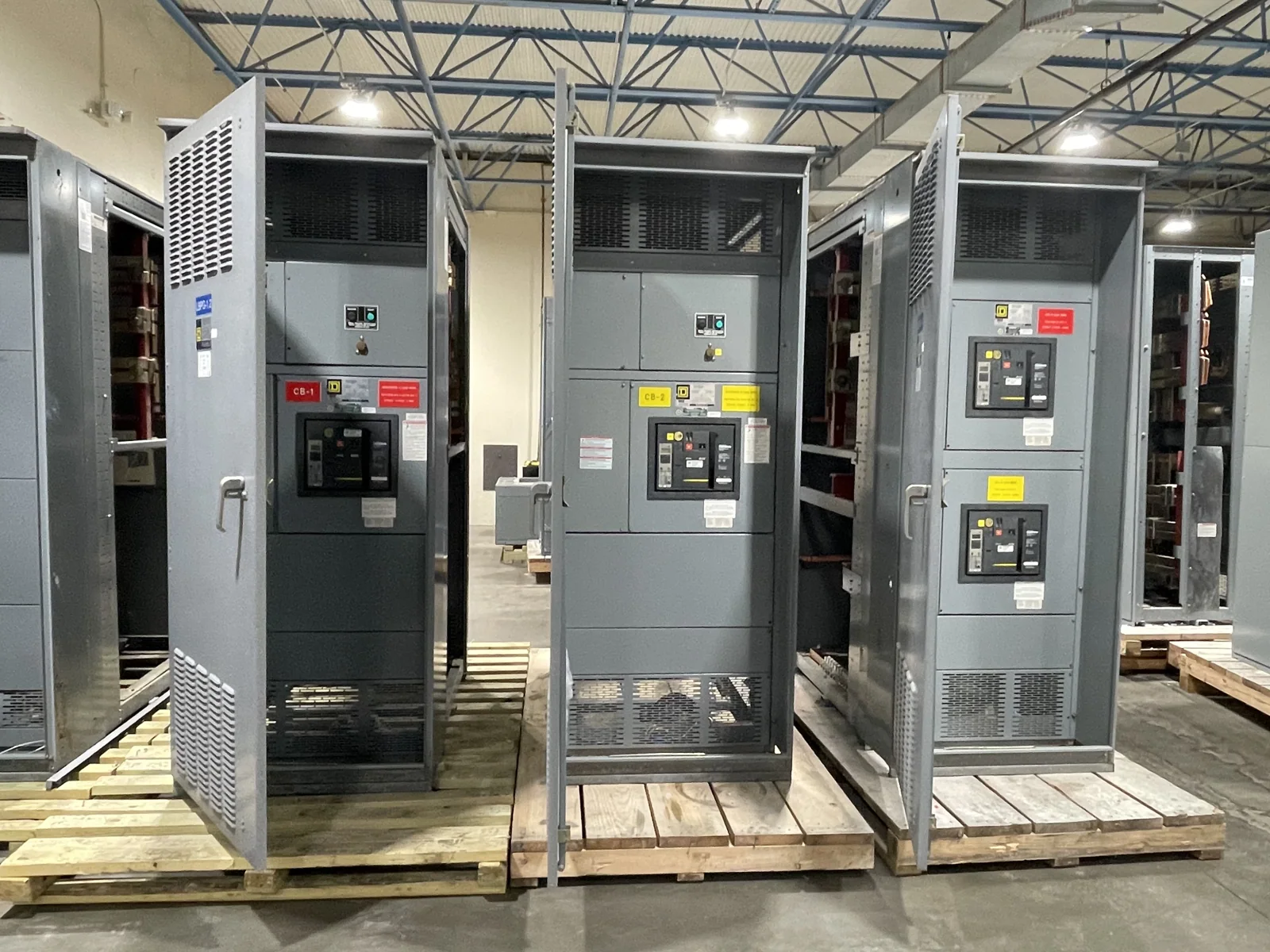
Selling 600-amp pad-mounted switchgear in Ohio starts with identifying the rated component. An enclosure that looks substantial is not proof that every switch, fuse compartment, bus section or termination is rated 600 amps. An evaluation begins with the visible nameplate, exterior labels and existing schedules, while leaving unreadable or undocumented values unknown.
Confirm what the 600-amp designation describes
Share the full wording from the assembly label if it can be read without opening or operating anything. The 600-amp figure may apply to the assembly, a continuous-current path, a switch or another identified component. Those descriptions are not interchangeable. Continuous current, interrupting rating and trip settings are separate facts. A protective device has its own interrupting capability and settings that cannot be inferred from the cabinet rating. Do not apply a bus rating to every device without documentation.
All voltage classes are considered; the 600-amp label alone does not establish voltage. Existing schedules and safe exterior label photos can support the evaluation, while unsupported values remain unknown.
Ownership and site authority come first
Outdoor pad-mounted gear may be customer-owned, utility-owned, leased, or part of a boundary where ownership is unresolved. Confirm who can sell it and whether an easement, utility approval, landlord consent, environmental review or redevelopment release is involved. If a cabinet is beside active service equipment, identify the proposed sale boundary rather than assuming nearby transformers, cable, concrete, fencing or terminations are included.
Hypothetical sale situation one: A property owner planning redevelopment has one outdoor enclosure marked for replacement, but the utility retains ownership of the incoming section. The owner could provide the visible identification and written release boundary while the utility or its authorized contractor coordinates isolation. The evaluation would cover only the customer-owned portion released for purchase; adjacent utility assets would remain outside the lot. This illustrates a process, not a claim about a particular Ohio site.
Document the inventory without disturbing equipment
Identify the enclosure as a whole, then describe visible components. Record the number of switch ways or compartments shown on the exterior schedule, visible device labels, nameplate values, fuse positions if documented, attached accessories and separately stored parts. Note whether doors, handles, labels and base sections appear present, and whether loose items have a documented association with this enclosure.
- Outdoor enclosure: pad-mounted cabinet, recorded dimensions, nameplate information and visible door or hinge condition.
- Switching devices: documented quantity, identification and rating for each visible switch or way; do not estimate from appearance.
- Stored items: labeled fuses, operating accessories, barriers or records only when ownership and association are known.
- Unknowns: missing labels, inaccessible compartments, uncertain fluid condition, unverified voltage and unsupported components.
Safe exterior photographs can show the nameplate, cabinet faces, base, roof, vents, corrosion, impact marks, standing-water evidence and surrounding clearance. Sellers need not open the enclosure, operate a handle, touch a component or test anything. If a label cannot be read safely, call it unknown.
Condition, completeness and offer factors
Condition is more than paint. A buyer may consider corrosion at the enclosure and base, bent doors, missing locks or covers, cracked external insulators, flooding evidence, contamination, fluid concerns, fire damage, impact, storage exposure and whether the equipment was installed or kept in reserve. Completeness also matters: a documented 600-amp assembly with identified sections differs from a cabinet with missing devices or untracked loose parts.
Potential offer factors include the verified component rating, voltage class, manufacturer, quantity of saleable sections, known condition, ownership clarity, completeness, location restrictions, loading complexity and freight requirements. These factors are considered together rather than converting “600” into a presumed value; unsupported information remains uncertain.
Release, staging and freight coordination
After agreement, payment is made upfront according to the agreed arrangement. The seller does not arrange testing or dismantling. Qualified, authorized personnel handle isolation and disconnection, and the buyer handles the crane, qualified disconnects, rigging, loading, freight and hauling. Site access still needs coordination: provide the authorized contact, release date, gate or escort requirements, overhead or ground-clearance restrictions, traffic controls, surface limitations and approvals for truck or crane access. Sharing constraints helps plan the work; it does not shift removal costs or technical responsibility to the seller.
Keep the equipment in its existing condition until release is coordinated. Do not move, open, energize, dismantle or attempt to verify the rating by operating the gear. If the enclosure is adjacent to active service, a qualified authorized team must establish the safe boundary and isolation plan.
Seller questions for an Ohio evaluation
- Which exact component or assembly bears the documented 600-amp rating?
- What voltage, manufacturer, serial or catalog information appears on the exterior label or schedule?
- Who owns the enclosure and each connected section, and who can authorize release?
- What devices, accessories or records are included, and which nearby assets must remain?
- Are corrosion, impact, flooding, contamination, fluid concerns or missing parts known?
- What access approvals, escort rules, staging limits and authorized release date apply?
Hypothetical sale situation two: A shut-down power plant has several outdoor cabinets, but its inventory sheet combines equipment from different yards. The seller can separate each enclosure by label, ownership and release boundary, flag unknown voltage or records, and identify the truck route and access approvals. The buyer can evaluate a defined lot and coordinate crane, rigging, loading and hauling without asking the seller to test or dismantle anything.
Provide records and exterior images, identify unknowns, and describe the sale boundary for evaluation without disturbing energized equipment.