What does “2,000 amp” actually describe?
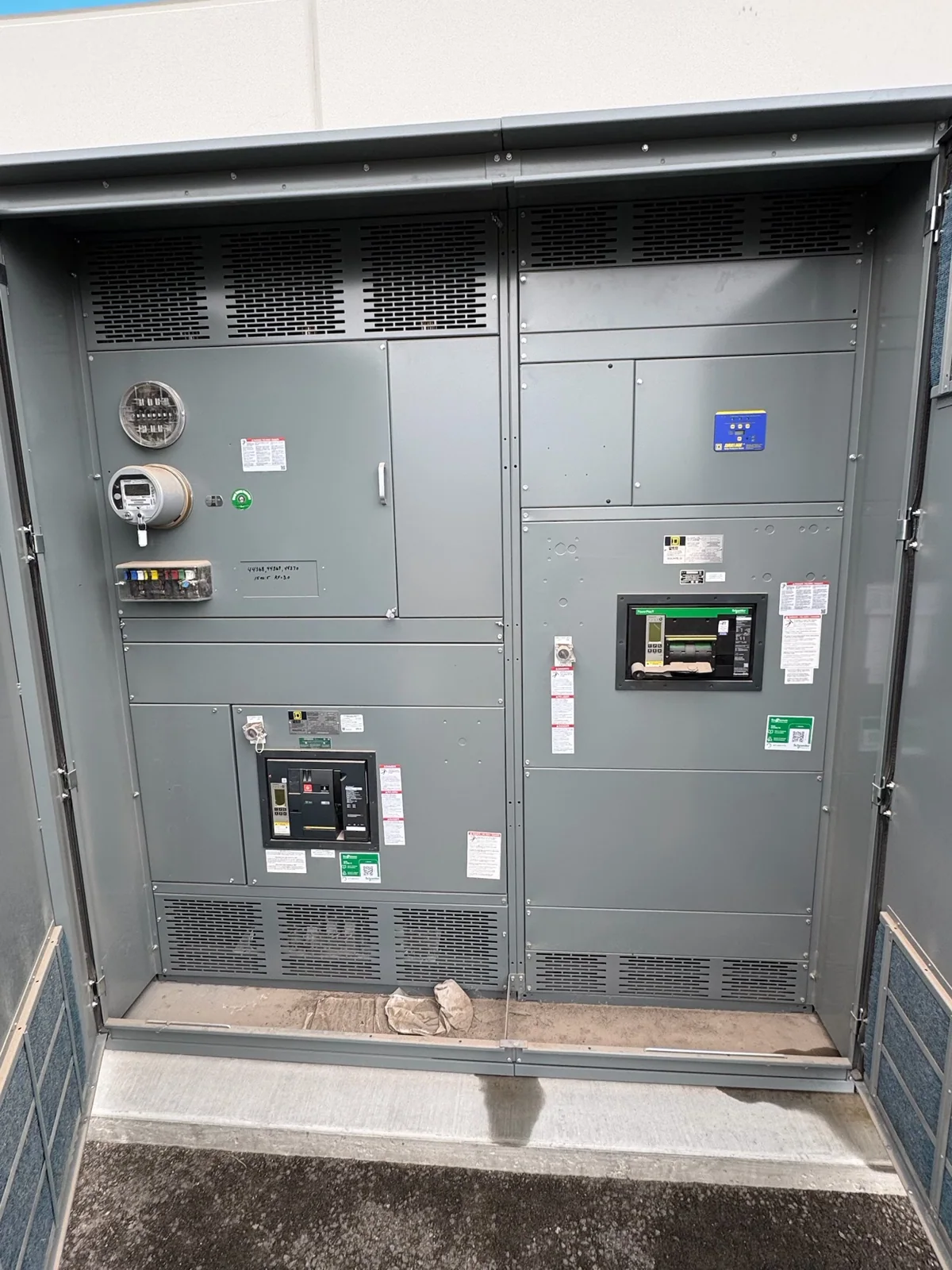
When a seller says a pad-mounted switchgear unit is 2,000 amp, which component carries that number? That is the first question in an evaluation. The rating may appear on the outdoor enclosure assembly, a bus or conductor system, a switch, or another documented portion of the equipment. A visible label, one-line diagram, equipment schedule, or other existing record should identify the rated component. Do not assume that every switch, fuse compartment, or device inside the enclosure is rated 2,000 amp simply because the assembly is described that way.
Continuous current, interrupting rating, and trip settings answer different questions. Continuous current concerns the current the applicable component is designed to carry under stated conditions. Interrupting rating concerns fault-current interruption capability. A trip setting is an adjustment or programmed value for a protective device, not a substitute for the assembly rating. If a value is not documented, it remains unknown rather than being inferred from enclosure size, appearance, or a nearby label.
Which information should a seller identify?
A useful inventory names the enclosure, visible switches or other devices, quantities, and ratings readable from safe exterior labels. Record manufacturer and catalog information only when visible or supported by existing schedules. Note whether the equipment is installed outdoors, stored on site, or associated with an active service. A safe exterior photograph can help, but no one should open the enclosure, operate a handle, remove a cover, or approach energized equipment for a better image.
Ownership matters as much as identification. Is the switchgear customer-owned, part of a landlord’s electrical system, controlled by a utility, or subject to another party’s rights? The answer may require a deed, asset record, service agreement, utility correspondence, or an authorized facilities contact. If ownership is unclear, the equipment cannot be treated as freely releasable. The buyer can evaluate a proposed lot while that authority is being coordinated.
What would a documented inventory look like?
Hypothetical example: an Ohio facility provides a schedule identifying one pad-mounted enclosure, a documented 2,000-amp continuous-current main-bus rating, two switching sections, and protective devices with separate markings. One section remains connected to active service while another is designated for replacement. The seller should list the proposed release section, included devices, and adjacent assets that remain.
- One outdoor enclosure, with dimensions and weight left unknown unless supported by records.
- The component identified as 2,000 amp, including the exact wording from its schedule or label.
- Each switch, fuse or other device, with its own visible rating and identification.
- Accessories, barriers, operating hardware, drawings, keys, spare parts, and known missing items.
- Visible corrosion, impact, cracking, standing water, contamination, leaks, or other environmental concerns.
This separation prevents a large enclosure from being mistaken for a complete, uniformly rated system and distinguishes installed equipment from loose parts that may belong to another lineup.
How do condition and completeness affect an offer?
Condition is assessed from documentation and observable exterior evidence. Weather exposure, rust, damaged doors, compromised gasketing, fluid residue, staining, suspected oil or other contamination, and flooding may affect handling and valuation. Describe environmental concerns plainly; do not speculate about a substance or claim the equipment is clean without evidence. No visible problem is a certification of internal condition.
Completeness is equally important. A unit with its documented enclosure, switching devices, barriers, labels, operating accessories, and records may be more useful than a shell with missing components. A potential offer can reflect ownership certainty, release-boundary clarity, documentation, condition, loading difficulty, and freight requirements. These are evaluation factors, not a promised price. No seller testing is required.
What site access and approvals must be coordinated?
Outdoor placement does not guarantee easy removal. Identify gates, locked areas, overhead obstructions, soft ground, slopes, narrow drives, traffic controls, and restrictions on crane setup or truck positioning. Note whether the enclosure is near an active service, public area, other utility assets, or a facility with escort requirements. Dimensions, weight, lifting points, and underground conditions remain unknown until supported by records or qualified planning.
Approvals should be coordinated before a release date is treated as firm. The owner, utility or other controlling party may need to confirm the asset boundary, outage status, isolation authorization, environmental handling requirements, and permission for a hauling crew to enter. This coordination does not shift removal costs or technical duties to the seller. Qualified, authorized personnel handle isolation and disconnection, while the buyer coordinates the crane, rigging, loading, freight, and hauling after agreement.
What should sellers ask before agreeing?
- Which exact component bears the documented 2,000-amp rating?
- What ownership evidence and authorized release contact are available?
- Is the proposed equipment separate from an active service or adjacent retained gear?
- What exterior damage, fluid issue, contamination concern, or flood exposure is known?
- Which records, labels, accessories, spares, and missing parts are included?
- What access approvals, escort rules, staging limits, and release date must be coordinated?
- Who will establish safe conditions and perform qualified isolation and removal?
Share existing schedules and safe exterior photos when available, and identify unknown values honestly. After the lot and authority are understood, the buyer can discuss a cash offer. Once an agreement is reached, payment is made upfront under the agreed terms, while the buyer manages the qualified disconnect, crane, rigging, loading, freight, and hauling. Sellers do not need to operate, dismantle, or test the switchgear.