What does “2,000 amps” actually describe?
Is the 2,000-amp figure printed on the lineup nameplate, the main incoming device, a bus section, or a feeder? That is the first useful question when you want to sell 2,000-amp switchgear in Ohio. A large assembly may contain a 2,000-amp main bus while individual devices carry different ratings. A breaker label, bus label, and assembly schedule describe different parts. Do not apply the bus rating to every device without evidence.
Existing schedules, one-line drawings, bills of material, and exterior nameplate photographs can establish the voltage class, phase arrangement, manufacturer, sections, and protective-device positions. If a value is missing or illegible, leave it unknown rather than estimating from cabinet size. This buyer considers switchgear across voltage classes; documented voltage matters more than appearance.
How should a large lineup be counted?
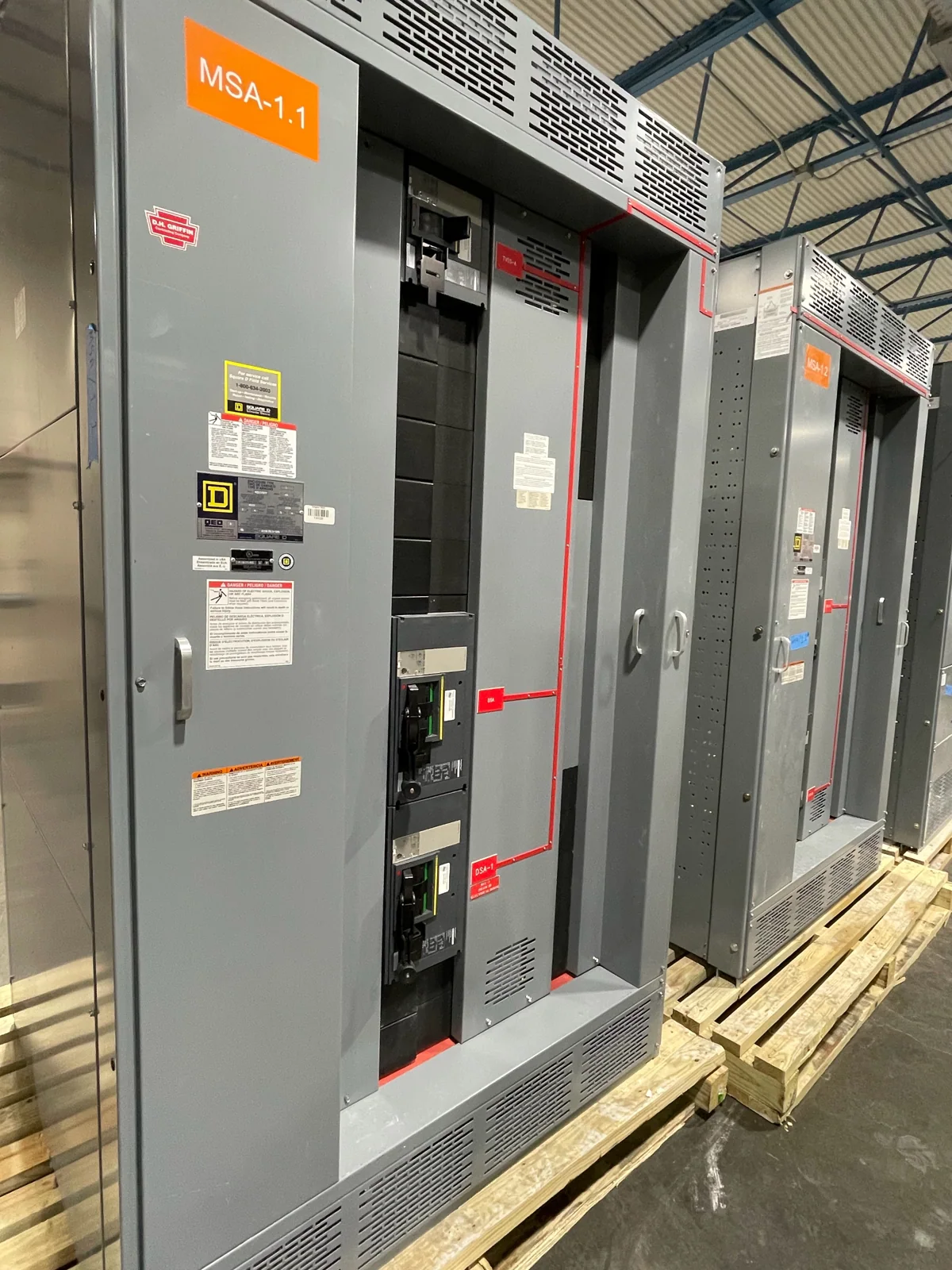
Can a reviewer tell where the lineup begins and ends? Count every section separately, then identify incoming, tie, outgoing feeder, and metering sections when the records support those descriptions. Note whether sections are connected, stored apart, or only shown on a drawing. A long lineup is not automatically complete, and an empty compartment is not proof that its device is included.
Separately stored breakers, fuses, trip units, controls, barriers, and hardware need their own counts and stated associations. If a loose device is merely believed to belong to a section, label that association as possible. Device fit and original position remain unknown unless supported by documentation.
Hypothetical inventory example
Hypothetical example: an Ohio facility reports six indoor sections. Its schedule identifies a 2,000-amp main bus, one incoming device, four feeder positions, and one tie position. Two feeder breakers are installed, one position is blank, and three loose breakers are stored nearby. A useful inventory lists the six sections, bus rating, every visible device marking, blank position, three stored breakers, and records linking—or failing to link—each spare to a section. It does not call every breaker 2,000 amp.
Which electrical ratings must stay separate?
Does “2,000 amps” mean continuous current, interrupting rating, or a trip setting? These are not interchangeable. Continuous current concerns the relevant equipment’s stated current rating. Interrupting rating concerns the fault current a device is identified to interrupt. Trip settings describe protection adjustments and may differ from frame or sensor ratings. Record exact wording and units from the label or schedule, including voltage and interrupting information, instead of converting one rating into another.
The seller does not need to calculate fault levels, change a setting, open a compartment, or test the equipment. Provide safe exterior labels and existing records only. Qualified, authorized personnel must establish safe conditions and handle isolation or disconnection.
What condition and completeness details matter?
Condition is more than paint. Identify whether the lineup is installed, disconnected, stored indoors, or exposed to weather, while leaving unverified status unknown. Note visible corrosion, dents, water staining, contamination, missing covers, damaged doors, removed barriers, and absent nameplates from safe exterior views. Never open, operate, dismantle, or touch energized equipment to obtain these details.
Report the section count, main and feeder devices, stored spares, control power components, metering, and known missing pieces. Equipment from a decommissioned data center may include organized spares and drawings; equipment from a shut-down power plant may be larger, mixed by release phase, or accompanied by incomplete records. Those are possibilities, not assumptions about a particular Ohio site.
How are ownership and release authority handled?
Who owns the lineup, and who can authorize its release? Confirm whether it is company-owned, leased, part of a landlord’s building system, subject to a contract, or utility-owned. Identify the owner or authorized representative, exact lot boundary, and equipment that must remain in service. For a plant shutdown or data-center decommissioning, separate saleable equipment from retained infrastructure and record staged release dates.
Access approvals are coordinated with the owner, facility contact, and site rules. The seller supplies records and safe exterior images; qualified personnel handle safe isolation and removal. The buyer handles crane coordination, qualified disconnects, rigging, loading, freight, and hauling, rather than asking the seller to perform those tasks.
What supports a potential offer?
Offer factors may include the verified 2,000-amp component, voltage class, manufacturer, configuration, number of complete sections, matching devices, associated spares, condition, record quality, ownership clarity, and handling complexity.
Access height, door dimensions, floor-loading information, staging space, crane reach, loading hours, and freight restrictions help define the work. Report those as site facts, not guesses. After reviewing the equipment and release conditions, the buyer can make a cash offer; once the seller accepts and the sale is agreed, payment is made upfront before the agreed pickup according to the agreed terms, and the seller is not asked to test the equipment first.
What should a seller send first?
- Safe exterior photographs of each section, nameplate, device label, stored spare, and visible damage.
- Existing one-lines, schedules, bills of material, inspection records, and shutdown or decommissioning lists.
- Documented voltage, current wording, interrupting information, trip information, manufacturer, section count, and device count.
- Ownership, lot boundary, retained equipment, release authority, and proposed release window.
- Access facts such as doors, stairs, staging area, crane requirements, loading restrictions, and facility contact.
Which facts remain unanswered? Say so plainly: unknown voltage, unknown spare association, unknown internal condition, or unknown removal date is more useful than a confident guess. A disciplined inventory presents the Ohio 2,000-amp lot accurately while leaving safe isolation, rigging, loading, hauling, and qualified removal to the responsible buyer-arranged team.