Start with the rating that is actually documented
A reference to 1,200 amps can describe the bus, the main device, a service section, or another component. It should not be treated as a rating for every part of a lineup. Begin with the clearest exterior nameplate, equipment schedule, single-line drawing, or inventory record available. Record the manufacturer, stated voltage, continuous-current wording, interrupting rating, and number of sections. If a field is unreadable or absent, mark it unknown instead of estimating from cabinet size or appearance.
The assembly nameplate and a feeder breaker nameplate answer different questions. A 1,200-amp assembly may contain incoming and outgoing devices with lower frame or sensor ratings. A loose breaker labeled 1,200 amps does not prove that it belongs in a particular lineup. These are separate values and should not be substituted for one another.
Build a section-by-section inventory
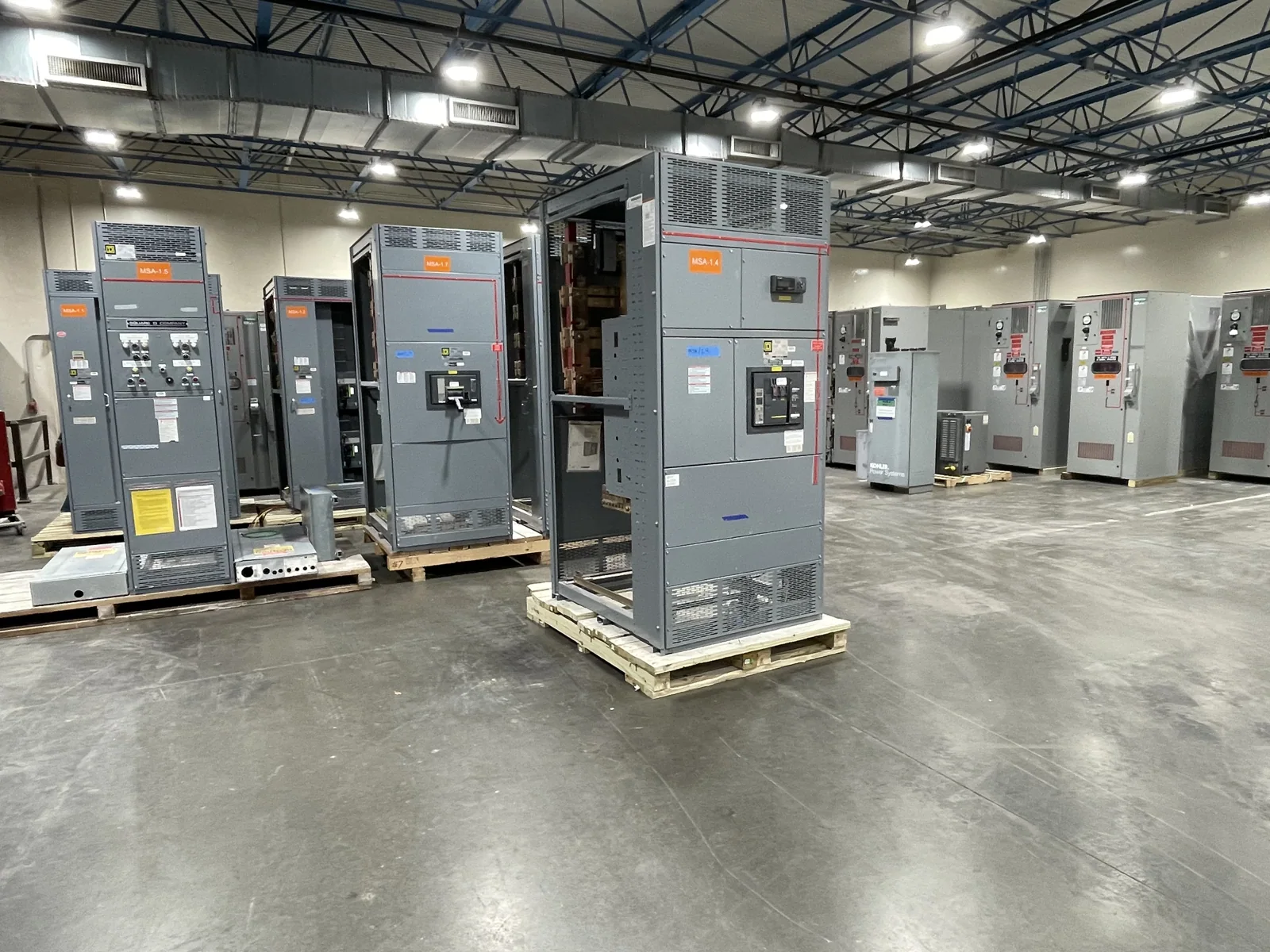
A useful Ohio seller package identifies each section rather than reporting one large cabinet count. List the incoming section, main device, bus or tie section, outgoing feeder sections, metering or control compartments where documented, and any end or transition section. For every visible device, capture its position, manufacturer, frame or sensor information, current marking, voltage marking, interrupting rating, and whether it is installed or separately stored. Do not open compartments or operate handles to obtain these details. Exterior labels and existing schedules are enough for an initial evaluation.
- Count lineup sections and note their sequence or section labels.
- Separate incoming devices, bus ties, outgoing feeders, and control or metering portions.
- List removable breakers, fuses, shutters, covers, relays, accessories, and spares individually when records associate them with the lot.
- Identify missing doors, panels, hardware, cable lugs, barriers, documentation, or shipping supports.
Hypothetical inventory example: an Ohio facility record could describe six sections with a documented 1,200-amp main bus, one incoming device marked 800 amps, four feeder devices marked 400 amps, and two loose breakers whose ratings and lineup association are unknown. That is more useful than “one 1,200-amp lineup.” The example is illustrative only; actual counts, ratings, and compatibility must come from records and visible identification.
Condition, completeness, and ownership affect evaluation
Describe condition without touching or testing the equipment. Safe exterior photographs may show nameplates, doors, barriers, paint, corrosion, impact marks, water staining, stored-device packaging, and label condition. Existing maintenance or inspection records can add context, but the seller does not need to energize, operate, dismantle, or test anything. Note whether the lineup was indoors, outdoors, in controlled storage, or exposed to dust, moisture, chemicals, or other known conditions. Unknown operating history should remain unknown.
State whether drawings, wiring diagrams, bills of material, manuals, breaker schedules, and spare-device lists are available. Explain which components are present or not located. Confirm ownership and authority to release the equipment; a tenant, landlord, plant owner, lender, utility, or demolition contractor may have different interests.
How a potential offer is shaped
A potential offer can reflect verified ratings, manufacturer and construction, section count, device mix, documented accessories, completeness, condition, demand, and recovery complexity. The number “1,200” alone does not value the lot. A complete lineup with traceable schedules may be evaluated differently from an unidentified enclosure with loose breakers. Voltage class is also a documented input, not an assumption: this buyer considers equipment across voltage classes when records and release circumstances support evaluation.
Share whether the equipment comes from a decommissioned data center, a shut-down power plant, a commercial facility, or another source, but do not infer condition from the source alone. Include known contamination or damage disclosures. After reviewing the lot, the buyer can provide a cash offer; once the seller accepts and the sale is agreed, payment is made upfront before the agreed pickup under the agreed terms. No seller testing is required.
Coordinate release, staging, and freight safely
Release planning should identify the authorized contact, required access approvals, outage or isolation boundary, staging area, dock or gate constraints, and any deadline or phased release. These are coordination details, not instructions for the seller to remove equipment. Qualified, authorized personnel establish safe conditions and handle isolation, disconnects, rigging, loading, and removal. The buyer handles the crane, qualified disconnects, rigging, loading, freight, and hauling rather than asking the seller to perform those tasks.
Dimensions, recorded section weights, door widths, route restrictions, clearances, and truck access help plan freight. If a facility remains active, identify equipment that must stay in service and keep the lot boundary precise. Never assume a neighboring section, stored breaker, or cable termination is included. Access approvals are coordinated with the site owner and authorized personnel; they do not shift removal costs or hazardous work to the seller.
Questions to include with your records
- Which exact component or nameplate documents the 1,200-amp rating?
- What are the documented voltage, continuous-current, interrupting, and trip-setting values for the assembly and each device?
- How many sections, incoming devices, outgoing feeders, ties, controls, and spares are included?
- Which loose devices are associated with this lineup, and which associations remain unknown?
- Who owns the equipment and who is authorized to approve its release?
- Where is it located, what access approvals apply, and what staging or freight restrictions are known?
- Are safe exterior photos, drawings, schedules, inspection records, and exposure details available?
Those answers keep an Ohio 1,200-amp switchgear evaluation grounded in recorded ratings, a defined lot, and a safe release boundary. Sellers can provide information without operating or testing equipment; qualified personnel manage physical work after agreement.