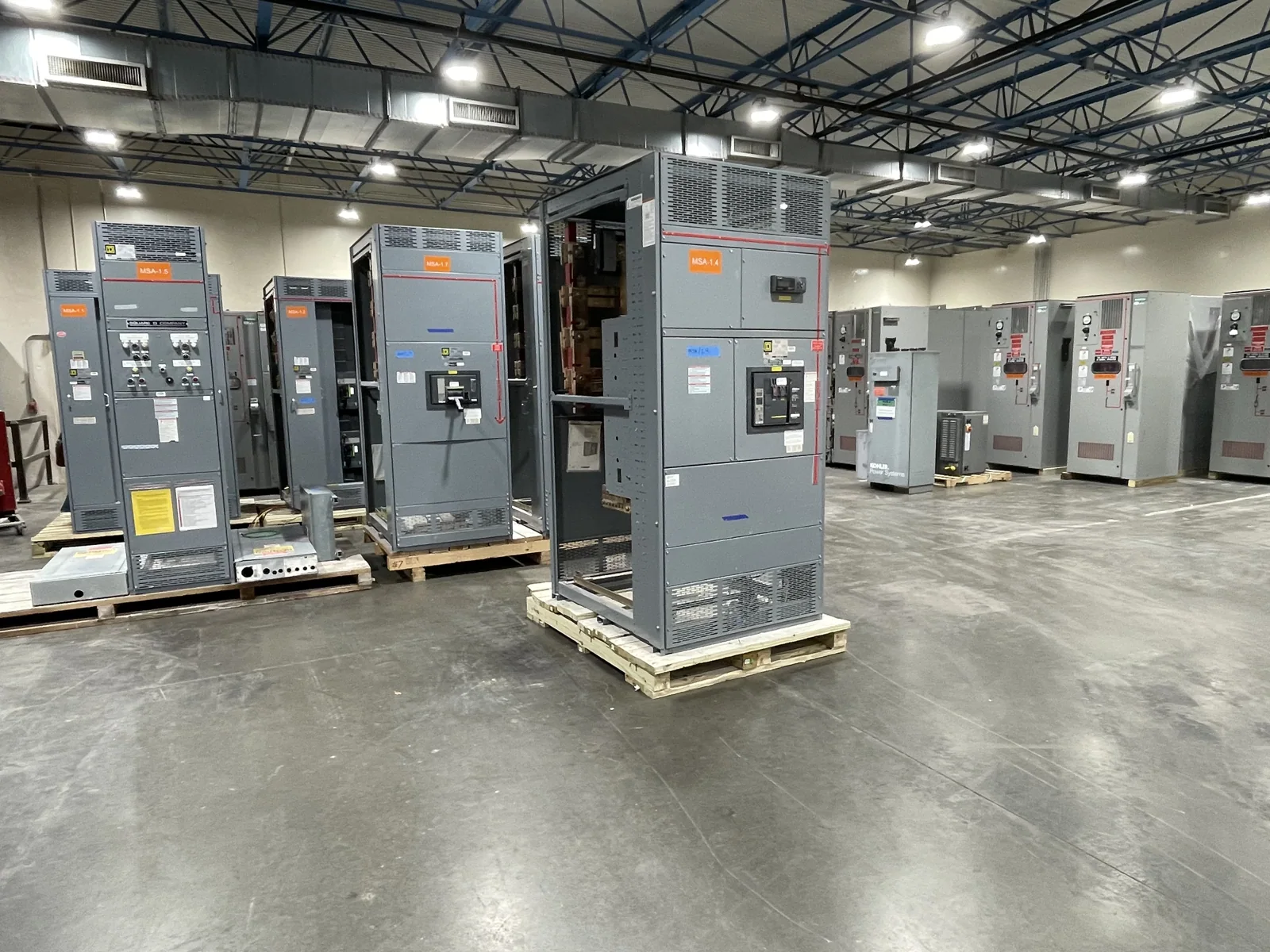
Start with the exact 480-volt identification
Several electrical assemblies can look similar from the aisle, yet an evaluation depends on wording shown on records and nameplates. Please share the complete existing voltage marking for the switchgear, including phase information or multiple voltage values only when documented. A statement such as 480 V is not enough to establish configuration, current rating, or intended service. Lineup labels, drawings, schedules, and breaker labels can describe different parts of the lot.
This distinction matters for a main, distribution, feeder, or stored replacement section. The assembly may carry one bus or system rating while an individual breaker has its own voltage, amperage, interrupting, and trip information. Do not blend those numbers into one specification. If transformers are involved, identify primary and secondary markings separately. A transformer secondary marked 480 volts does not prove that adjacent switchgear has the same construction or operating state.
Build a sample inventory that can be matched
A practical inventory follows the equipment as it exists, rather than estimating from enclosure size. For each lineup, list sections, incoming and outgoing devices, documented bus-tie equipment, and separately stored breakers or accessories. Note the section label beside each item so a loose device is not automatically assigned to the nearest lineup.
Hypothetical example: a decommissioned facility may have a documented 480-volt lineup with four sections, one incoming device, three feeder devices, and two stored breakers in a labeled cabinet. The example does not establish that the breakers fit every section, that the lineup is complete, or that any equipment is available for release. The seller would identify the records and visible labels, while the buyer would evaluate whether the stored devices belong with the assembly. If a number, label, or association is unknown, call it unknown rather than filling the gap with an assumption.
- Lineup or section identification and the complete documented voltage wording.
- Incoming, outgoing, tie, metering, and protective devices visible in the records.
- Separately stored breakers, fuses, relays, control components, covers, and hardware.
- Known missing parts, reserved equipment, and items that remain with the facility.
Condition affects both fit and value
Condition is more than whether a cabinet appears clean. Records can reveal service history, a prior changeout, storage dates, or a section never installed. Safe exterior photos may show nameplates, doors, viewing windows, corrosion, dents, missing covers, water staining, damaged paint, and packaging. Please do not open compartments, operate handles, remove guards, or test anything. A qualified, authorized team must establish safe conditions.
Describe environmental exposure carefully. Equipment from a decommissioned data center may have been indoors but still have missing control components or mixed spare inventory. Equipment from a shut-down power plant may include substantial sections alongside separately stored devices, with unknown storage conditions or prior modifications. These are inventory possibilities, not claims about a particular Ohio site. Visible condition, documentation quality, completeness, and the confidence that parts match the stated lineup all influence valuation.
Ownership and release planning
Before discussing a sale, identify who owns the switchgear and who can authorize its release. A tenant, landlord, electrical contractor, lender, utility, or other party may have an interest in equipment, and a building service lineup may not be included merely because it is near surplus gear. Records should distinguish equipment that is being retired from equipment that must remain active. The proposed lot boundary, release authority, and any required access approvals should be stated plainly.
Release timing affects planning. Share whether equipment is out of service, awaiting a change, or subject to an unknown date. Access approvals are coordination: the buyer works with authorized contacts on entry rules, outage coordination, escorts, loading hours, and pickup conditions. The seller is not expected to arrange or perform removal. After agreement, the buyer handles qualified disconnects, crane needs, rigging, loading, freight, and hauling, while the site coordinates lawful access and safe release.
What supports an offer
An evaluation can consider documented voltage and configuration, legible manufacturer information, section count, device quantities, completeness, condition, storage, ownership, and the route to loading. Door dimensions, floor or dock restrictions, clearance, turning space, and crane access affect logistics without changing the equipment description. For a large lineup, note known section dimensions from records; do not guess from a photograph.
The business buys electrical equipment across voltage classes, not only 480-volt gear. After the equipment, ownership, and release details are reviewed, the buyer can make a cash offer; once the seller accepts and the sale is agreed, payment is made upfront before the agreed pickup. The seller does not need to test the switchgear. Instead, provide the information already available and let qualified personnel handle the safety and disconnection process.
Seller questions for a clean handoff
- What is the complete voltage, phase, and current wording shown on the lineup and individual device labels?
- How many sections, incoming devices, outgoing devices, ties, and separately stored spares are included?
- Which records exist: one-lines, schedules, purchase documents, maintenance notes, or prior removal lists?
- What is known about missing covers, damaged enclosures, corrosion, moisture, modifications, or mixed parts?
- Who owns the equipment, who authorizes release, and what equipment is expressly excluded?
- What access approvals, loading hours, dimensions, and site contacts must be coordinated?
Safe exterior photos and existing records are a strong starting point for a 480-volt switchgear evaluation in Ohio. Clear separation of lineup labels, breaker labels, transformer markings, unknowns, and retained equipment helps prevent a costly mismatch before the release plan is agreed.