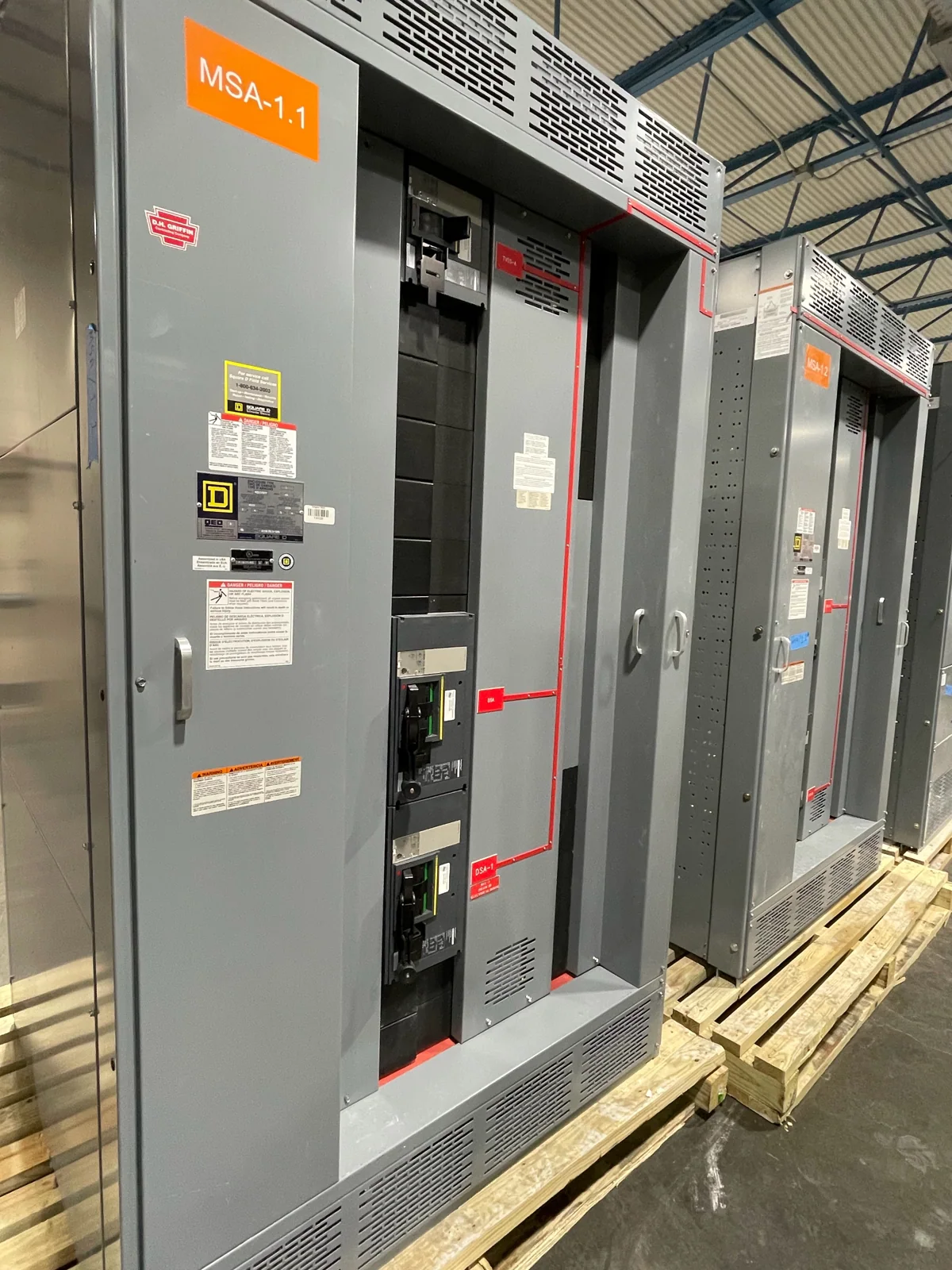
When a 2,400-volt lineup becomes surplus
A shutdown can leave substantial electrical equipment standing in an Ohio electrical room after its production role has ended. Consider this hypothetical inventory: a 2,400-volt metal-enclosed lineup from a closed generating facility includes an incoming section, four feeder sections, two removable devices stored nearby, and a packet of drawings. The owner is unsure whether the loose devices belong to it. That uncertainty is useful information, not a reason to guess. A buyer can evaluate what is documented, visibly present, and still unknown.
This page is for owners, facility managers, contractors, and asset representatives with 2,400-volt switchgear in Ohio. The business buys electrical equipment rather than selling replacement gear. It considers all voltage classes, including equipment not ultimately confirmed as 2,400 volts, when the records and physical description support an evaluation.
Start with the complete voltage marking
Copy the full wording from the accessible exterior nameplate, schedule, or drawing. Include voltage, phase information, frequency, current information, and multiple values exactly when documented. A single “2,400” on a cabinet does not establish how the assembly is configured or what it can serve. Do not infer construction, suitability, or operating state from appearance, paint, cabinet size, or one number.
Record manufacturer, equipment identification, lineup designation, section numbers, and visible device labels. Count every lineup section. Separate the incoming device, bus-tie or transfer section if documented, outgoing feeder devices, metering compartments, and removable breakers or switches. List a stored device separately unless a drawing, tag, or other record connects it to a section. This prevents an assembly rating from being confused with an individual device rating.
Transformer markings need their own line
Some 2,400-volt equipment is associated with a transformer. Identify transformer primary and secondary markings separately. The primary value may relate to the switchgear while the secondary value belongs to downstream equipment; neither should be substituted for the other. Share documented ratios, kVA information, and connection descriptions only when they appear in existing records. If the relationship is unclear, say so. A transformer’s secondary label is not proof of the switchgear’s voltage class.
Hypothetical inventory that is easy to evaluate
For the hypothetical shutdown above, a useful inventory could read: “Lineup sections A through F; documented 2,400-volt incoming section at A; feeder sections B through E; section F designation unknown; four installed feeder devices by tag; two loose devices with manufacturer labels but no confirmed positions; one transformer record showing separate primary and secondary values; exterior corrosion visible at the lower frame; ownership and release date pending.” This exposes the lot boundary and unresolved questions.
- List each section number and visible function.
- List incoming, feeder, tie, grounding, metering, and protective devices only when documented or visibly labeled.
- Count stored breakers, fuses, relays, control items, and covers separately from installed equipment.
- Identify missing doors, barriers, hardware, nameplates, drawings, or device tags without recreating them.
Condition affects the evaluation
Describe condition from records and safe exterior observation. Useful notes include indoor or outdoor storage, moisture exposure, dust, impact, corrosion, missing panels, damaged insulators visible from outside, packaging, and whether components are loose or secured. Mention known contamination, fire exposure, flooding, or prior handling. Do not open compartments, remove covers, operate handles, touch conductors, or attempt a test. The seller does not need to test the equipment. Qualified, authorized personnel establish safe conditions and handle required disconnection.
Condition is one valuation factor. Completeness, documented identity, section count, device association, records, ownership clarity, timing, access, and freight complexity also influence an offer. Cosmetic wear with strong documentation may be easier to evaluate than a cleaner-looking assembly with unknown sections and unidentified loose devices. No value should be inferred from a voltage label alone.
Ownership and release logistics
Confirm who owns the switchgear and whether a landlord, utility, lender, insurer, former operator, or other party has an interest. Identify the exact sale boundary: the lineup and stored devices may be included while an adjacent transformer, cable, relay panel, or active feeder remains excluded. If the equipment came from a decommissioned data center or shut-down power plant, note that history and provide available records.
Share the release date, outage or shutdown coordination, site contact, access approvals, security requirements, loading restrictions, and whether sections are on a floor, behind a doorway, or along a constrained route. These are coordination details, not a request for seller removal. After agreement, the buyer handles crane needs, qualified disconnects, rigging, loading, freight, and hauling. The seller should not dismantle or move the gear.
What to send and what to ask
Send existing one-lines, equipment schedules, nameplate transcriptions, section drawings, ownership records, storage notes, and the proposed release boundary. Safe exterior photos may show nameplates, section fronts, device labels, overall lineup arrangement, packaging, and access conditions. Avoid photographs requiring entry into a hazardous area or opening equipment.
Helpful questions include: Which voltage and phase values are documented? How many sections are included? Which is incoming, and which are feeders? Are removable devices installed or stored? Is each spare matched to a section by tag or drawing? Are transformer primary and secondary values recorded independently? What is known about moisture, contamination, impact, or missing parts? Who can authorize release, and when can coordinated access occur? Clear answers let the buyer make a grounded cash offer and, after agreement, arrange upfront payment and removal without asking the seller to test or handle energized equipment.