Start with the Siemens-marked inventory, not an assumption
If you are releasing motor control center inventory in Ohio, begin by separating the complete MCC lineup from removable starter buckets stored with it. A Siemens marking on a door, bucket, label, or document is useful identification, but it does not prove affiliation, authorization, model compatibility, condition, or value. Record what is visible and identify what remains unknown.
The first decision is ownership and scope. Confirm authority to release the buckets, lineup sections, loose drives, controls, and spares. A decommissioned data center or shut-down power plant may contain equipment owned by different parties, or a lineup that must remain for another system. The proposed lot needs a clear boundary.
Identify each section and bucket with records
Use existing schedules, one-line drawings, panel directories, maintenance lists, and purchase records where available. Compare those records with the lineup as vertical sections, then compare each listed starter bucket with the removable units physically present. Capture the marking, section position, bucket size or described function, voltage and current wording, and visible manufacturer information exactly as documented. Do not invent a catalog number when a label is unreadable.
Keep the assembly record separate from the individual bucket record. An MCC may have a documented system voltage while a starter, drive, feeder, or control component has its own ratings. List drives and reduced-voltage starters separately, with controls and loose accessories noted. Site-specific wiring, interlocks, or communications components can affect completeness even when the enclosure looks intact.
Reconcile completeness before describing the lot
A useful inventory does more than state “one Siemens MCC.” Say how many lineup sections are present, which buckets are installed, which are removed, and which positions are empty or reserved. Match the schedule to included units line by line. Mark discrepancies rather than treating an empty position as a missing bucket or a loose bucket as belonging to that lineup.
- List every complete vertical section and its visible identifier.
- Count installed removable starter buckets separately from loose spare buckets.
- Identify included drives, overloads, control transformers, relays, and documented components.
- Flag missing buckets, blank covers, damaged doors, absent hardware, and unknown controls.
- State whether drawings and schedules describe the same lineup or remain unverified.
Hypothetical example: a shut-down plant record lists six sections and twelve starter buckets, while the accessible inventory shows six sections, nine installed buckets, two loose buckets, and one empty position. Report those counts exactly. The loose units should remain “association unknown” unless records identify their original section or position.
Describe condition without testing or opening equipment
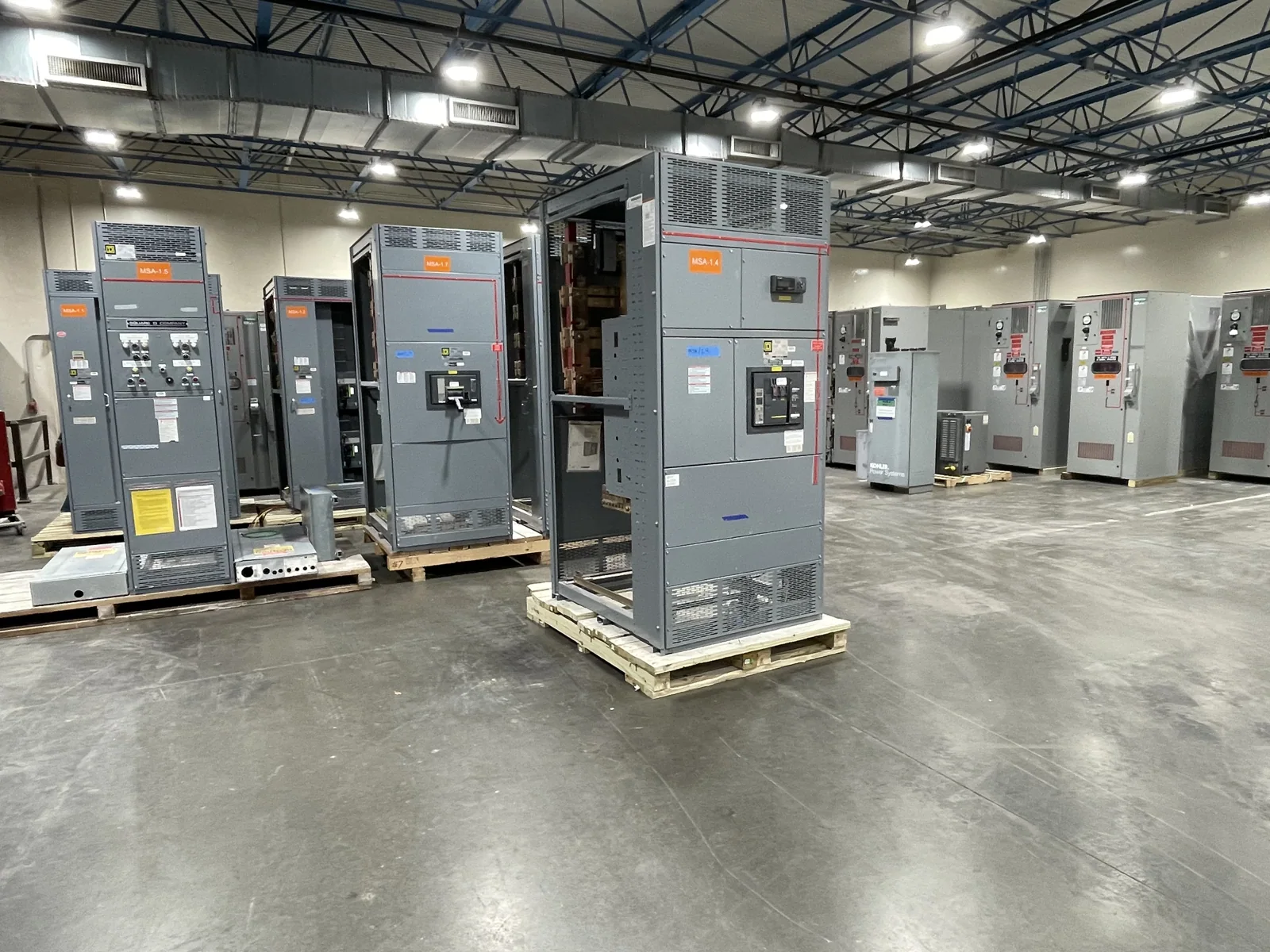
Provide safe exterior photos and existing records only. Useful images can show closed doors, nameplates, section labels, bucket fronts, stored packaging, visible corrosion, impact marks, water staining, and missing covers. Do not open compartments, operate handles, remove covers, touch energized equipment, dismantle buckets, or test anything. No seller testing is required.
Condition notes should distinguish cosmetic wear from information affecting handling or evaluation. Record whether buckets are installed or palletized, whether labels remain legible, and whether storage appears dry and protected. Report known contamination, fire exposure, flooding, severe corrosion, or unexplained damage plainly. If history or internal condition is unknown, say so.
What can affect a potential offer
A potential cash offer can reflect verified identity, documented ratings, quantity, lineup completeness, and the relationship between loose buckets and original sections. It may also reflect included drives and controls, readable records, packaging, visible condition, and whether the lot can be released as one coordinated group. Missing buckets, uncertain compatibility, mixed inventories, damaged enclosures, incomplete documentation, and difficult access can reduce confidence in the evaluation.
The buyer considers all voltage classes, but voltage should come from records or labels rather than appearance. Siemens-marked equipment should not be presented as a guaranteed fit for another MCC or application. A complete lineup with matched buckets is a different inventory problem from loose buckets with unknown history.
Plan access, isolation, and physical release
After review, identify the authorized site contact, ownership approvals, security or escort requirements, loading restrictions, and achievable release window. In a data center, plant, or controlled facility, access coordination may require outage planning and approval from the owner or operating authority. These approvals define when the buyer’s team can work; they do not transfer removal costs or technical responsibility to the seller.
Qualified, authorized personnel must establish safe conditions and handle isolation and disconnection. The buyer handles qualified disconnects, rigging, crane coordination, loading, freight, and hauling. The seller should not dismantle equipment or prepare energized gear. Share doorway dimensions, floor or dock constraints, elevator limits, staging space, and known route restrictions from existing information when available, without guessing.
Release checklist for a clear decision
- Confirm seller authority and define whether the lot includes lineup, buckets, drives, controls, or spares.
- Send schedules, drawings, nameplate information, and safe exterior photos already available.
- Reconcile section counts, installed buckets, loose buckets, empty positions, and reserved controls.
- Separate verified facts from unknown identity, compatibility, internal condition, and ownership.
- Identify access approvals and the authorized contact for the agreed release window.
Once the lot boundary and documentation are clear, the buyer can evaluate the inventory and discuss a cash offer. After agreement, payment is made upfront, and coordinated removal can proceed with the buyer’s qualified team. The strongest submission makes every Siemens marking, bucket count, missing component, condition note, and release approval traceable.