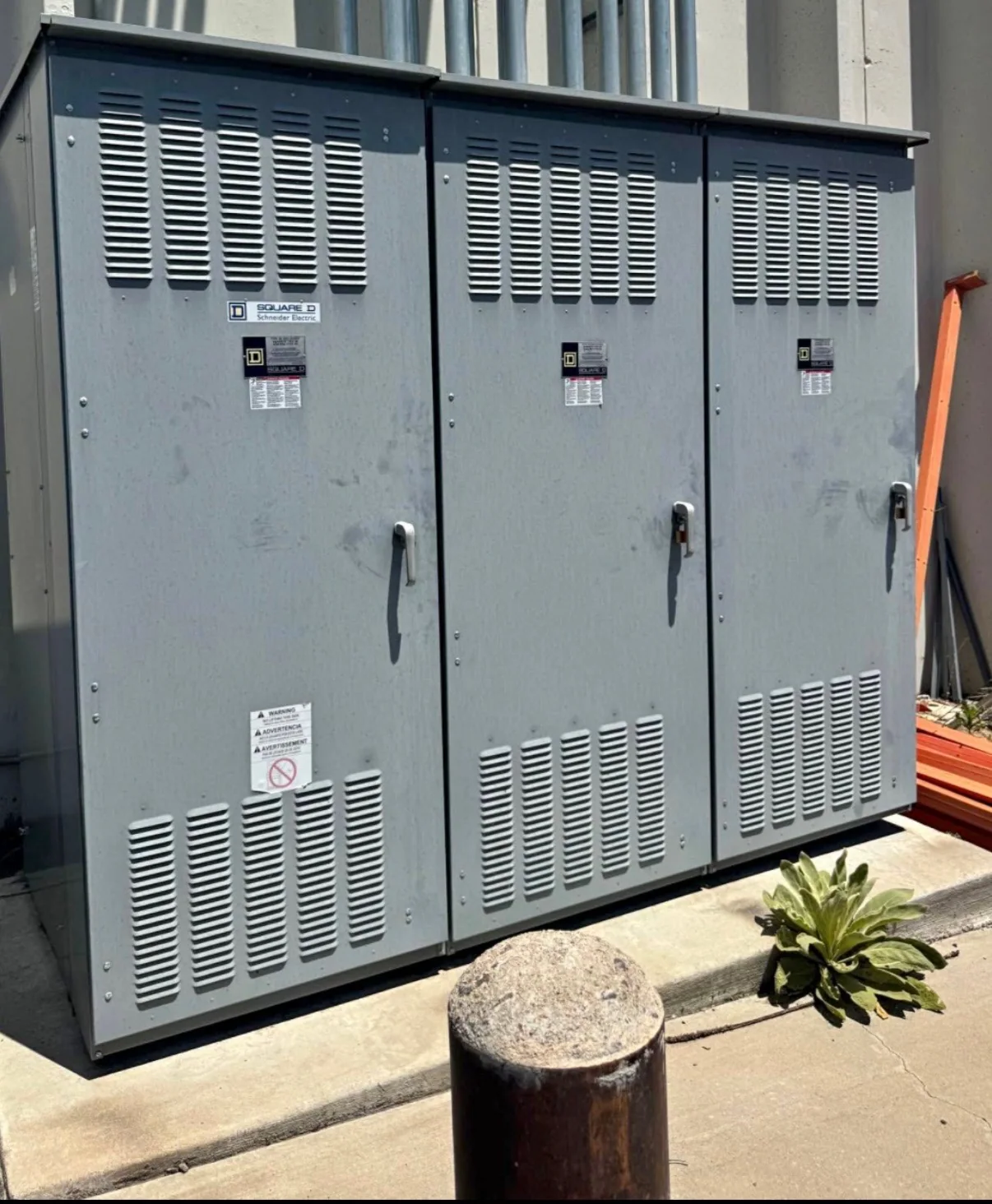
Define the actual 600-amp breaker lot
A 600-amp label is a starting point, not a complete description of a sale. First identify which component bears the rating: an individual circuit breaker, a removable frame, a trip unit, a lineup bus, or another assembly. A bus marked 600 amps does not make every breaker in that section a 600-amp device. For an Ohio evaluation, use the wording visible on each safe exterior label or in an existing equipment schedule. Record manufacturer, catalog or frame marking, voltage class, continuous-current wording, interrupting rating, trip-unit designation, quantity, and the documented section or enclosure relationship.
The business considers all voltage classes. Do not infer voltage from enclosure size, color, age, or a familiar brand. If a label is missing or unreadable, leave that value unknown. A safe exterior nameplate photograph and an existing schedule are useful; the seller need not open a compartment, operate a mechanism, or test anything.
Inventory markings, accessories, and completeness
Count breakers as discrete items and describe each physical state. A hypothetical example could list two breakers with exterior frame markings stating 600 A, one breaker with an unreadable frame marking, and one separately stored trip unit whose association is unconfirmed. Also state whether items are installed, palletized, boxed, or loose only when that is known. Do not claim drawout or fixed construction unless records establish it.
List trip units and accessories separately. Include documented trip-unit or catalog markings, rating plugs if visible, auxiliary contacts, shunt or undervoltage accessories, racking hardware, interlocks, terminal covers, mounting hardware, and storage cases. Mark items “not observed” or “unknown” where appropriate. A breaker without its expected trip unit or with unmatched accessories may be valued differently from a complete assembly. A loose device should not be called compatible with a lineup without evidence.
- Quantity of devices carrying a documented 600-amp marking.
- Manufacturer and catalog, frame, or serial markings visible externally.
- Voltage and interrupting information stated on each device, not borrowed from the bus.
- Trip units, accessories, covers, connectors, racking parts, and storage materials included.
- Known missing pieces, uncertain associations, and the proposed lot boundary.
Separate electrical ratings from condition
Continuous current, interrupting rating, and trip settings answer different questions. Continuous current is the device’s stated carrying capability under its labeling conditions. Interrupting rating concerns the fault-current duty stated for that device and voltage; it is not interchangeable with the ampere marking. Trip settings are protection values and should be reported only when documented. Do not calculate one rating from another, and never apply a 600-amp bus rating to every breaker without evidence.
Condition notes should be factual and limited to safe observations: exterior corrosion, dents, cracked insulating parts, missing covers, damaged labels, moisture exposure, dirt, impact marks, packaging, and apparent storage environment. Note whether a device appears installed or removed, but do not present appearance as proof of operational condition. No seller testing is required. Qualified, authorized personnel establish safe conditions and handle isolation and removal; sellers should not touch energized equipment, dismantle devices, or attempt functional checks.
Factors in a potential offer
Valuation may reflect verified identity, voltage class, continuous-current and interrupting data, documentation, quantity, completeness, accessory match, physical condition, and whether the 600-amp marking belongs to the breaker rather than the surrounding assembly. It can also depend on clear staging and protection from weather. Uncertain ratings, mixed lots, missing trip units, disputed ownership, or an incomplete release boundary reduce confidence until records resolve them.
Identify the owner, any lien or lease issue, and the person authorized to approve release. In a decommissioned data center or shut-down power plant, equipment may sit beside assets retained for another system; adjacent gear is not included merely because it shares a room or lineup. A lot list, release authorization, drawings, schedules, purchase records, or removal notes can distinguish saleable property from retained equipment.
Staging, access, and freight coordination
Share the known pickup setting, floor or room location, documented dimensions and weights, door clearances, loading restrictions, and whether access needs site, landlord, utility, or security approval. Describe the travel path and staging area from existing information; do not assume a dock, lift, crane point, or after-hours window. Access approvals are coordinated with the authorized site contact. The buyer handles qualified disconnects, crane work, rigging, loading, freight, and hauling, so the seller is not asked to arrange or pay for removal.
For a large lot, keep each device and accessory traceable during staging. Preserve boxes or tags linking a loose trip unit to a breaker when documented. Do not move, energize, open, or dismantle equipment for photographs. Payment is upfront after agreement, with the final scope and release conditions documented before the buyer’s removal team arrives.
Seller questions for a useful review
- Which exact items carry the 600-amp marking, and where is that marking recorded?
- What voltage, interrupting rating, trip-unit information, and accessories are documented for each device?
- Are breakers installed, stored, or mixed, and are any lineup associations uncertain?
- Who owns the equipment and who can authorize its release?
- What damage, moisture exposure, missing parts, staging limits, or access approvals are known?
Send the existing inventory, schedules, ownership information, safe exterior label photos, and release constraints. Unknown values can remain unknown; accurate boundaries are more useful than assumptions. The buyer can then evaluate the 600-amp circuit breakers as a defined physical lot and coordinate safe, buyer-managed removal.