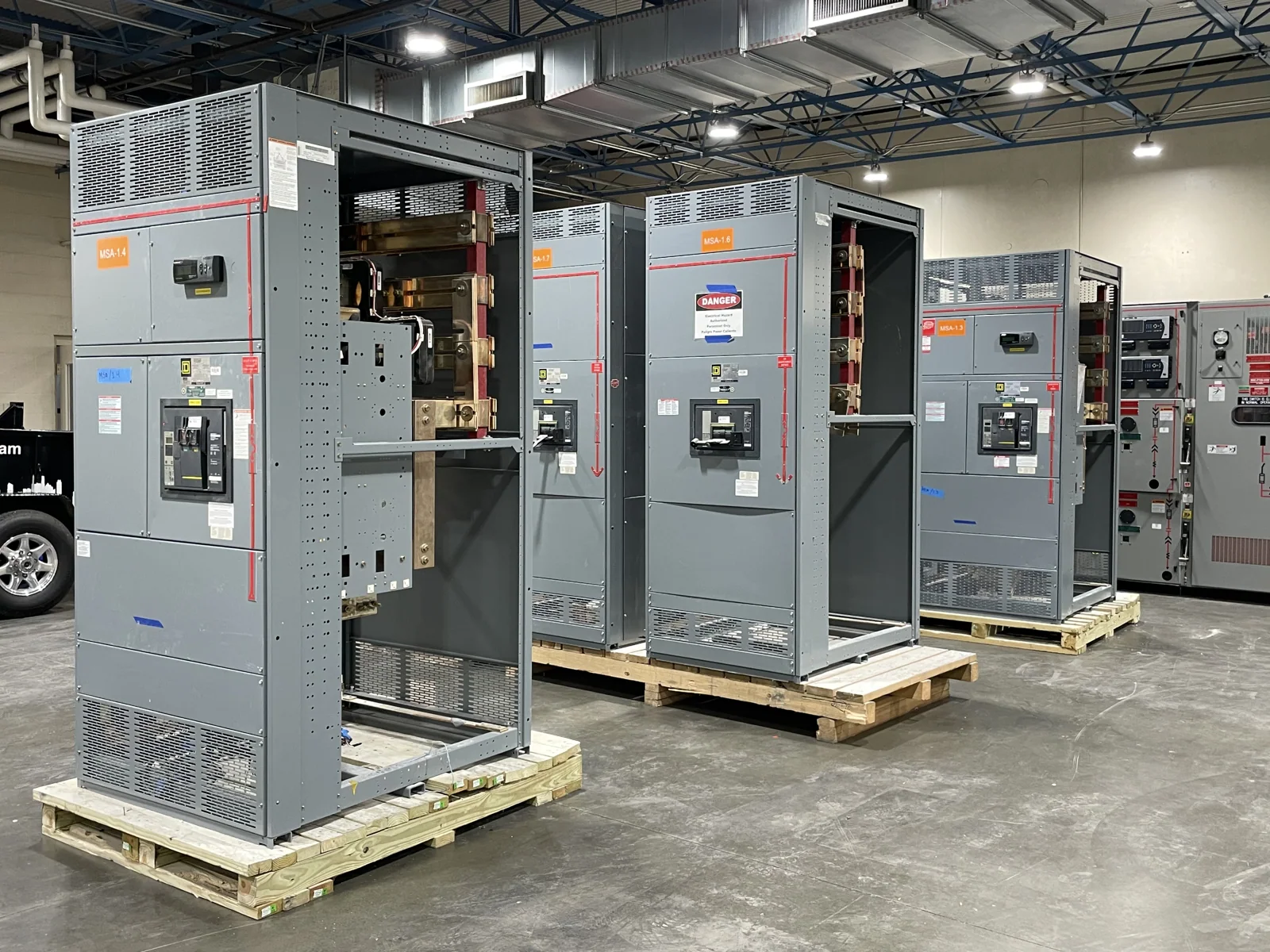
When surplus electrical equipment includes a 225-amp circuit breaker in Ohio, begin with identification rather than assumptions. The seller does not need to operate, open, dismantle or test anything. An exterior label, schedule and ownership record can establish the starting point. The sequence below moves from recognizing the component to release without confusing a bus rating, frame rating or trip setting.
1. Identify what actually carries the rating
Determine whether “225 amp” belongs to the individual circuit breaker, its frame, a replaceable trip unit or another part of the assembly. A lineup or panel may contain a 225-amp device while its bus has a different rating. A large enclosure does not prove that every installed device is 225 amp. Read the visible nameplate or label from outside and record the manufacturer, catalog number, frame marking, device rating and any legible series or type designation. Do not identify an unfamiliar product by appearance alone.
Count physical devices, not just the number shown on a drawing. Note whether each breaker is installed, stored in a cabinet, boxed separately or listed as a spare. If a label is faded, say so; leave unknown values unknown. Safe exterior photographs of labels and overall condition are useful, but no photograph is worth reaching into a compartment or approaching energized equipment.
2. Separate the ratings
“225 amp” is only one part of the electrical description. Continuous current, interrupting rating and trip settings answer different questions. Continuous current concerns the current the device is designated to carry under stated conditions. The interrupting rating concerns fault current the device is designed to interrupt under specified conditions. A trip setting describes when protection is intended to respond and may be adjustable, fixed or documented elsewhere. Take each value from the label, schedule or reliable record, not from enclosure size.
Use the full documented voltage wording when available and consider all voltage classes in an evaluation; never infer voltage from a 225-amp marking. Do not apply a bus rating to every device without evidence. A schedule may show a 225-amp position, but a later change or spare substitution can make the physical inventory different. Flag discrepancies rather than presenting a guessed match as fact.
3. Create a documented inventory
For each device, list its location or storage position, manufacturer, catalog number, frame marking, stated ampere rating, visible voltage, interrupting rating if shown, trip information if shown and quantity. Add accessories only when the record or exterior view supports their presence.
Hypothetical inventory example: a seller’s record could identify two stored breakers marked 225 amp, with one legible frame number and one catalog number, plus a third 225-amp breaker installed in a lineup. Voltage and interrupting values might be documented for only two units, while all trip settings are unknown. That is stronger than calling the lot “three complete breakers”: it gives a count, documented associations and clear limits on what has not been verified.
4. Describe condition and completeness
Condition begins with what can be observed without handling equipment. Note dusty exteriors, bent covers, visible cracks, corrosion, water staining, missing escutcheons, damaged labels and storage packaging. State whether a device is loose, secured for storage or still part of a lineup. Do not claim operational condition from appearance, and do not ask the seller to energize, rack, reset or test a breaker.
Completeness affects value separately from cosmetics. A breaker may lack a documented trip unit, cradle, faceplate or mounting hardware. A stored spare may belong to a different frame or catalog family even if its ampere marking matches. Keep uncertain associations separate and identify parts excluded from the proposed lot. Existing schedules and photographs can establish context without new testing.
5. Confirm ownership, staging and release authority
Establish who owns the breaker and who can authorize its transfer. Equipment in a leased facility, shared electrical room or contractor-controlled storage area may require approval from another party. Define the sale boundary: one breaker, a group of spares or a larger assembly with selected devices retained. A 225-amp device serving an active load is not surplus merely because replacement is planned; the authorized owner must define when it becomes available.
Staging is a coordination question, not an instruction for the seller to remove equipment. Share the approximate location, access restrictions, loading hours, security procedures and approvals a carrier or crew must follow. Qualified, authorized personnel handle isolation and removal; the seller need not perform electrical work or testing.
6. Reach an offer and release safely
A potential offer can reflect documented identity, quantity, voltage and interrupting information, frame and catalog numbers, completeness, condition, ownership clarity and collection complexity. Matching documented devices are easier to evaluate than mixed breakers with similar ampere markings but uncertain compatibility. State missing records or unknown accessories plainly so the evaluation reflects the evidence.
After agreement, payment is made upfront according to the agreed arrangement, while the buyer coordinates qualified disconnects, crane needs when applicable, rigging, loading, freight and hauling. Access approvals still need coordination with the site, but removal costs are not shifted to the seller. Keep equipment undisturbed until authorized release is confirmed.
Useful seller questions are: Which component is marked 225 amp? What are the frame and catalog numbers? Which voltage and interrupting values are documented? How many units are installed versus stored? Who owns them, and who can approve access? Clear answers move the process from identification to release without invented certainty.