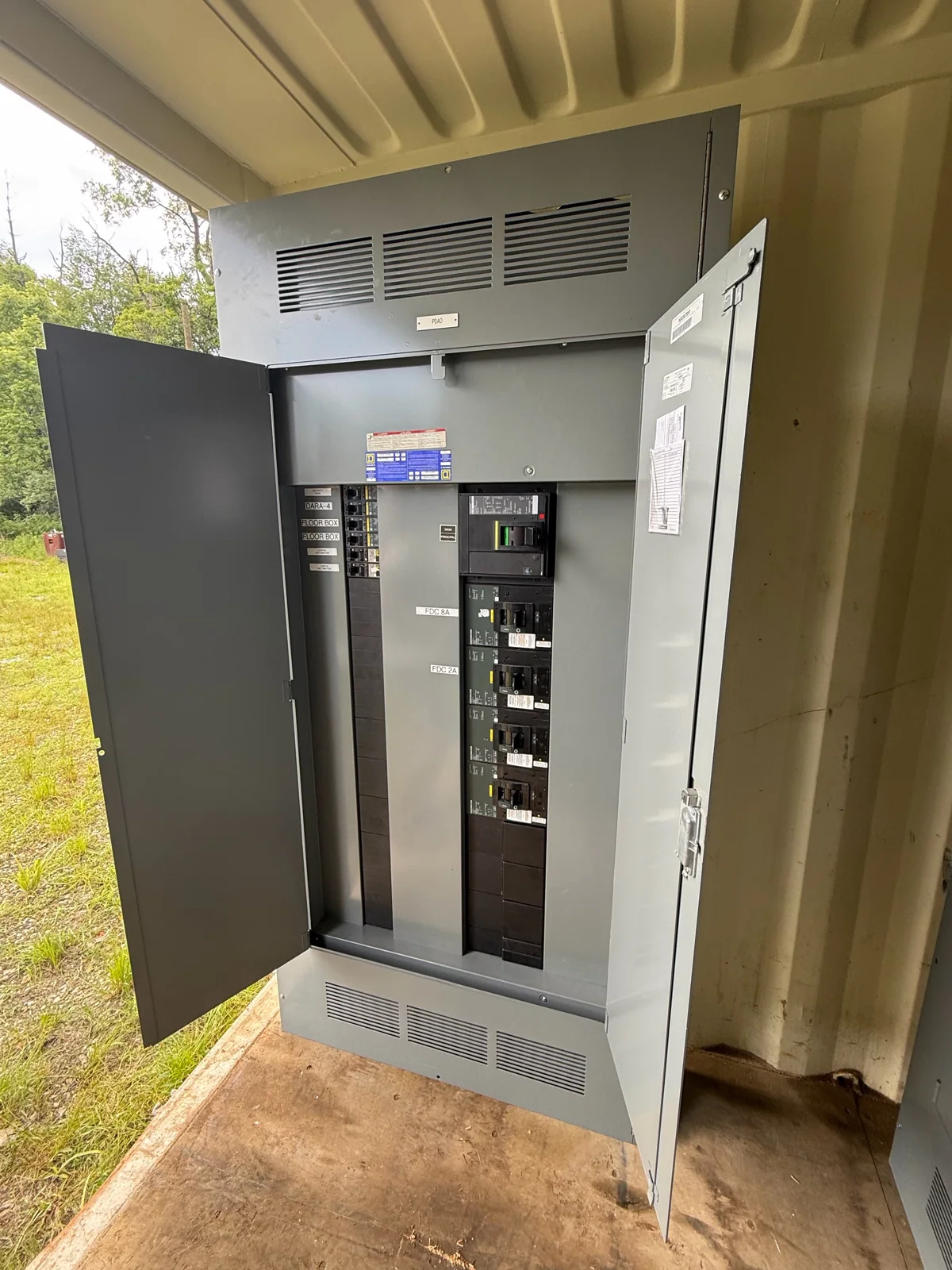
Start with the transfer-switch lot, not the room
A data-center closure can release several automatic transfer switches, yet the sale boundary may be smaller than the electrical room. Begin with what the owner is authorized to release: each transfer-switch enclosure, its controller, documented bypass or isolation equipment, and separately stored accessories. Record manufacturer and model exactly as shown on exterior labels. Also capture stated voltage class, ampere rating, pole configuration, source designations, and serial or asset number without guessing. An enclosure label and controller label may identify different parts, so keep them separate.
Existing drawings or schedules may identify normal and emergency sources, downstream distribution, or a bypass path. Share only evaluation-relevant portions, removing security-sensitive information, network details, room names, access codes, and operational diagrams. Safe exterior photos of nameplates, doors, visible damage, and stored components are useful. The seller need not open compartments, touch energized equipment, dismantle anything, or perform a transfer test.
Two hypothetical sale situations
Hypothetical situation one: a complete closure release
Imagine a hypothetical Ohio data center that has shut down entirely and has an owner-approved release package. The lot includes two labeled transfer-switch enclosures, their documented controllers, one matching bypass section, and a carton of identified control components. The useful inventory does not merely say “two switches.” It ties each controller and bypass assembly to an enclosure, notes legible source and load markings, and identifies items as loose, mounted, or stored nearby. A closure may simplify timing, but it does not make ownership automatic. Confirm that landlord, tenant, lender, or equipment-owner boundaries have been resolved in writing.
For this lot, records showing what belongs together and protected storage may support a clearer valuation. Disclose water exposure, corrosion, impact, rodent damage, missing covers, or removed control parts. Describe environmental concerns from existing knowledge; do not sample, disturb residue, or investigate by opening equipment. The buyer can evaluate the disclosed condition.
Hypothetical situation two: a phased shutdown with retained infrastructure
Contrast that with a hypothetical multi-tenant facility where one data hall is closing while another remains active. A transfer switch near the retiring area may be proposed for sale, but an adjacent bypass, feeder section, controller cabinet, or source connection may remain operating infrastructure. Define which enclosure and accessories are released and which equipment stays. “After final shutdown” is a milestone, not present availability. List expected release date, outage or access window, owner approval, and coordination required with the authorized operator.
Evaluation may remain lower-confidence until the retained boundary and safe disconnect plan are settled. Do not relabel unknown equipment as included. A practical inventory could state: one transfer-switch enclosure, controller identification visible, bypass status unknown, source designations documented in a redacted schedule, two loose parts of uncertain association, and one neighboring cabinet excluded unless later authorized. Clear exclusions prevent removal-day mismatches.
Condition, value, and release planning
Offer considerations include documented voltage and current ratings, manufacturer and model identity, quantity, completeness, known age, storage environment, visible condition, and whether controller and bypass equipment are associated with the enclosure. The buyer considers all voltage classes, so do not omit equipment because it fails to match a presumed data-center standard. Uncertainty from missing nameplates, unverified loose parts, inaccessible dimensions, unclear ownership, contamination concerns, or a narrow release window can affect evaluation. No seller testing is required. Qualified, authorized personnel establish safe conditions and handle disconnection.
Useful milestones are approval to release, confirmation of the lot boundary, review of redacted records, qualified disconnect coordination, removal access, and loading readiness. The buyer handles crane arrangements when needed, qualified disconnect coordination, rigging, loading, freight, and hauling. The seller coordinates site approvals, escorts, dock or gate rules, working hours, and restrictions imposed by the owner or remaining occupants; this does not shift removal or rigging costs to the seller.
Record doorway and corridor constraints, floor or mezzanine location, elevator restrictions, overhead clearance, dock availability, turning space, and controlled routes. Do not dismantle or measure in an energized area. Authorized personnel can provide existing measurements or facility records. If a crane is needed, the buyer and site contacts can coordinate lift approvals, exclusion zones, and freight timing before release.
A useful seller inventory and question list
- Enclosure count, documented dimensions, manufacturer, model, serial or asset label, voltage class, current rating, and visible source or load markings.
- Controller count and exact label text, noting whether each is mounted, boxed, or of uncertain association.
- Bypass or isolation equipment, covers, accessories, spare parts, and known missing components, listed separately.
- Condition notes covering storage, moisture, corrosion, impact, contamination, removed panels, and known environmental issues.
- Ownership boundary, authorized release contact, redacted drawings or schedules, shutdown milestone, access approvals, and availability.
Ask: Who owns each item, and are tenant or landlord claims resolved? Which source connections and bypass components are included, and which remain active? Are labels and records consistent, or are associations unknown? What route, dock, escort, lift approval, and access window must be coordinated? Are there known environmental, water, fire, or construction conditions? Provide existing documentation and safe exterior views, then let the buyer evaluate without asking the seller to operate, test, open, or handle the equipment.