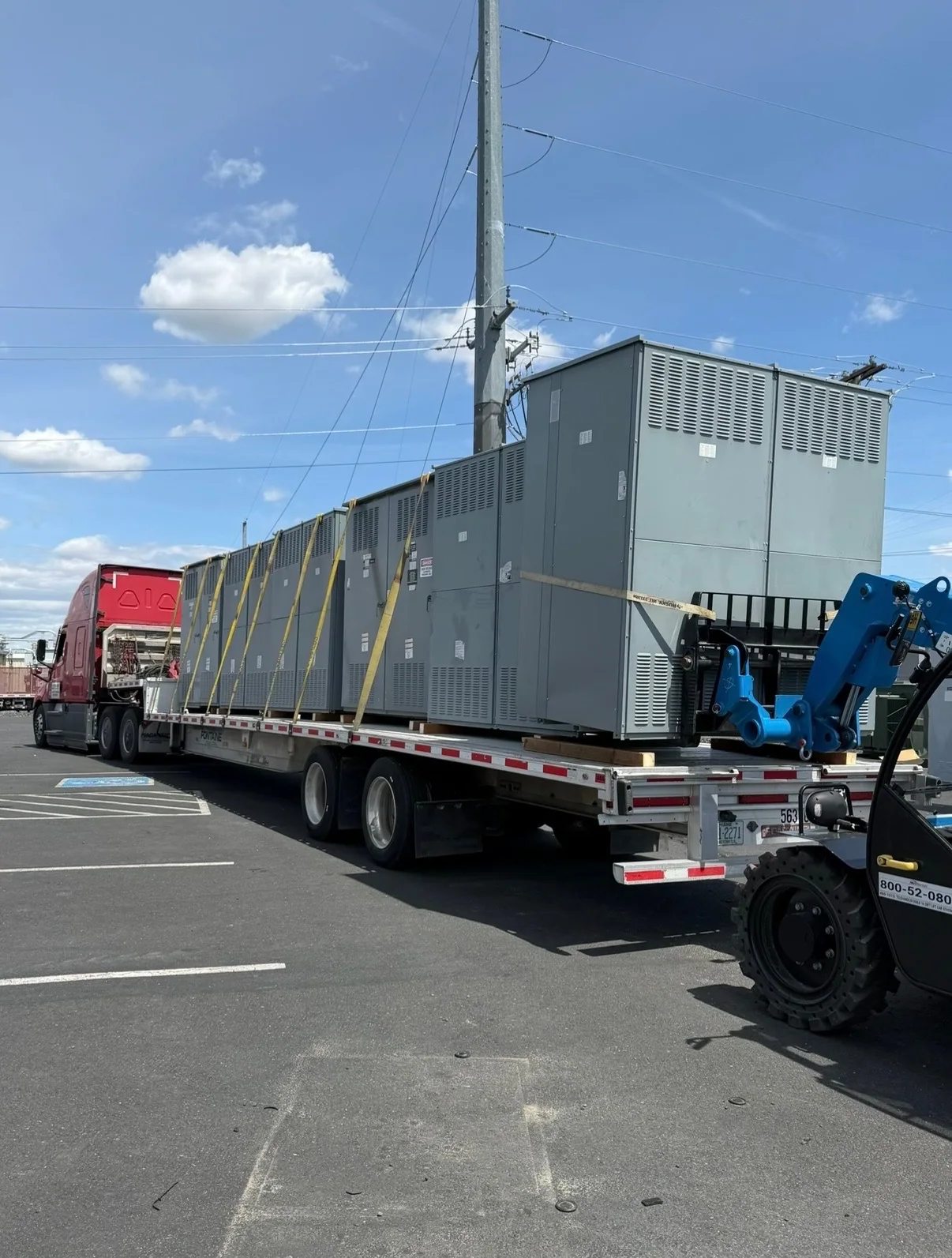
Electrical assets released during a phased data center closure require more than a model number and a pickup address. A lineup can be surplus in one room while its redundant path remains essential in another. An evaluation starts with a controlled inventory showing what is available now, what is reserved for a later migration stage, and what remains with the owner or tenant. This guide describes a hypothetical closure only; it does not identify an existing Ohio project.
Build the lot around rooms and release stages
Begin with a room-by-room schedule rather than one blended count. A practical record might group main switchgear, low-voltage switchboards, automatic transfer equipment, panelboards, power distribution units, transformers, busway, battery systems, and spare breakers by electrical room, data hall, generator area, or storage location. For every group, note its release stage: available after a room is retired, held until a later migration, or retained as part of a redundant A or B path.
Hypothetical example: Room E-1 may contain a retired feeder lineup available in stage one, while its similarly labeled companion in Room E-2 remains in service until stage three. Do not assume matching labels mean matching ownership, voltage, or availability. The evaluation is stronger when each section, device, loose spare, and accessory has a room reference and proposed release date.
Match nameplates, drawings, and complete assemblies
Use the full wording visible on nameplates and existing records: manufacturer, assembly designation, voltage class, ampere rating, bus rating, interrupting information where documented, section count, device type, and serial or asset identifier. A main-bus rating is not the same as a breaker rating, and a loose breaker should not be assigned to a lineup merely because its faceplate looks similar. Record whether doors, barriers, cubicles, control power components, metering, shutters, connector kits, neutral sections, and mounting hardware are present.
Completeness matters when equipment was removed in waves. Tie each removable device to its documented cell or section, identify separately stored spares, and mark unknown associations as unknown. One-lines, equipment schedules, turnover lists, and packing records can resolve gaps. Before sharing drawings or photos, redact security-sensitive details such as camera locations, access-control information, network diagrams, credentials, detailed operating sequences, and other information not needed for valuation.
Separate ownership from physical location
Data center equipment may belong to a building owner, an operator, a tenant, a contractor, or another asset holder. Physical presence does not establish the right to sell. Identify the legal owner for each lot, the party authorized to approve release, and any lease, utility, lender, or customer boundary that affects disposition. A tenant-owned PDU in a landlord-controlled electrical room should not be combined with building service gear without written authority.
Also identify retained redundancy. An owner may release one path while retaining the companion path, spare transformer, bypass cabinet, or emergency distribution needed for continuity. Mark retained equipment clearly in the schedule, even if it sits beside sale equipment. Access approvals, escort requirements, badging, photography rules, and shutdown windows should be coordinated with the authorized site contact; they are not instructions for the seller to perform electrical work.
Describe condition without unsafe testing
Condition notes should cover visible exterior damage, corrosion, moisture evidence, missing covers, impact marks, stored packaging, label legibility, and whether components are installed or loose. Disclose known oil, battery electrolyte, refrigerant, fire-suppression, mold, asbestos, or other environmental concerns when applicable; do not sample, open, or investigate hazardous material for the evaluation. Safe exterior photos and existing documents are sufficient for an initial review.
A qualified, authorized team must establish safe conditions and handle disconnection. Sellers should not open enclosures, operate devices, enter restricted energized areas, dismantle equipment, or perform tests. Condition, completeness, documented ratings, manufacturer and age information, release certainty, environmental disclosures, and handling complexity influence an offer.
Plan rigging and transport before a release date
Data center rooms often impose constraints invisible in an inventory spreadsheet: narrow corridors, raised floors, loading-dock reservations, door clearances, elevator limits, roof or slab loading concerns, security escorts, and overlapping migration work. Record section dimensions and weights when available, the room and travel path, packaging status, staging space, dock hours, and whether a crane or specialty rigging plan may be needed. Do not promise that a route or vehicle will work until site conditions are coordinated.
The buyer handles qualified disconnects, crane coordination, rigging, loading, freight, and hauling. The seller’s role is to identify ownership, provide accurate records, authorize access, and communicate the release window. Coordination may include induction rules, escort scheduling, insurance documentation, and a safe handoff point, but it does not transfer removal costs or unsafe work to the seller.
Questions that improve an evaluation
- Which rooms and stages contain the surplus, and which redundant paths must remain?
- Who owns each lineup, device, spare, transformer, PDU, busway run, and accessory?
- What nameplate records, drawings, schedules, and decommissioning lists exist, and what information must be redacted?
- Which sections are complete, which parts are loose, and which device-to-section matches remain unknown?
- What visible damage, moisture, contamination, battery condition, or other environmental issue is already known?
- What approvals, escorts, dock rules, outage milestones, and release dates govern access?
Once the lot boundaries and milestones are clear, the buyer can review the assets the authorized owner proposes to release and discuss a cash offer; once the seller accepts and the sale is agreed, payment is made upfront before the agreed pickup. The exact value depends on verified documentation, completeness, condition, voltage class, demand, timing, and the practical effort required to remove and transport the equipment.