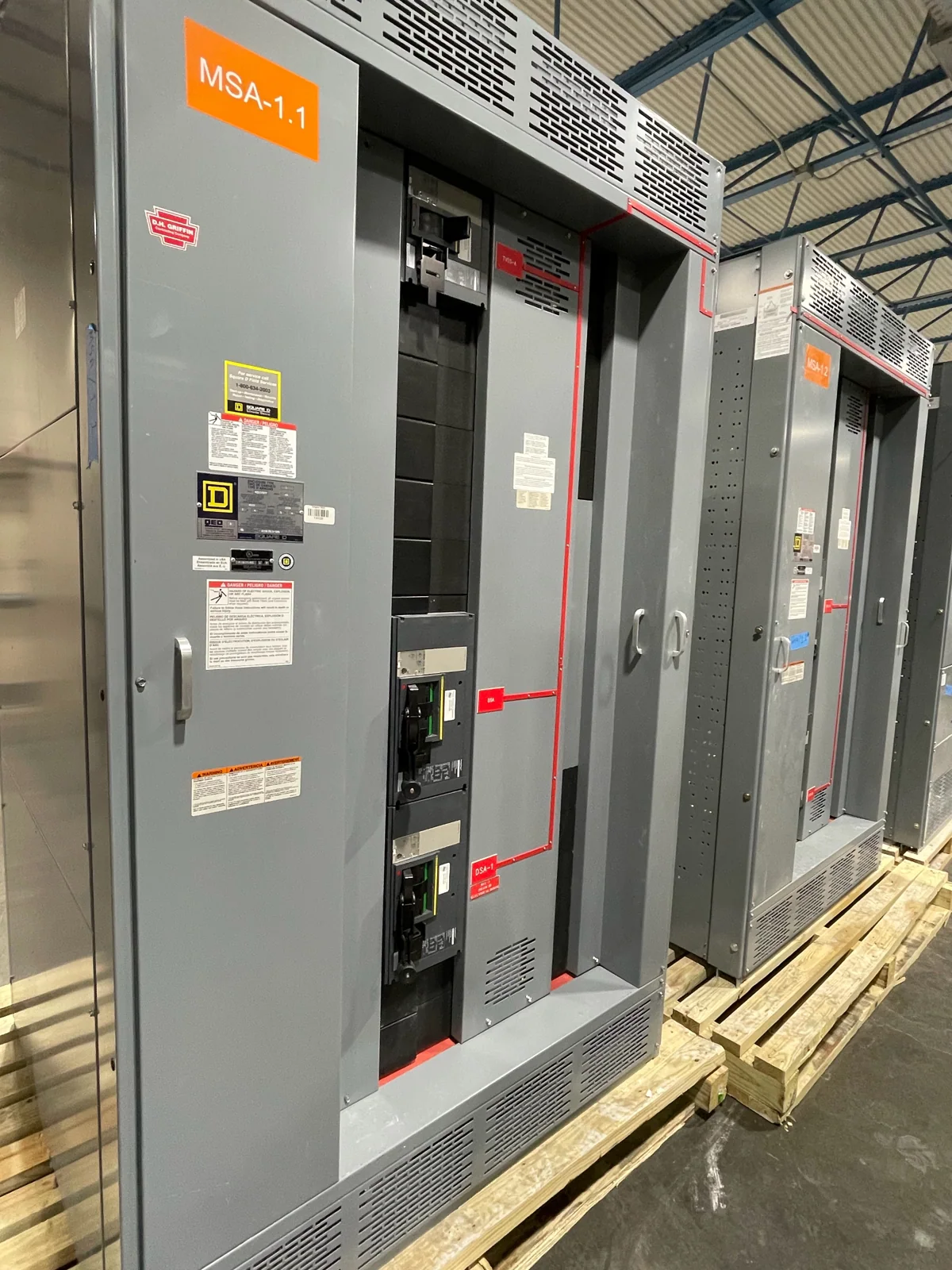
Define the data-center switchboard lot before discussing value
Switchboards released during a data-center decommissioning can look like one large asset while actually representing several electrical boundaries. A useful evaluation starts with what is physically present, where it sits, and what the owner is authorized to release. The lot may include service sections in one room, distribution sections in another, and metering elsewhere. Do not pool counts because the equipment served the same campus or tenant.
Hypothetical example: a facility shutdown could leave a service switchboard in Room A, a distribution lineup feeding an unoccupied data hall in Room B, and a metering section retained for a building load in Room C. The sale lot might include only the Room B lineup and its documented removable devices. The Room A service section and Room C metering section would remain outside the lot. That boundary should be written down, not inferred from a demolition plan or from the fact that a room is no longer populated.
Build an inventory by room and function
For each room, list the lineup designation, section count, nameplate wording, manufacturer, documented voltage and current information: service, distribution, feeder, or metering. Include main and feeder devices, protective devices, covers, control components, and separately stored breakers or spares when records associate them with the lineup. A section’s physical size is not a rating, and a breaker label is not a substitute for assembly documentation. Record unknown values rather than estimating from appearance.
A practical inventory might read: “Room B, distribution lineup, five sections; two main or tie positions documented on drawings; three feeder sections; four removable devices stored on marked shelves; two blank covers present; one cover location unknown.” That format is more useful than “one switchboard,” because it identifies completeness questions before a release decision. Note whether each item is installed, loose, packaged, or awaiting qualified removal. If stored breakers have no clear section association, keep them as an uncertain sub-lot until ownership and records resolve the match.
- Separate service, distribution, and metering sections by room.
- Identify equipment retained for tenant, life-safety, security, or facility loads.
- Count loose devices and spare parts separately from installed sections.
- List missing covers, labels, hardware, drawings, or accessories without assuming replacements.
Check records, ownership, and sensitive information
Existing one-line diagrams, panel schedules, equipment lists, decommissioning plans, and maintenance records can clarify the lot. Before sharing a drawing or photograph, remove security-sensitive details, network topology, access codes, camera locations, tenant names, and other operational information not needed for an equipment evaluation. Exterior nameplate images and room-level identification are more useful than revealing a facility’s operating layout.
Confirm whether the owner, a data-center operator, a landlord, a tenant, a lender, or another party controls each item. A tenant may own a distribution lineup while the building owner retains service equipment. A contractor’s possession of stored breakers does not by itself establish title. The seller should identify the authorized decision-maker, any lien or lease restriction, and the exact retained boundary. Utility-owned equipment, shared infrastructure, and components supporting continuing loads should be marked outside the proposed lot unless the responsible authority documents otherwise.
Describe condition without testing or energized access
Condition notes should come from existing records and safe exterior observations only. Useful facts include storage location, enclosure corrosion, impact damage, water staining, dust, missing doors or covers, nameplate legibility, packaging quality, and construction exposure. Disclose known environmental issues, such as reported oil, chemical, mold, or suspect-material concerns, rather than sampling, opening compartments, or making a new determination.
No seller-operated test is required. Do not open, operate, dismantle, or touch energized equipment for an evaluation. Qualified, authorized personnel must establish safe conditions and handle disconnecting the equipment. If records do not establish whether a device is isolated, identify that limitation plainly; uncertainty is preferable to an unsafe assumption.
What influences an offer and release plan
Valuation can reflect documented voltage class, manufacturer and configuration, section count, device completeness, marketability of a coherent lineup, age, condition, records quality, and handling complexity. A complete distribution lineup with matched devices may be more useful than a mixture of sections and unidentified spares. Missing covers, damaged frames, unknown ownership, contamination concerns, or a retained feeder can reduce certainty even when the enclosure appears substantial.
Project milestones matter as much as the equipment description. Share the anticipated shutdown date, outage approval status, construction sequence, access window, storage deadline, and whether rooms become available at different times. These are planning facts, not promises of a particular timeline. Payment is made upfront after agreement, while the buyer coordinates qualified disconnects, crane service, rigging, loading, freight, and hauling. The seller is not expected to arrange or pay for removal, but access approvals, escorts, security rules, and room release still need coordination with authorized facility contacts.
Questions to answer before release
- Which room and section numbers are included, and which remain active?
- Who owns each service, distribution, and metering component?
- Which devices are installed, stored, retained, or unmatched?
- What drawings, schedules, nameplate records, and exterior photos are available after sensitive details are removed?
- Are there known water, oil, chemical, mold, or suspect-material concerns?
- What doors, corridors, docks, floor restrictions, overhead clearances, and approved loading windows affect rigging and transport?
- Who can authorize safe release, coordinate outage access, and confirm the final lot boundary?
A bounded, documented lot lets the buyer evaluate switchboards from a hypothetical Ohio data-center decommissioning without confusing retained infrastructure with surplus equipment.