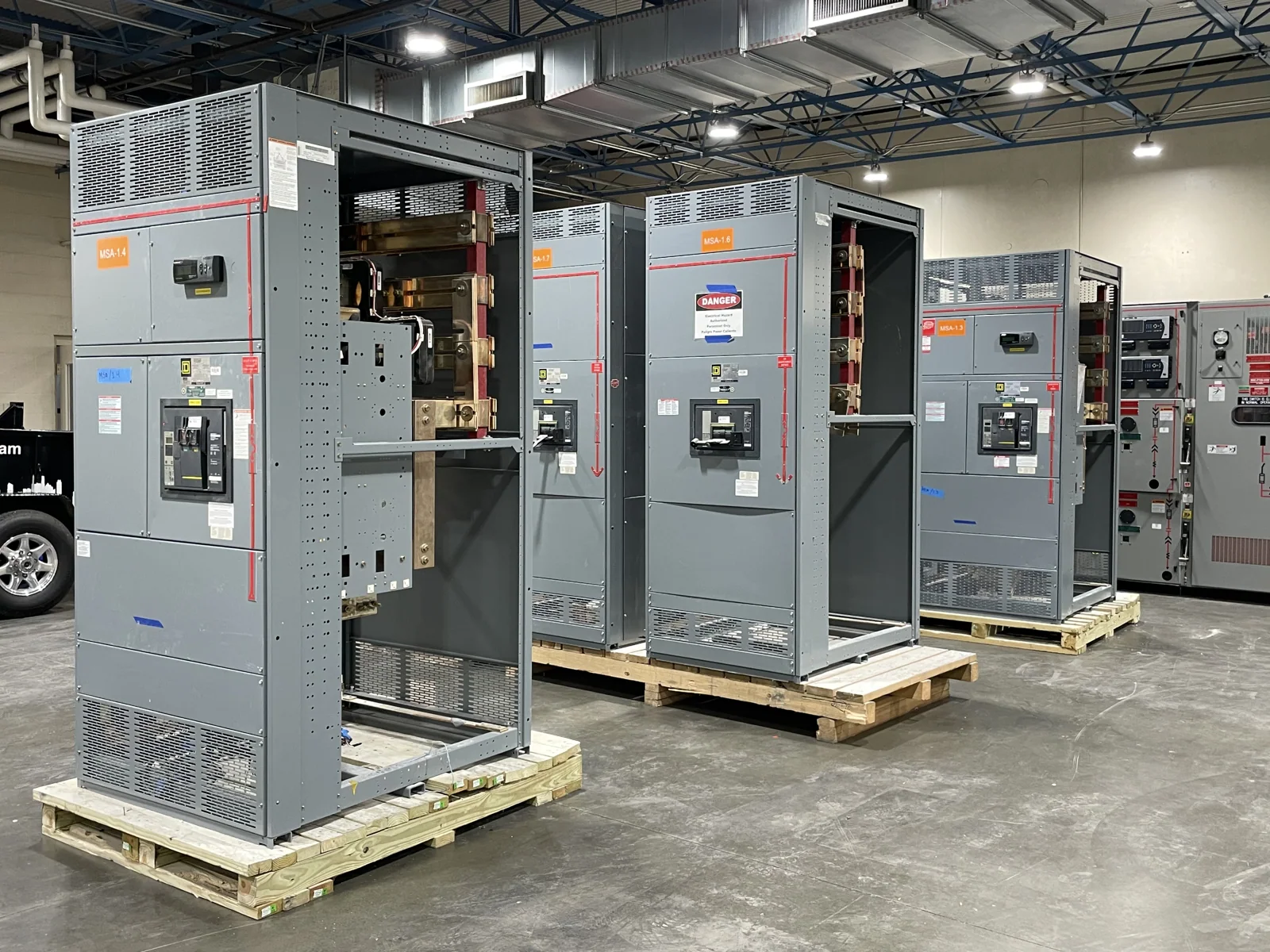
Start with the offered busway lot
For a seller in Warren County, the first useful distinction is between a real equipment lot and a broad description such as “overhead electrical.” The county records identify Lebanon as the county seat, but that does not establish the pickup site; the actual facility, ownership and release authority remain to be confirmed. A buyer evaluates busway by its identifiable pieces and documented system, not by location wording alone.
Begin with a simple inventory of straight lengths, elbows, joints and tap-off units. Count each category separately. Note whether pieces are installed overhead, staged in a storage area or mixed between rooms. If a manufacturer series, nameplate, voltage, amperage, phase or bus configuration is visible from a safe exterior view, transcribe it as shown. Do not infer a rating from housing size or assume two similar-looking systems connect. Parts from different series may not fit together.
Identify the system without disturbing it
Existing drawings, schedules, purchase records and decommissioning lists can make an evaluation more precise. Useful records may show run identifiers, section lengths, joint locations, tap-off quantities, hanger details and the boundary of equipment being released. Include the nameplate image or written label for each distinct system when available, while marking unreadable or unknown information as unknown.
Hypothetical example: an overhead run scheduled for replacement might contain twelve straight sections, two elbows, eight joints and four tap-off units. That count is only an illustrative format, not a claim about a Warren County installation. A useful submission would say which items are included, which remain in service, and whether the four tap-offs are part of the same documented series. It would also note ceiling height, lift access and any obstructions visible from the floor or approved observation point.
Check lot completeness and condition
Completeness affects whether the offered busway is a coherent lot or a collection of uncertain parts. List covers, joint hardware, end pieces, reducers, hangers and tap-off enclosures when records or safe exterior views establish that they are present. Do not count a missing component as included merely because a drawing depicts it. Separately identify loose parts, unlabeled cartons and pieces whose association with the run cannot be confirmed.
Describe observable condition without opening, operating or dismantling anything. Record dents, corrosion, water staining, impact marks, bent housings, damaged insulation visible from outside, missing covers and packaging quality. State whether pieces are indoors, outdoors, supported, palletized or exposed to weather, but do not promise that appearance proves electrical condition. No seller testing is required. A qualified, authorized team must establish safe conditions and handle any necessary disconnection; the seller should provide records and safe exterior photos only.
How the buyer weighs an offer
Valuation reflects the usefulness and certainty of the complete lot. Documented series and nameplate information, matching straight lengths and fittings, traceable tap-off units, preserved accessories and clear ownership can support an evaluation. Mixed systems, missing joints, unidentified breakers or tap boxes, severe visible damage, contamination concerns, incomplete records and uncertain release authority can reduce confidence. Voltage classes are considered; never substitute an assumed low-voltage rating for the wording on the equipment.
The buyer also considers handling complexity. Long sections may require different packaging than elbows or tap-offs. Fragile housings, restricted staging space, ceiling obstructions and a split release can affect freight planning and the practical value of the lot. A written list that separates known facts from unknowns is more useful than an optimistic estimate of total footage.
Plan access, removal and freight together
Share the facility contact, ownership approval, access rules, loading hours, ceiling or doorway constraints, lift clearances and any escort or security coordination that is known. These are coordination items, not a transfer of removal costs to the seller. After agreement, the buyer handles crane needs, qualified disconnects, rigging, loading, freight and hauling. The seller does not need to dismantle the overhead run, arrange a crane or test energized equipment.
For an overhead location, identify the approximate run length, elevation, obstructions, available lift path and staging area without entering a restricted area or touching equipment. Access approval should cover observation, qualified disconnection and loading dates as applicable. The release plan must also distinguish busway that remains needed for an operating area from busway authorized for removal.
Prepare the release package
- Provide the equipment location as an actual site description, not an assumption that Lebanon is the pickup point.
- List every straight length, elbow, joint and tap-off unit, with series and nameplate wording where visible.
- Attach existing schedules, drawings, ownership records and safe exterior photos; label unknowns plainly.
- Identify retained sections, access approvals, site contacts, loading constraints and the authorized release date.
After the lot, authority and release conditions are clear, the buyer can review the lot and provide a cash offer; once the seller accepts and the transaction is agreed, payment is made upfront before the agreed pickup. The buyer purchases equipment from sources including decommissioned data centers and shut-down power plants, and considers surplus busway across voltage classes. Ask whether the offered lot is complete, whether any tap-offs are reserved, what documentation survives, and what safe coordination is required. Those questions let the buyer move from identification to a controlled release without asking the seller to operate or test anything.