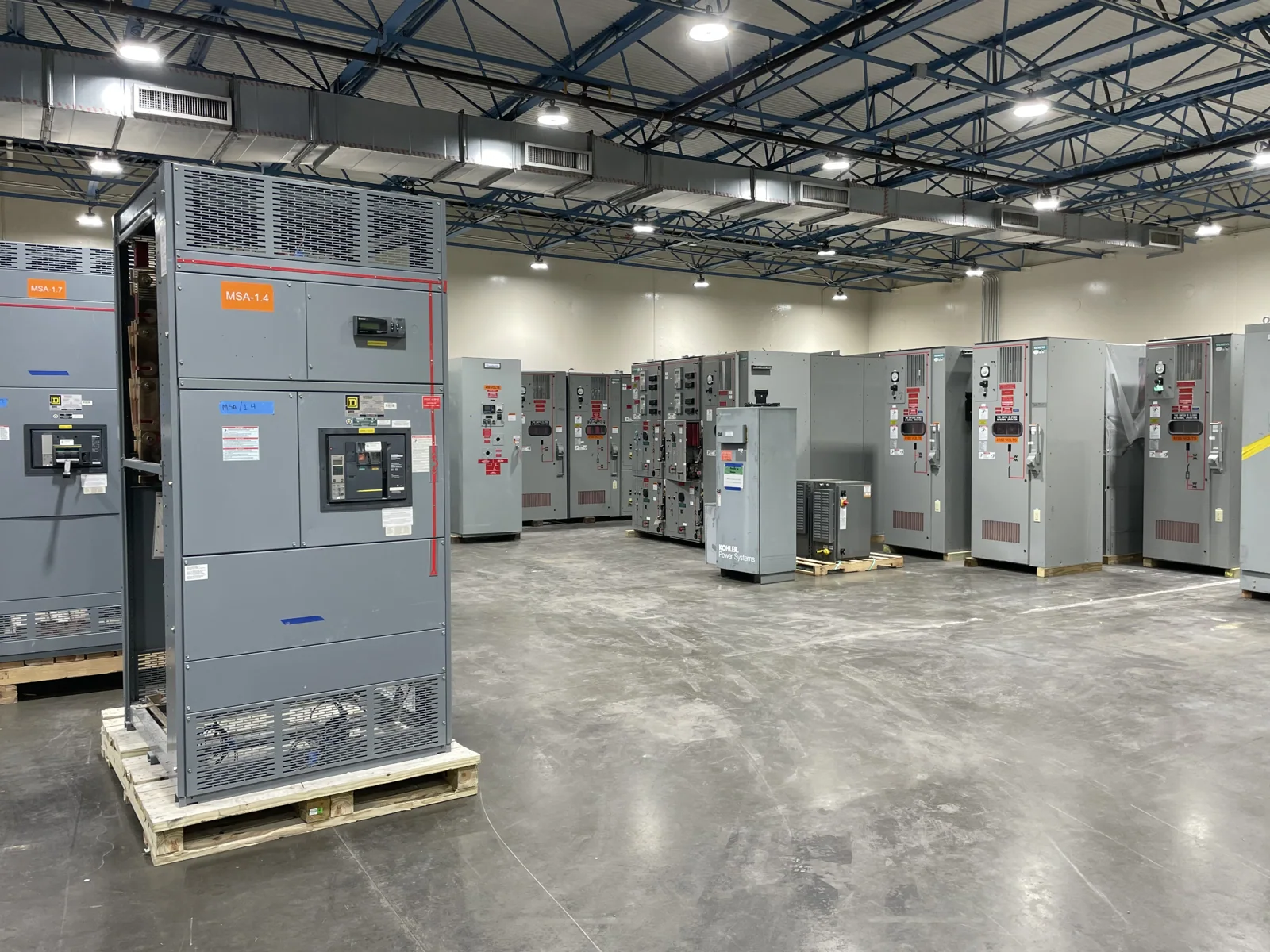
A hypothetical Ohio facility is clearing an electrical room after a production change. The inventory sheet says “2,000 amp busway,” but the material is not one simple item: overhead straight sections remain in place, two elbows are wrapped on a pallet, and tap boxes sit in a separate cage. Before anyone discusses an offer, the useful question is which actual component bears the 2,000-amp marking. It may be the busway assembly or a particular run, while a tap-off device has its own nameplate and limitations. That distinction keeps a promising lot from being valued on an assumption.
Start with documented identity
Share the clearest existing schedule, purchase record, layout, or exterior nameplate image available. A label may identify the manufacturer, series, system voltage, continuous current, enclosure style, phase arrangement, or section length. Record those words as printed rather than translating a partial marking into a familiar model. If a label is hidden, illegible, or absent, mark the value unknown. The 2,000-amp description should not be copied onto every piece merely because the pieces were found together.
Note whether each section is still overhead, stored indoors, or already staged, and identify the facility area without claiming adjacent electrical equipment is included. Confirm that the seller controls the material and that no landlord, utility, lender, tenant, or project owner retains rights.
Inventory every component
Separate straight lengths from fittings. For every straight section, list the visible length, quantity, label information, and whether end hardware appears present. Count elbows, offsets, flanges, joint packs, end closures, hangers, covers, and other hardware separately. List tap boxes or tap-off units one by one, including visible manufacturer and rating information. Do not call a fitting a complete run, and do not assume parts from a different series mate together.
- Hypothetical example: eight documented 10-foot straight sections marked for a 2,000-amp system, two elbows with unclear labels, three tap boxes with different current markings, and one crate of unidentified joint hardware.
- If a schedule lists twelve sections but only eight are visible, record the discrepancy rather than filling the gap with an assumption.
Use only safe exterior views of labels, ends, packaging, and accessible surfaces. The seller does not need to open an enclosure, operate a device, touch energized equipment, dismantle a joint, or perform electrical testing.
Describe condition and completeness
Report observable dents, bent housings, corrosion, water staining, missing covers, crushed packaging, or evidence of incomplete hardware. Note whether stored pieces are protected from weather and whether pallets or crates identify their contents. For an overhead run, describe ceiling height and visible obstructions, but do not ask the seller to remove it. Interior condition and energized status remain unknown unless established by qualified personnel.
A labeled set with matching lengths, fittings, joint materials, tap boxes, and mounting hardware is easier to scope than a mixed pile. Clean-looking housing does not prove hidden parts are present. Keep documented facts, exterior observations, and unresolved questions distinct.
Keep ratings separate
Continuous current is not the same as an interrupting rating, and neither is the same as a breaker trip setting. A 2,000-amp bus rating must not be applied to a tap box, plug-in unit, protective device, or joint simply because it is attached to the run. Record voltage and current wording for each identifiable item. If a breaker or tap-off has a frame rating, trip setting, or interrupting value on its own label, preserve it separately. Do not infer ratings from enclosure size or appearance.
A potential offer can reflect confirmed manufacturer and series, documented voltage, matching section quantity, usable lengths, fitting coverage, tap-box identity, visible damage, packaging, ownership clarity, and safe-recovery complexity. Material still overhead may require more coordination than a staged lot. A stored lot may lose value if sections are mixed, hardware is missing, or the release boundary is unclear.
Coordinate release and freight
Provide the site contact, release authorization, access rules, ceiling or doorway constraints, loading-hour limits, and required escorts or approvals. These are coordination details, not a request for the seller to fund removal. Qualified, authorized personnel handle isolation and removal. The buyer coordinates the crane, qualified disconnects, rigging, loading, freight, and hauling; the seller need not test or prepare energized equipment. Agree on a safe release date with the responsible owner and facility team before scheduling work.
For overhead busway, ceiling access and section length influence rigging and packaging. For stored material, list documented pallet dimensions, crate count, approximate weights, and clear travel path without moving anything for measurement. Package long straight sections separately from fragile elbows, tap boxes, and small joint hardware so the inventory remains traceable.
Questions for an Ohio evaluation
- Which nameplate or schedule supports the 2,000-amp description, and which component does it describe?
- What voltage, manufacturer, series, section lengths, and quantities are documented for the straight runs?
- How many elbows, joints, tap boxes, end pieces, hangers, and covers are included, and which are missing or unknown?
- Is any busway still overhead, and what ceiling access, outage window, escort, or release approval applies?
- Who owns the material, who can authorize release, and where may the buyer stage it after qualified removal?
- Are exterior photos and existing schedules available without anyone opening, operating, or testing equipment?