A buyer for electrical equipment from campus closures and electrical changeouts
If you have electrical equipment from campus closures and electrical changeouts available in Ohio, we buy surplus and used electrical equipment rather than selling equipment to you. This can be a single eligible item, a collection of spares or a larger inventory released by an upgrade or shutdown. Tell us what is available and what you know about it; an incomplete inventory can be a useful starting point.
We consider all voltage classes and make cash offers based on the actual equipment and agreed scope. Payment is upfront, before the agreed freight pickup, and the buyer covers freight. You do not have to test the equipment for us. The transaction details, including the lot and timing, are confirmed by agreement.
Identify the assets from campus closures and electrical changeouts
A campus closure or consolidation can involve several buildings, each with its own distribution equipment, ownership records and release schedule. Inventory the switchgear, panelboards, unit substations or other assets separately by building. Distinguish permanently retained service equipment from surplus items and identify any spare breakers or components included in the proposed lot.
Coordinate ownership, safety and timing
The owner may need approvals from facilities, property management and outside contractors before material can leave. A phased list helps align freight with the actual building schedule without assuming that all areas are vacant. Share the access plan and known restrictions, and leave electrical isolation and dismantling to authorized qualified personnel.
Two useful examples of equipment to identify
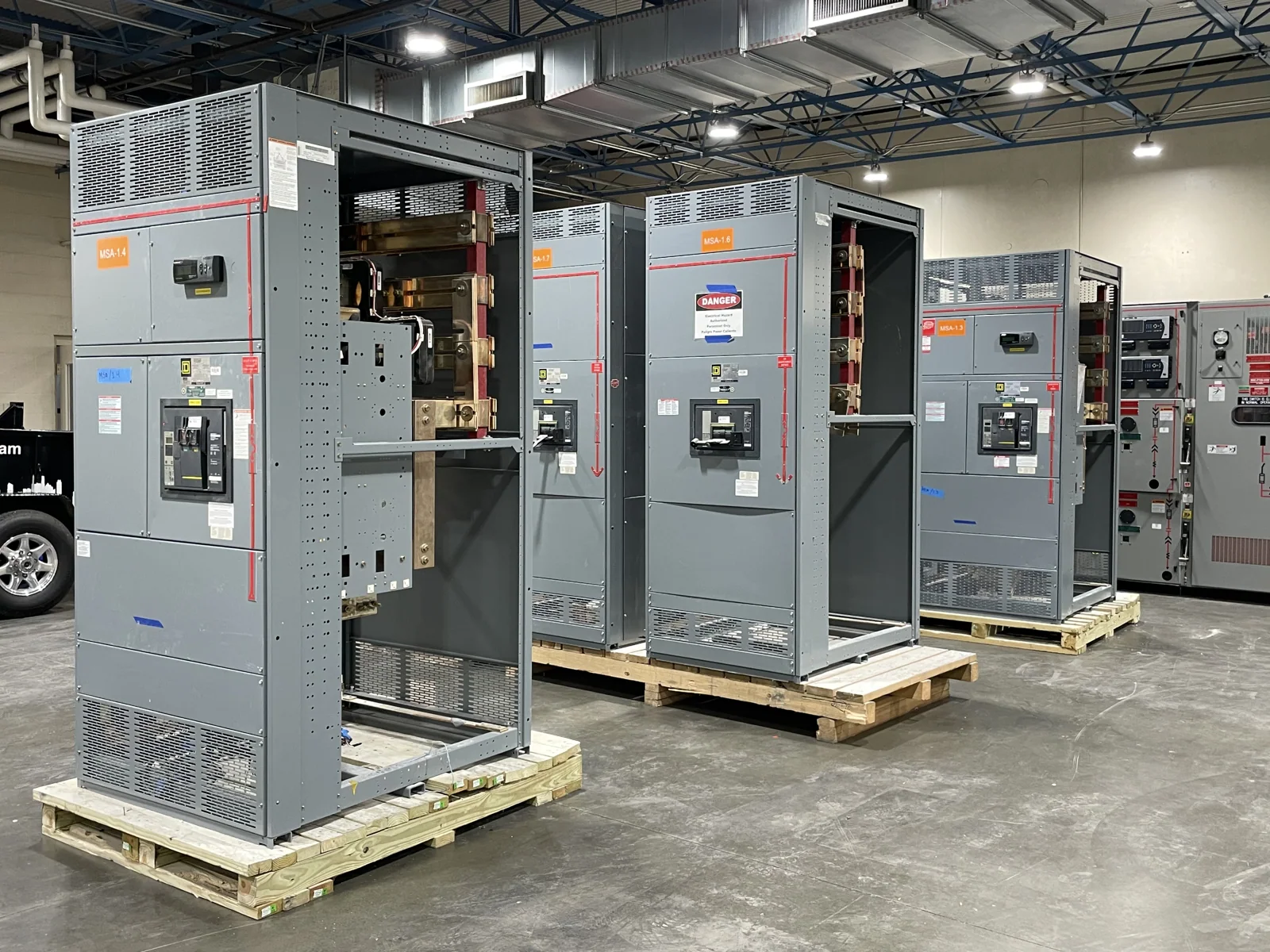
A switchgear lineup may contain an incoming section, bus, protective devices and multiple outgoing sections. Photograph the overall lineup and any safely visible manufacturer, model, voltage, current and interrupting information. Count the vertical sections and note which breakers or instrument compartments are present, missing or stored separately. A drawing or equipment schedule can help identify a lineup when an outside label is unreadable.
Busway, also called bus duct, distributes power through enclosed conductors and can include straight sections, elbows, joints and tap-off units. Share the nameplate rating and manufacturer if visible, an approximate installed or stored length, and photographs of the sections and tap boxes. Identify whether the material is still overhead or is already on the floor.
Organize a multi-building portfolio
For equipment spread across several buildings, provide a separate inventory and release date for each location rather than one undifferentiated list. Identify who has authority to grant access to each site. A spreadsheet or marked-up plan can show counts, brands and staging constraints without disclosing unnecessary operational information. The buyer can then evaluate the overall lot and the actual freight needs.
Account for limited loading access
Freight planning is different when equipment is behind narrow doors, on an upper floor or far from a loading area. Share approximate access dimensions, floor level and any known elevator or dock restrictions. If a rigging contractor has already prepared a removal plan, summarize its scope. Avoid promising a loading method until the site owner and responsible contractors agree on it.
What to send for an evaluation
Start with the equipment type, manufacturer, model or catalog number, quantity and location. Include current and voltage ratings only when they are safely visible or already recorded. A wide photograph showing the complete assembly, plus close-ups of accessible exterior nameplates, can explain a great deal. Existing drawings, a spare-parts list or an equipment schedule are helpful when available.
State what is included and excluded: complete lineups, loose breakers, accessories, covers and separately stored spares should not be assumed. Describe known damage, missing pieces, storage conditions and any known environmental concerns. If a detail is unknown, say so. The buyer can discuss the inventory without asking you to perform electrical testing.
How a cash offer and payment work
The buyer reviews the information you provide and discusses the proposed lot, condition, ownership, site access and release schedule. A cash offer reflects those facts and the anticipated handling needs; a nameplate rating by itself is not a fixed price. Ask about any item or responsibility that is unclear before accepting an offer.
Once the parties agree on the equipment, price and transaction terms, payment is upfront, before the agreed freight pickup. We handle the crane, rigging, disconnects, loading, freight and hauling. Our qualified team coordinates this work with the site after the purchase is agreed. No seller testing is required for the evaluation.
Access, release and covered freight
Tell the buyer whether the items are still installed or already staged, and give approximate dimensions and loading access. If a lineup must be separated, our qualified team coordinates the safe release plan with the facility. Keep separately stored parts associated with the correct assembly.
Provide the expected availability date, site contact, access hours and any dock, doorway, lift or staging restrictions. The buyer covers the freight for the agreed purchase; pickup planning follows the confirmed scope and the site's release requirements. If several buildings or release dates are involved, identify them separately so the parties can coordinate the actual shipment.
Electrical safety and honest condition information
Treat equipment as potentially energized until authorized, qualified personnel establish an electrically safe work condition under the applicable site procedures. Do not open covers, operate switches, remove breakers, disconnect conductors or perform tests for photographs or a quote. The seller does not need to demonstrate that an item works.
Tell the buyer about known damage, oil or fluid concerns, contamination, missing components or other restrictions, and supply existing records if you have them. Unknown condition is different from a representation that equipment works. Our qualified professionals handle safe isolation and the agreed removal work in coordination with site authorization and any required assessments.
Common questions from equipment sellers
What if the equipment cannot leave in one piece? Describe the section count, overall dimensions and known access limits. Our qualified team coordinates safe separation and removal with the facility, and we handle the rigging, loading and freight.
What if some breakers or covers are missing? Describe the missing components and distinguish them from parts that are stored separately. An incomplete assembly can still be submitted for review; the buyer needs an accurate list to understand the proposed lot.
What if the equipment is in more than one building? Group the inventory by building and anticipated release date. Share the access contact and the site-specific loading restrictions for each location so the parties can coordinate the actual scope and freight.
Start with the equipment you have
To discuss electrical equipment from campus closures and electrical changeouts in Ohio, provide a short inventory, safely available label photos and your approximate timing. Include the name of the person authorized to discuss the sale and any known access constraints. The buyer can review equipment across all voltage classes and discuss a cash offer without requiring seller testing.