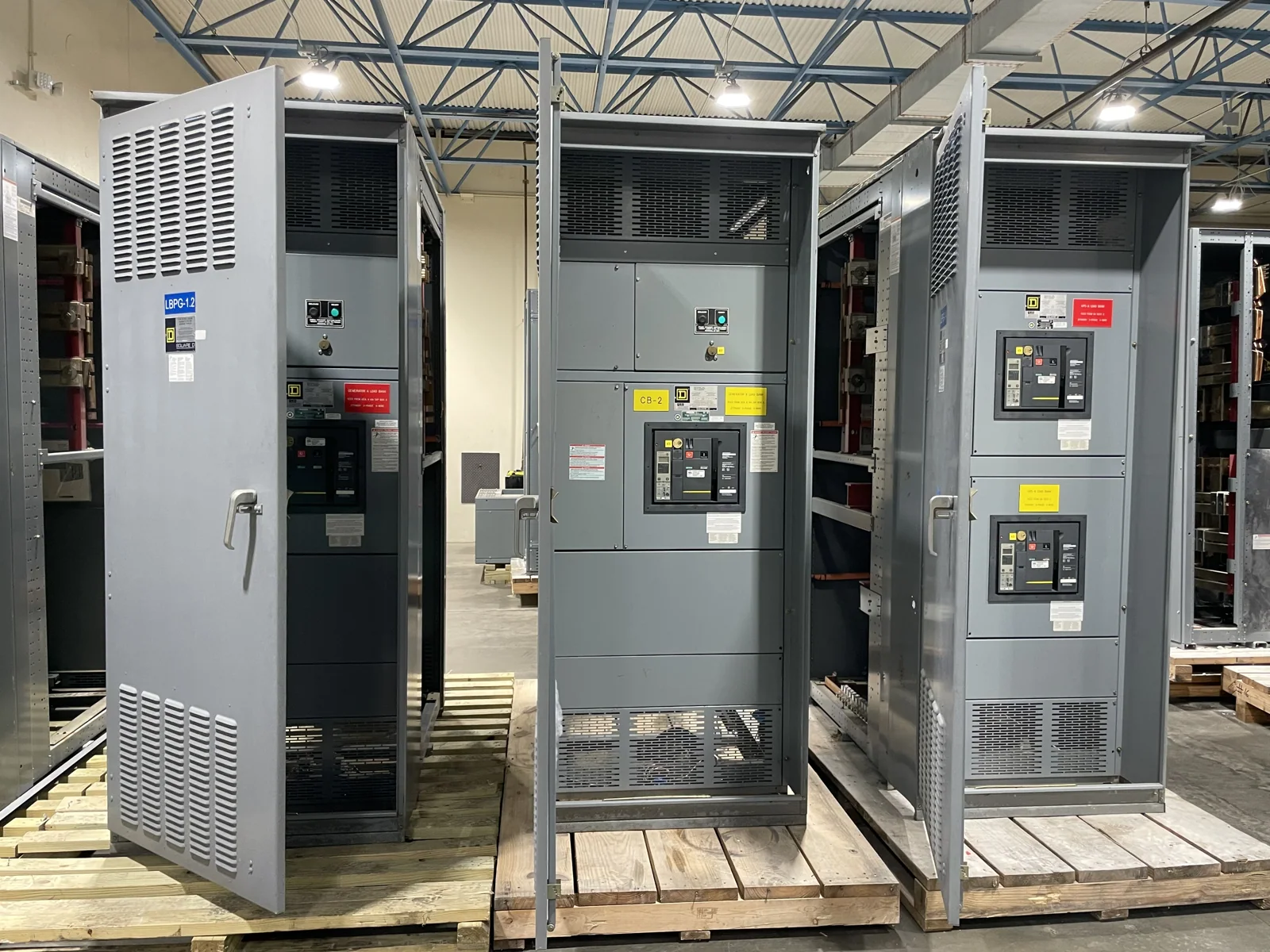
Start with the tap-off inventory, not the busway run
Tap-off units can be valuable as a defined lot, but they should not be counted as ordinary busway length. Begin with a unit-by-unit list of every labeled tap-off box, including units still associated with a run and units stored separately. Record the visible manufacturer or brand, series or family wording, catalog or identification number, voltage class, ampere marking, phase information when shown, enclosure description, and any protective device named on the label. A nameplate may identify the tap-off assembly while a breaker, fuse, or disconnect inside or mounted with it has its own rating. Do not infer one from the other.
Existing drawings, schedules, purchase records, photographs, and removal documents can help establish which units belong to which busway system. If a record conflicts with a label, preserve both facts and mark the association as unknown until an authorized review resolves it. A seller does not need to open a unit, operate a handle, remove a cover, or test anything. Safe exterior photographs are useful alongside existing documents.
A practical inventory example
Hypothetical example: an Ohio facility has twelve labeled tap-off boxes removed during an overhead distribution change. The records show eight units assigned to one busway series, while four stored units have no confirmed run association. The inventory should list twelve line items rather than reporting “one busway lot.” For each line, note quantity, visible rating text, brand or series text, protective-device description if documented, storage position, exterior condition, and whether the record-to-label match is confirmed or unknown.
That structure separates what is present from what is merely presumed. It also prevents loose breakers, fuse carriers, operating handles, mounting hardware, plugs, or covers from being silently folded into the tap-off count. If a protective device is included, describe it as included, absent, removed, or unknown based on records and safe exterior observation. Do not represent a unit as compatible with another run simply because the enclosure looks similar.
Completeness and condition affect the evaluation
A useful lot may include complete labeled units, but completeness is not established by exterior appearance alone. Identify missing covers, damaged viewing windows, bent mounting features, corrosion, impact marks, water exposure, heat discoloration, labeling loss, cut conductors, or storage damage that is already known. Note whether units are individually packaged, stacked, palletized, or mixed with unidentified parts. Separate documented accessories from loose items whose ownership or fit is uncertain.
Condition reporting should be factual rather than optimistic. “Not inspected internally” is a meaningful status, not a defect invented by the seller. The buyer can evaluate the records and visible condition without asking the seller to energize, dismantle, clean, or prove operation. Testing is not required from the seller. The same approach applies across voltage classes: state the documented class and markings, while leaving unverified characteristics open.
Ownership, release authority, and staged access
Before an offer is finalized, establish who owns each group of units and whether any utility, landlord, tenant, lender, insurer, contractor, or project owner has an interest in the equipment. A decommissioned data center, shut-down power plant, industrial building, or other Ohio facility may contain both surplus tap-offs and equipment reserved for another phase. The seller should identify the lot boundary, the authorized decision-maker, and any units that must remain in place.
For a staged release, list what is available now, what becomes available later, the documents supporting each stage, and the access contact for each release. Access approvals are coordination items: they may involve escorts, induction rules, outage windows, loading-hour restrictions, or security clearance. They do not shift removal costs to the seller. Qualified personnel establish safe conditions and perform electrical and physical work. The buyer handles qualified disconnects, rigging, crane coordination when needed, loading, freight, and hauling.
What can influence an offer
Valuation may reflect confirmed quantities, documented voltage and current markings, identifiable brand and series, protective-device completeness, association with a known busway system, exterior condition, packaging, and the cost and complexity of lawful access. A concentrated, well-documented lot can be easier to evaluate than the same number of mixed units with uncertain ownership or missing records. Describe documented dimensions and weights, and flag stairs, doors, elevators, ceiling height, restricted routes, or outdoor storage as access facts rather than assumptions.
After reviewing the equipment and release conditions, the business can provide a cash offer; once the seller accepts and the sale is agreed, payment is made upfront before the agreed pickup. An evaluation does not guarantee acceptance of an offer, a fixed price, compatibility, a test result, or an automatic purchase. The evaluation remains tied to the information available and the condition and release actually agreed.
Common seller questions
- What should I send first? Existing schedules, nameplate records, ownership documents, release notes, and safe exterior photographs of labels and visible condition.
- Do I need to test or disconnect the units? No. Do not touch, open, operate, dismantle, or test them; qualified, authorized personnel handle safe conditions and electrical work.
- Can loose breakers or accessories be included? Yes, list them separately and identify their documented association. If unknown, say unknown rather than promising fit.
- What if some units release later? Separate the quantities, dates or conditions that are actually authorized, and identify who can approve each stage.
- Who arranges removal? The buyer coordinates qualified disconnects, rigging, crane needs, loading, freight, and hauling after access is approved.
A clear inventory lets an Ohio seller present tap-off units as a documented equipment opportunity rather than an unexplained pile of boxes.